

In 2025, the Trump executive order crypto policy marked a pivotal moment for the cryptocurrency landscape. With its focus on innovation and strategic planning, the executive order introduced measures that redefined how the U.S. approaches digital assets. One groundbreaking initiative is the creation of a Strategic Bitcoin Reserve. By capitalizing it with bitcoin from the Department of Treasury, the U.S. signaled its recognition of bitcoin as a national strategic asset. This historic move not only reshapes the financial future but also positions the U.S. as a leader in global digital financial technology.
The policy’s broader framework aims to provide regulatory clarity for cryptocurrency. For example, it establishes jurisdictional boundaries between regulatory bodies and promotes stablecoin issuance. These measures encourage innovation and strengthen the dollar’s sovereignty in the digital era.
Key Takeaways
The Trump order bans central bank digital currencies (CBDCs). This protects your money privacy and supports new tech growth.
A National Bitcoin Reserve was made. It treats Bitcoin as a key asset and helps the economy stay strong in tough times.
The U.S. Digital Asset Stockpile was created to boost the digital economy and get big companies to invest in crypto.
A Crypto Working Group was set up. It brings experts together to make clear rules and support new ideas in digital money.
The order adds rules to stop money crimes. This makes crypto safer and builds trust for users.
Key Provisions of the Trump Executive Order Crypto
Prohibition of Central Bank Digital Currencies (CBDCs)
The Trump executive order crypto policy takes a firm stance against central bank digital currencies (CBDCs). It prohibits their development and implementation within the United States. This decision reflects concerns about the potential risks CBDCs pose to individual privacy and financial freedom. By rejecting CBDCs, the policy aims to protect you from government overreach in the digital currency space. It also emphasizes the importance of maintaining a decentralized financial ecosystem.
This prohibition aligns with the broader goal of promoting innovation in the digital asset industry. Instead of relying on centralized solutions, the policy encourages private-sector-led advancements in cryptocurrency and blockchain technology. This approach fosters competition and ensures that the U.S. remains a leader in the global digital asset ecosystem.
Establishment of a Strategic Bitcoin Reserve
One of the most groundbreaking aspects of the executive order is the creation of a Strategic Bitcoin Reserve. This reserve positions bitcoin as a national strategic asset, highlighting its importance in the evolving financial landscape. By allocating bitcoin from the Department of Treasury, the U.S. demonstrates its commitment to embracing decentralized digital assets.
The establishment of this reserve also serves as a hedge against economic uncertainties. Bitcoin’s decentralized nature and limited supply make it an attractive option for safeguarding national wealth. This move mirrors actions taken by 19 states, which have introduced or passed legislation to establish their own bitcoin reserves. It signals growing institutional interest in bitcoin and its potential as a store of value.
Creation of a U.S. Digital Asset Stockpile
The executive order introduces another innovative measure: the creation of a U.S. Digital Asset Stockpile. This initiative focuses on accumulating a diverse range of digital assets to strengthen the nation’s position in the digital economy. By building this stockpile, the U.S. aims to support the growth of the digital asset ecosystem and ensure its competitiveness on the global stage.
This measure also provides a foundation for future digital asset regulation. Clearer rules and a well-defined federal regulatory framework can encourage institutional adoption and investment. Bank of America CEO Brian Moynihan has noted that regulatory clarity could lead to increased banking engagement with cryptocurrency. This highlights the potential for the U.S. to lead in shaping the regulatory landscape for digital assets.
Formation of a Cryptocurrency Working Group
The Trump executive order crypto policy introduced the formation of a Cryptocurrency Working Group. This initiative aims to bring together experts, regulators, and industry leaders to shape the future of digital currency in the United States. By fostering collaboration, the working group seeks to address challenges and unlock opportunities within the digital asset ecosystem.
The working group focuses on several key areas. First, it evaluates existing regulations to identify gaps and inconsistencies. This ensures that the regulatory framework aligns with the evolving nature of digital assets. Second, it develops strategies to promote innovation while maintaining financial stability. For example, the group explores ways to integrate stablecoins into the broader financial system without compromising security or oversight.
You can expect the working group to prioritize transparency and accountability. It provides regular updates on its progress and recommendations. This approach builds trust among stakeholders and encourages broader participation in the digital currency space. Additionally, the group works to harmonize U.S. regulations with international standards. This ensures that the country remains competitive in the global digital economy.
The formation of this working group highlights the Trump administration’s commitment to proactive regulation. Instead of relying solely on enforcement, the executive order emphasizes collaboration and forward-thinking policies. This shift benefits both the industry and consumers by creating a more predictable and supportive environment for digital innovation.
By addressing regulatory challenges and fostering innovation, the Cryptocurrency Working Group plays a crucial role in shaping the future of digital assets. Its efforts contribute to a robust and dynamic digital asset ecosystem, positioning the U.S. as a leader in the global financial landscape.
Comparing Trump’s Crypto Policy with Biden’s Administration
Regulatory Continuities and Shared Goals
Both Trump and Biden administrations recognized the growing importance of digital currencies and the need for a structured approach to manage them. While their methods differed, you can see some shared goals in their policies:
Both administrations aimed to foster innovation in the digital asset ecosystem.
They acknowledged the risks associated with cryptocurrencies, such as fraud and illicit activities.
Regulatory agencies under both administrations worked to establish frameworks that balance innovation with financial stability.
Aspect | Trump Administration | Biden Administration |
|---|---|---|
Regulatory Approach | More regulatory, focusing on consumer protection | |
Focus on Crypto | Minimal attention, allowing rapid growth | |
Key Actions | Reduced burdens of Dodd-Frank | Intensified efforts against scams and market manipulation |
Agencies Involved | Limited involvement | SEC, CFTC, FinCEN actively engaged |
Despite these similarities, the Biden administration leaned more toward consumer protection, while Trump’s policies emphasized rapid innovation.
Key Differences in Approach to Digital Assets
The differences between the two administrations become clear when you examine their approaches to digital assets. Biden’s administration adopted a cautious, research-driven strategy. It focused on systemic risks, consumer protection, and international collaboration. In contrast, Trump’s executive order crypto policy took a bold, pro-innovation stance. It prioritized domestic innovation and deregulation.
For example, Biden’s policy explored the potential for a U.S. central bank digital currency (CBDC). Trump’s policy explicitly banned CBDC development, citing concerns over privacy and financial freedom. Additionally, Biden’s regulatory timeline allowed up to a year for agencies to provide recommendations. Trump’s executive order set aggressive deadlines, requiring guidelines within 60 days and reports within six months.
Aspect | Biden’s Policy | Trump’s Policy |
|---|---|---|
Approach | Cautious, research-focused approach | Pro-innovation stance |
CBDC Stance | Explicitly bans development of CBDCs | |
Focus | Systemic risks, consumer protection, financial stability, international collaboration | Domestic innovation, dollar-backed stablecoins, deregulation |
Regulatory Timeline | Up to a year for agencies to provide recommendations | Aggressive deadlines: 60 days for guidelines, 6 months for reports |
These differences highlight the contrasting priorities of the two administrations.
Shift from Enforcement to Supportive Regulation
Under Biden, regulatory agencies like the SEC and CFTC intensified enforcement actions. They targeted scams, market manipulation, and other illegal activities in the cryptocurrency space. This enforcement-heavy approach aimed to protect consumers but often created uncertainty for innovators.
Trump’s executive order marked a shift toward supportive regulation. It emphasized collaboration between regulators and industry leaders. By forming a Cryptocurrency Working Group, the policy sought to address challenges and promote innovation. This approach reduced the adversarial relationship between regulators and the digital asset industry.
Note: This shift from enforcement to collaboration reflects a broader effort to create a predictable environment for digital currency innovation. It encourages you to explore opportunities in the growing digital financial ecosystem.
Revocation of Prior Measures and Its Implications
Policies and Frameworks Revoked by Trump’s Executive Order
Trump’s executive order introduced sweeping changes by revoking several prior policies and frameworks. These changes aimed to streamline the regulatory environment and align it with the administration’s vision for digital assets and financial innovation. A review of historical data highlights some of the key measures that were overturned:
Executive Order | Description |
|---|---|
Ended federal funding for elective abortions, reversing orders from 2022. | |
Mexico City Policy | Reinstated restrictions on U.S. funding for coercive abortion activities. |
Emergency Measures for California | Overrode existing water management policies to improve resource delivery. |
FEMA Review Council | Established a council to enhance FEMA’s disaster response effectiveness. |
These revocations reflect a broader effort to reduce regulatory complexity and focus on policies that support innovation and economic growth. By eliminating outdated or restrictive measures, the executive order creates a more predictable environment for the digital currency ecosystem.
Impact on SEC Enforcement Actions
The executive order significantly impacts the SEC’s approach to regulating digital assets. Under the previous administration, the SEC adopted an enforcement-heavy strategy, targeting cryptocurrency projects for non-compliance. This created uncertainty for innovators and investors. Trump’s policy shifts the focus from punitive actions to supportive regulation. By emphasizing collaboration between regulators and industry leaders, the executive order fosters a more balanced approach.
This change reduces the adversarial relationship between the SEC and the digital currency industry. It also encourages the development of clear guidelines, which can help you navigate the regulatory landscape with greater confidence. The new approach aligns with the administration’s goal of promoting innovation while maintaining financial stability.
Industry Reactions to the Policy Shift
The industry has responded positively to the policy shift introduced by Trump’s executive order. By providing a clearer pathway for digital financial technology, the order reduces regulatory uncertainty and encourages institutional investment in digital assets. Market analysis reveals several key reactions:
A review of the USMCA and proposed tariffs on Canadian and Mexican imports signals a shift in trade policy.
Oil prices dropped by over 3% following Trump’s announcement to pressure OPEC, reflecting market sensitivity to policy changes.
The halting of payments under the Inflation Reduction Act impacts clean energy initiatives, raising concerns among investors.
A survey by Chief Executive highlights that CEO confidence remains low due to economic uncertainties. However, the executive order’s focus on fostering innovation and reducing regulatory burdens offers a glimmer of hope for the digital currency industry. By addressing long-standing challenges, the policy creates opportunities for growth and investment in the evolving financial ecosystem.
Broader Aspects of the Trump Executive Order Crypto
Regulatory Clarity for Digital Financial Technology
Trump’s executive order introduces a structured timeline to enhance regulatory clarity for digital financial technology. This clarity ensures that you, as an investor or innovator, can navigate the digital currency landscape with confidence. The policy mandates specific deadlines for regulatory agencies to streamline their approach to digital assets.
Timeframe | Action |
|---|---|
30 days | Agencies to identify existing regulations impacting the digital asset sector. |
60 days | Agencies to submit recommendations on identified regulations to the Working Group. |
120 days | Creation of a unified, technology-neutral framework for digital asset regulation. |
180 days | Working Group to deliver a detailed report outlining a proposed federal regulatory framework. |
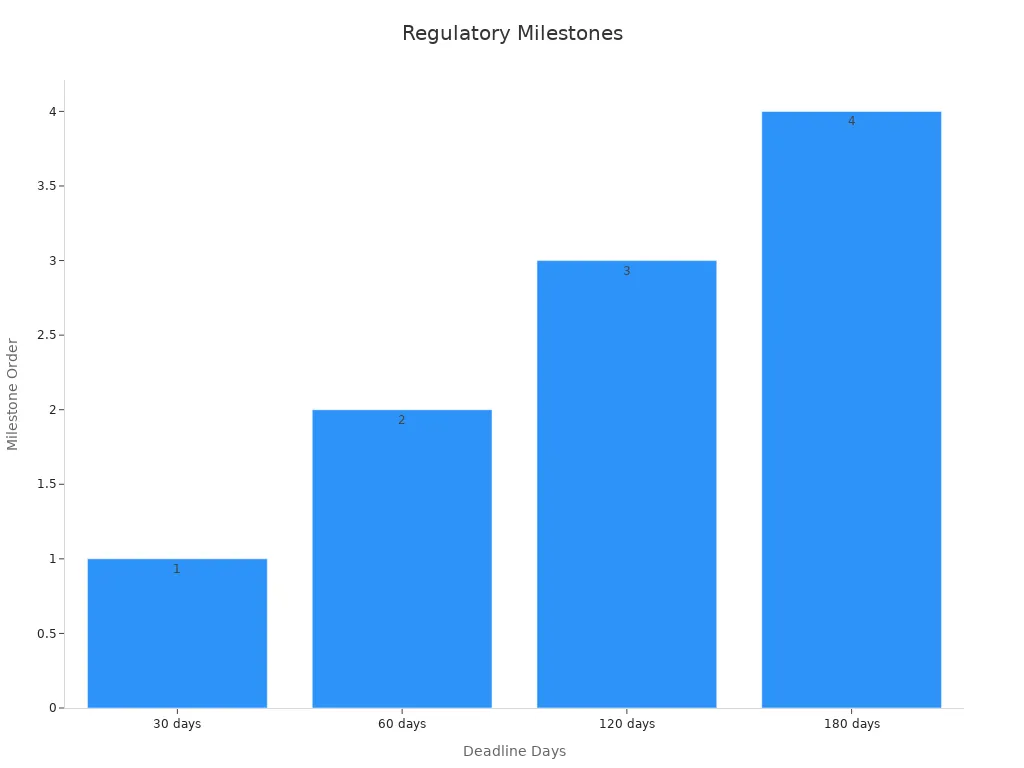
This structured approach reduces uncertainty and fosters a predictable environment for digital innovation. By setting clear expectations, the executive order strengthens the foundation for a thriving digital financial ecosystem.
Implications for Blockchain Innovation and Economic Development
The executive order prioritizes blockchain innovation as a driver of economic growth. By encouraging private-sector advancements, it creates opportunities for you to explore blockchain’s potential in various industries. The policy’s emphasis on decentralized solutions aligns with the broader goal of fostering a competitive digital economy.
Blockchain technology can revolutionize sectors like supply chain management, healthcare, and finance. With regulatory clarity and government support, businesses can adopt blockchain solutions more confidently. This adoption not only enhances efficiency but also positions the U.S. as a global leader in blockchain innovation. The executive order’s focus on innovation ensures that the digital currency ecosystem contributes to long-term economic development.
Effects on Cryptocurrency Adoption and Investment
The executive order’s measures significantly impact cryptocurrency adoption and investment. By establishing a Strategic Bitcoin Reserve and revoking outdated policies, the government signals its support for digital assets. This move boosts investor confidence and encourages broader adoption of cryptocurrencies.
Policy Action | Description | Anticipated Effect |
|---|---|---|
Supports growth and use of digital assets and revokes previous guidance | Enhances regulatory clarity and investor confidence | |
Establishment of Strategic Bitcoin Reserve | Capitalizes on forfeited Bitcoin for government use | Signals government support for Bitcoin, potentially increasing adoption |
Formation of Crypto Task Force by SEC | Develops a comprehensive regulatory framework for crypto assets | Promotes a clearer regulatory environment, encouraging investment and adoption |
These actions create a favorable environment for you to invest in digital currencies. The policy also encourages institutions to integrate cryptocurrencies into their portfolios, further driving adoption. As a result, the U.S. strengthens its position as a leader in the global digital financial landscape.
Anti-Money Laundering (AML) Measures in Trump’s Crypto Policy
Integration of AML Provisions into the Executive Order
Trump’s executive order includes robust anti-money laundering (AML) provisions to address the risks associated with digital currencies. These measures aim to ensure that cryptocurrency transactions remain transparent and compliant with existing financial regulations. By integrating AML requirements, the policy strengthens the framework for monitoring and preventing illicit activities in the crypto space.
You can expect these provisions to require cryptocurrency exchanges and wallet providers to implement stricter identity verification processes. This ensures that users engaging in digital asset transactions are properly identified, reducing the risk of anonymous criminal activity. Additionally, the executive order mandates regular audits and reporting to enhance accountability within the industry.
The inclusion of AML provisions reflects the administration’s commitment to balancing innovation with security. It sends a clear message that while the U.S. supports the growth of digital assets, it will not tolerate their misuse for illegal purposes.
Strengthening Oversight and Compliance Mechanisms
The executive order introduces measures to strengthen oversight and compliance mechanisms in the cryptocurrency industry. These steps ensure that you, as a user or investor, can trust the integrity of digital financial systems. By enhancing oversight, the policy aims to create a safer environment for legitimate transactions while deterring bad actors.
One key initiative involves the establishment of a centralized database for tracking suspicious activities. This database allows regulators to monitor transactions across multiple platforms, improving their ability to detect and respond to potential threats. The policy also encourages collaboration between government agencies and private-sector stakeholders to develop advanced tools for monitoring and compliance.
To further enhance compliance, the executive order requires cryptocurrency businesses to adopt best practices for risk management. This includes conducting regular risk assessments and implementing robust internal controls. These measures not only protect you from fraud but also contribute to the overall stability of the digital asset ecosystem.
Addressing Concerns About Illicit Activities in the Crypto Space
Cryptocurrencies have often been associated with illicit activities, such as money laundering and fraud. Trump’s executive order directly addresses these concerns by implementing targeted measures to combat illegal use cases. These efforts aim to build trust in digital currencies and encourage their adoption for legitimate purposes.
A recent industry report highlights the scale of illicit activities in the crypto space:
Type of Illicit Activity | Amount (USD) |
|---|---|
Ponzi or pyramid schemes | |
Darknet markets (illegal drugs) | 1.5 billion |
Stolen through hacks and exploits | 3.7 billion |
Stolen through cross-chain attacks | 2 billion |
Total linked to illicit investment schemes | 7 billion |
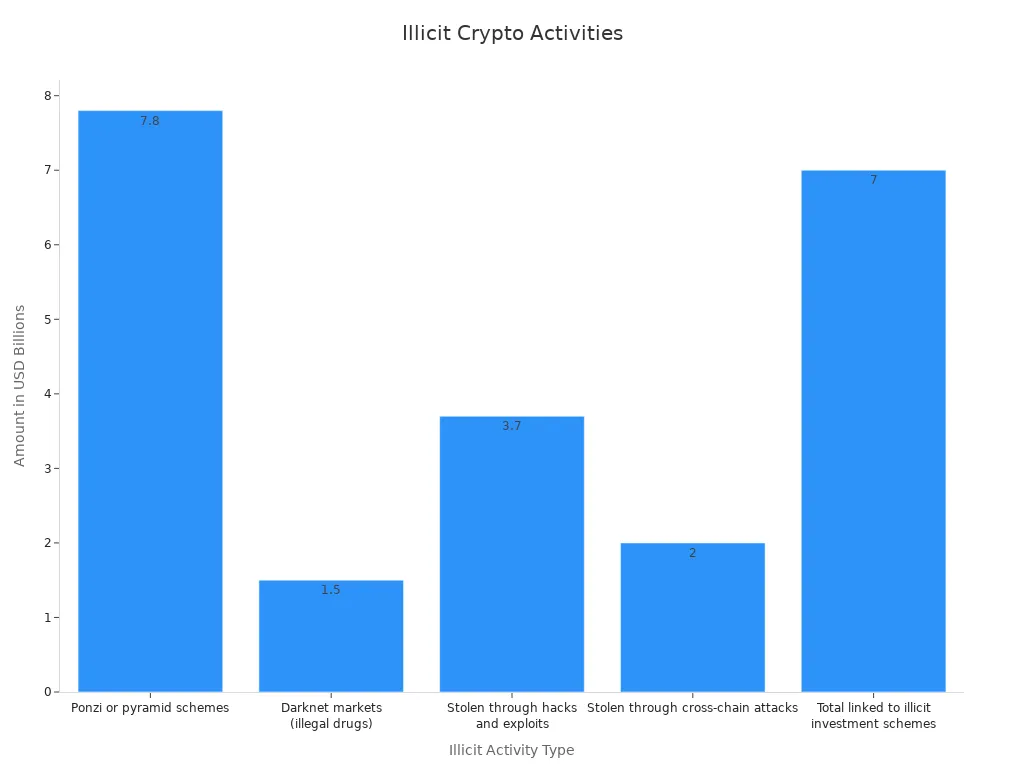
These figures underscore the importance of robust AML measures. The executive order prioritizes the development of advanced technologies, such as blockchain analytics tools, to trace and prevent illicit transactions. By leveraging these tools, regulators can identify suspicious patterns and take swift action to mitigate risks.
You play a crucial role in this effort by choosing platforms that comply with AML regulations. When you use compliant services, you contribute to a safer and more transparent cryptocurrency ecosystem. The policy’s focus on addressing illicit activities ensures that digital assets can thrive as a legitimate and secure financial tool.
Trump’s cryptocurrency policy introduced transformative measures to position the U.S. as a leader in digital finance. Key provisions include the prohibition of CBDCs, the establishment of a Strategic Bitcoin Reserve, and the creation of a U.S. Digital Asset Stockpile.
Notable Announcements:
A strategic reserve of Bitcoin, Ether, XRP, Solana, and Cardano boosted market confidence, with Bitcoin and Ether prices rising over 10%.
The SEC adopted a collaborative stance, allowing banks to hold crypto for customers.
Appointment | Role | Significance |
|---|---|---|
Brian Quintenz | Chair of the CFTC | Advocated for modernizing financial regulation to accommodate digital assets. |
Caroline D. Pham | Acting Chair of the CFTC | Led initiatives to foster collaboration across the finance ecosystem. |
Looking ahead, challenges like regulatory harmonization and market volatility persist. However, initiatives like the President’s Working Group on Digital Asset Markets and the Digital Asset Summit signal a promising future for innovation and adoption.
FAQ
What is the Strategic Bitcoin Reserve, and why is it important?
The Strategic Bitcoin Reserve is a government-held stockpile of Bitcoin. It positions Bitcoin as a national asset and safeguards economic stability during financial uncertainties. This initiative signals the U.S. government’s support for decentralized digital assets.
How does the prohibition of CBDCs affect the financial ecosystem?
The prohibition protects your financial privacy and freedom. It prevents centralized control over digital currencies and encourages private-sector innovation. This approach fosters competition and strengthens the decentralized financial ecosystem.
What role does the Cryptocurrency Working Group play?
The working group brings experts together to shape digital asset policies. It evaluates regulations, promotes innovation, and ensures financial stability. Its collaborative efforts create a predictable environment for cryptocurrency growth.
How does the executive order address illicit activities in crypto?
The policy integrates anti-money laundering measures. It requires exchanges to verify identities and mandates regular audits. These steps reduce risks and ensure safer transactions for you and other users.
Will this policy increase cryptocurrency adoption?
Yes, the policy boosts adoption by providing regulatory clarity and government support. Initiatives like the Strategic Bitcoin Reserve and clearer guidelines encourage institutional investment and public trust in digital assets.

