
The IRS crypto FIFO relief for 2025 offers taxpayers a temporary reprieve from strict wallet-by-wallet cost basis tracking. This relief postpones the mandatory use of FIFO methods for centralized exchanges, allowing you to continue using your preferred cost-basis strategy. Historically, IRS guidance permitted flexible tracking methods like universal pooling, but the upcoming changes aim to improve reporting accuracy. Starting in 2025, brokers will issue Form 1099-DA, requiring you to maintain precise records for each wallet. Understanding these updates ensures compliance and prepares you for stricter rules ahead.
Key Takeaways
The IRS offers a one-year relief in 2025 allowing you to use your preferred cost-basis method for crypto trades on centralized exchanges instead of mandatory FIFO.
You must keep detailed records of every crypto transaction, including dates, amounts, cost basis, and wallets, to stay compliant and prepare for stricter rules starting in 2026.
Form 1099-DA will be issued by brokers in early 2026 to report your 2025 crypto sales, helping you and the IRS track gains and losses accurately.
Consistently use the same cost-basis method throughout 2025 and communicate your choices to brokers to avoid mistakes and IRS audits.
Start organizing your records and using tools now to ease tax filing and smoothly transition to new IRS rules after the relief period ends.
IRS Crypto FIFO Relief Overview
What Is FIFO?
FIFO stands for “first in, first out.” This method means you sell your oldest crypto assets first when you make a transaction. The IRS uses FIFO to help you calculate your gains or losses. If you bought Bitcoin at different times and prices, FIFO calculations require you to sell the earliest coins you bought before newer ones. This approach can affect your taxes because the price you paid for your oldest coins might be different from the price of your newer coins.
IRS guidance has often focused on FIFO as a default method. However, you can sometimes choose other cost-basis methods if you follow the rules. The IRS wants to make sure you report your crypto sales correctly, so understanding FIFO is important. If you do not pick a method, the IRS will use FIFO for your transactions.
Relief Period for 2025
The IRS crypto FIFO relief gives you a break for the 2025 tax year. You do not have to use the FIFO method for your crypto trades on centralized exchanges during this time. Instead, you can use your preferred cost-basis method, such as specific identification or average cost, as long as you keep good records. This temporary relief lasts from January 1, 2025, to December 31, 2025.
Note: The IRS issued a notice on December 31, 2024, that grants this relief for the 2025 tax year only. The relief is described as a one-year transitional period. After 2025, stricter rules will apply, and you will need to tell brokers which lots you are selling in real time or set up standing instructions.
The IRS postponed the mandatory use of FIFO on centralized exchanges until January 1, 2026. During 2025, you can maintain your own records and choose your accounting method. If you do not select a method by January 1, 2026, the FIFO method will apply again. This guidance gives brokers and custodians more time to update their systems and helps you adjust to new reporting rules.
IRS guidance also requires you to follow Revenue Procedure 2024-28 if you want to use the relief. You must keep records for each sale or set up consistent instructions for the year. The relief does not remove the need to track your holdings by wallet or account starting January 1, 2025.
Who Is Affected?
The IRS crypto FIFO relief mainly affects people who use centralized exchanges and brokers. If you trade crypto on these platforms, you benefit from the temporary relief. You can use your chosen cost-basis method for 2025, but you must keep detailed records. The relief does not apply to decentralized exchanges or private wallets.
Brokers and custodians also get more time to prepare for new IRS guidance. They must start reporting gross proceeds for 2025 sales in early 2026 using Form 1099-DA. The relief helps them update their technology to support different accounting methods.
You still have to follow all reporting requirements. The IRS expects you to keep internal records and comply with Revenue Procedure 2024-28. The relief does not change the need for accurate reporting. After 2025, you must specify which lots you sell to brokers, or the IRS will use FIFO by default.
Tip: Start organizing your records now. The relief is temporary, and new rules will begin after 2025. Good record-keeping will help you stay compliant and avoid problems with the IRS.
Reporting Changes for 2025
Form 1099-DA
You will see a big change in digital asset tax reporting for 2025. The IRS has introduced Form 1099-DA, which stands for “Digital Asset Proceeds from Broker Transactions.” This new form is now part of the official 2025 General Instructions for Certain Information Returns. The IRS created this form because of Public Law 117-58 and new regulations. You will receive Form 1099-DA from your broker if you sell or trade crypto on a centralized exchange. This form will show your digital asset sales and help you report your gains or losses.
Form 1099-DA makes it easier for you and the IRS to track crypto transactions. The reporting rule now requires brokers to send this form to both you and the IRS. This step improves transparency and helps everyone follow the tax reporting rule. You should expect to receive Form 1099-DA in early 2026 for your 2025 transactions. Make sure you check the details on this form and match them with your own records.
Note: The IRS uses Form 1099-DA to collect information about your digital asset sales. This helps the IRS enforce the reporting rule and close the tax gap.
Cost Basis Methods
Choosing the right cost-basis method is very important for your tax reporting. The cost-basis is the original value you paid for your crypto. When you sell, your cost-basis helps you figure out your gain or loss. The IRS allows you to use different cost-basis methods, such as FIFO (first in, first out), specific identification, or average cost. For 2025, you can pick your preferred cost-basis method if you follow the IRS guidance.
You must follow cost-basis instructions carefully. If you want to use specific identification, you need to tell your broker which coins you are selling. If you do not give cost-basis instructions, the IRS will use FIFO as the default. The reporting rule requires you to keep track of your cost-basis for each transaction. This helps you report your gains or losses correctly.
Here are some common cost-basis methods you can use:
Cost-Basis Method | How It Works | When to Use It |
|---|---|---|
FIFO | Sell oldest coins first | Default if no instructions |
Specific Identification | Choose which coins to sell | If you want more control |
Average Cost | Use the average price of all coins | If allowed by IRS guidance |
You should review the IRS guidance for 2025 to make sure you follow the right cost-basis instructions. This will help you avoid mistakes and stay compliant with the reporting rule.
Record-Keeping
Good record-keeping is the key to accurate tax reporting. You need to keep detailed records of every crypto transaction. This includes the date, amount, cost-basis, and which wallet or account you used. Accurate record-keeping helps you follow the reporting rule and makes it easier to fill out your tax forms.
Studies show that accurate record-keeping reduces the risk of penalties and legal issues. It also helps you and your broker communicate better. When you keep good records, you create an audit trail. This trail helps you prove your numbers if the IRS asks questions. Using software or templates can make record-keeping easier and more reliable.
Tip: Start using a practice management tool or spreadsheet to track your cost-basis for each transaction. This will help you follow the IRS guidance and reporting rule.
Enhanced record-keeping practices, especially with software, lead to more precise and up-to-date documentation. This accuracy is critical for making good decisions and staying compliant. Auditing your records helps you find and fix mistakes. Training and using templates also reduce errors and keep your records consistent.
You might wonder if these new reporting changes will affect overall tax compliance. The IRS has tracked compliance rates for many years. The table below shows that compliance rates have stayed stable, even as reporting rules changed. The new reporting rule for digital assets helps the IRS measure the tax gap more accurately.
Tax Years | Voluntary Compliance Rate (%) | Net Compliance Rate (%) | Gross Tax Gap (Billion $) | Net Tax Gap (Billion $) | Notes on Impact of Reporting Changes |
|---|---|---|---|---|---|
2001 | 83.7 | N/A | N/A | N/A | Baseline compliance rate |
2006 | 82.3 | N/A | N/A | N/A | Compliance rate stable |
2008-2010 | 81.7 | 83.7 | 458 | 406 | Slight decrease in voluntary compliance attributed to methodology improvements, not behavior change; no significant compliance shift |
2011-2013 | 83.6 | 85.8 | 441 | 381 | Compliance rates stable, consistent with prior periods |
2014-2016 | ~85 | 87 | N/A | N/A | Slight improvement in voluntary compliance; tax liability increased 23% |
2017-2019 (proj) | 85.1 | 87 | 540 | 470 | Projected slight increase in gross tax gap; compliance rates remain stable; new reporting improves accuracy and granularity |
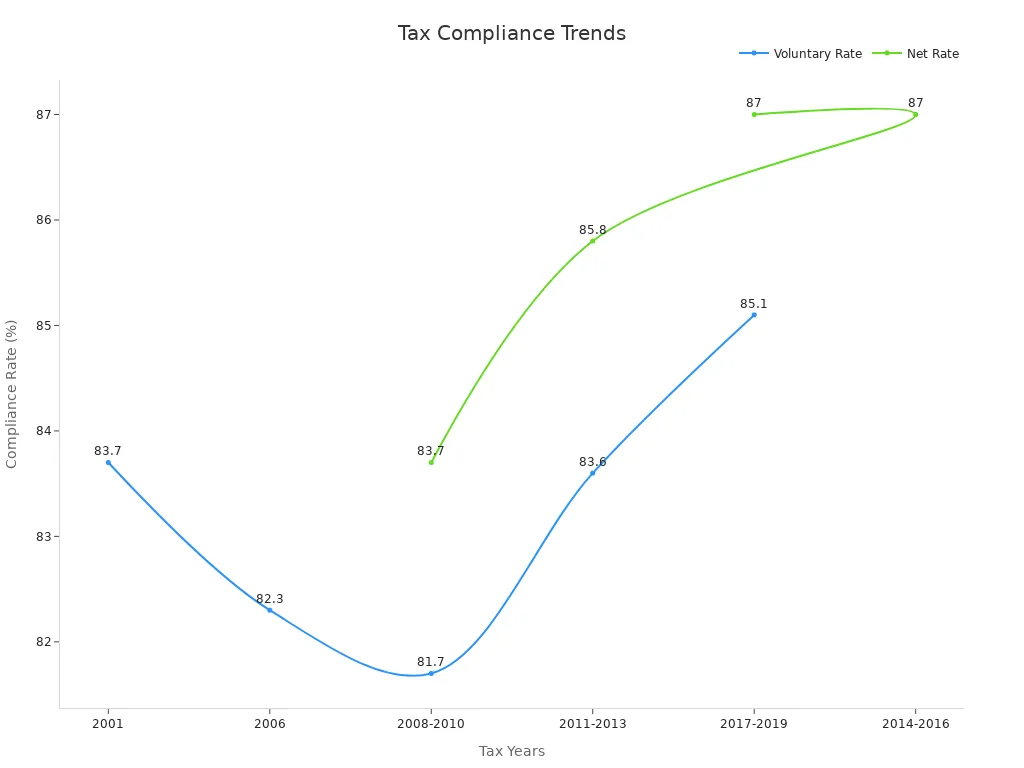
You can see that the reporting rule changes have not caused big shifts in compliance rates. Instead, they help the IRS collect better data and improve tax reporting for everyone.
Impact on Taxpayers and Brokers

Taxpayer Responsibilities
You need to follow the new IRS rules closely during the relief period. Keep detailed records of every crypto trading transaction. Track the date, amount, and cost basis for each sale. You must also match your records with the information on Form 1099-DA. If you use a tax preparer, remember that the IRS does not accept reliance on a preparer as a reason for late filing. In past cases, courts have upheld penalties even when taxpayers trusted their preparers. You are responsible for filing on time and following all rules, no matter who helps you.
Tip: Start organizing your records now. Good record-keeping helps you avoid mistakes and reduces your crypto tax burdens.
Broker Requirements
Brokers and exchanges must follow strict IRS rules for reporting. They need to send you Form 1099-DA with details about your digital asset sales. Brokers must also update their systems to support different cost-basis methods. This means they have to track which coins you sell and when you sell them. The IRS expects brokers to provide accurate information to both you and the agency. If brokers do not follow the rules, you may face problems with your tax return.
Brokers must:
Report gross proceeds from crypto trading.
Support your chosen cost-basis method.
Send Form 1099-DA to you and the IRS.
Technology Challenges
Brokers and the IRS face technology challenges as they update their systems. Delays can happen when new rules require big changes. In the past, IRS enforcement slowed down when resources were tight or when outside events, like the pandemic, caused delays. The IRS uses computer programs and third-party data to check for noncompliance, but fewer staff can mean less follow-up. Automated systems sometimes overstate tax bills, and fewer staff make it harder to fix these errors. You may see delays in getting forms or help from brokers as they adjust to the new rules.
Note: Stay alert for updates from your broker. Technology upgrades may take time, but you still need to follow the rules and keep your records up to date.
Compliance Tips
Documentation
You need to keep thorough records for every crypto transaction. Good documentation helps you follow IRS rules and makes tax time easier. Store wallet histories, exchange reports, receipts, and smart contract logs in one place. Automated tools can track your blockchain activity in real time and help you organize your cost-basis for each trade. Control dashboards and audit trails show who performed each action and when. This level of detail supports your compliance and gives you proof if the IRS asks questions.
Keep all crypto-related documents, including communications and receipts.
Use crypto tax software to import transactions and calculate gains or losses.
Create centralized reports so you are always audit-ready.
IRS court cases show that missing or weak documentation can lead to problems. Courts want to see detailed, time-stamped records that match your activities. If you document your cost-basis and control activities well, you can avoid penalties and prove you followed the rules.
Consistency
You should use the same cost-basis method for all your crypto trades during the year. Consistent use of FIFO, specific identification, or average cost makes your tax reporting clear and simple. When you stick to one method, you reduce mistakes and make it easier to match your records with Form 1099-DA. Brokerages and the IRS rely on these methods to check your gains and losses.
Consistent cost-basis tracking also helps you avoid audit triggers. If you switch methods without a clear reason, the IRS may question your returns. Accurate tracking of cost-basis, including fees and reinvested amounts, keeps your reporting correct and helps you follow the rules.
Using the same cost-basis method every year gives you a repeatable process and helps you avoid confusion.
Preparing for 2026
You should start preparing now for the end of the relief period. In 2026, stricter rules will apply, and you may need to tell brokers which lots you are selling in real time. Early preparation helps you avoid last-minute stress and mistakes.
Use automation tools to track your cost-basis and update your records.
Stay informed about new IRS rules and reporting changes.
Ask for help from tax professionals if you have questions.
Firms that prepare early for new rules face fewer disruptions. Senior leaders who model good compliance habits help everyone stay on track. By keeping your cost-basis records up to date and following the rules, you can handle stricter requirements with confidence.
You now understand the IRS crypto FIFO relief and how it shapes your 2025 crypto tax reporting. Staying organized will help you avoid mistakes and keep your filings accurate.
Professional tax advisors research new laws, represent you during audits, and help you plan for tax savings.
Reliable tax software and up-to-date knowledge reduce filing errors and missed deductions.
Keep learning about IRS updates as the relief period ends. Staying informed and organized gives you confidence for future tax seasons.
FAQ
What is the IRS crypto FIFO relief for 2025?
You can use your favorite cost-basis method for crypto trades on centralized exchanges in 2025. The IRS will not force you to use FIFO for that year. This relief gives you more time to adjust to new rules.
Do you still need to report your crypto trades in 2025?
Yes, you must report all your crypto trades. The IRS requires you to keep records and file your taxes correctly. You will receive Form 1099-DA from your broker to help you report your sales.
Which cost-basis methods can you use during the relief period?
You can use FIFO, specific identification, or average cost. You must keep clear records for each method. If you do not choose, the IRS will use FIFO as the default.
How should you keep records for your crypto transactions?
Keep a list of every trade. Write down the date, amount, price, and wallet used. Use crypto tax software or a spreadsheet to organize your records. Good records help you avoid mistakes and answer IRS questions.

