
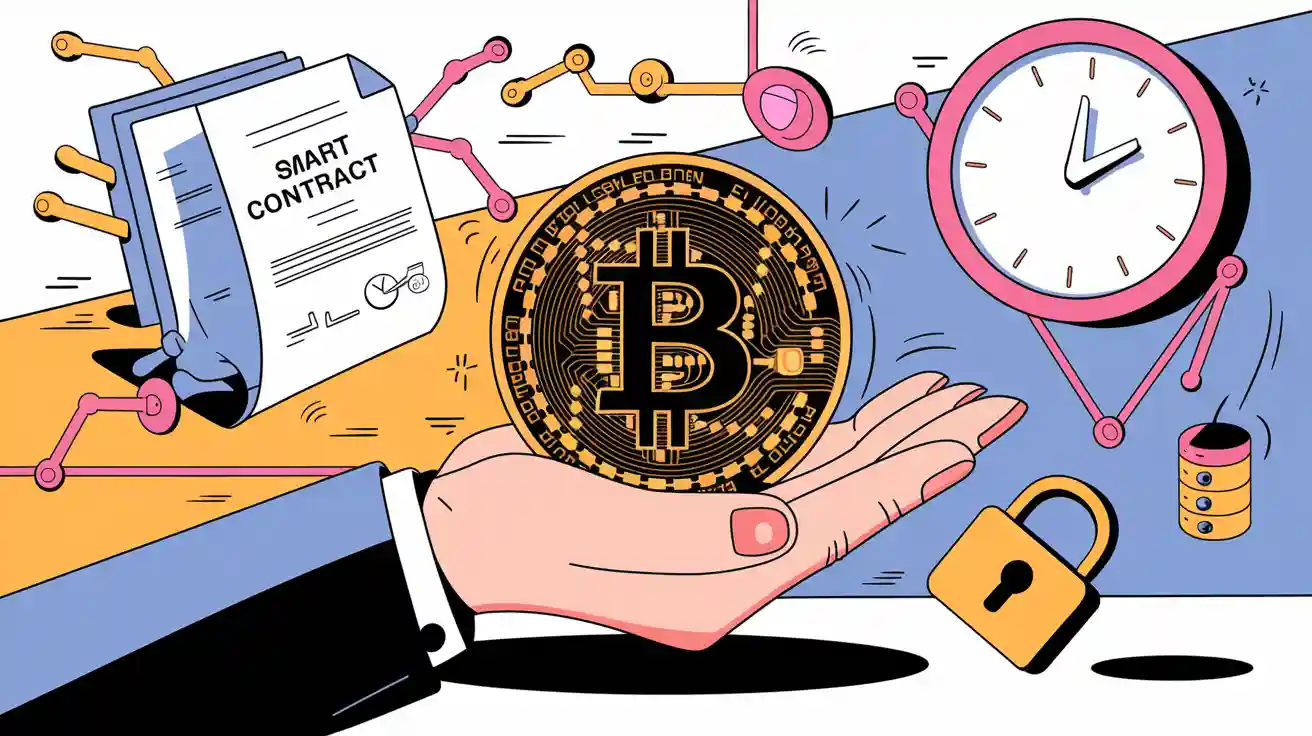
A bitcoin contract address does not directly impact transaction time, but several factors do. A bitcoin contract address acts as a special type of destination for smart contracts or scripts within the bitcoin network. Transaction time matters because users often expect bitcoin transactions to complete quickly and securely. Network congestion, block size limits, and transaction fees all influence how long a transaction takes. For example, block size limits allow about 2,000 to 3,000 transactions every 10 minutes, but actual confirmation time can range from minutes to hours. Users should understand these variables to manage bitcoin transactions efficiently.
Key Takeaways
Bitcoin contract addresses store automated rules and funds, enabling secure and transparent smart contracts.
Transaction speed depends mainly on network congestion, block size limits, and the fees users pay, not on the contract address itself.
Higher transaction fees help miners prioritize your transaction, leading to faster confirmations.
Layer 2 solutions like the Lightning Network offer near-instant bitcoin transactions with lower fees.
Users should monitor network conditions, choose the right fees, and use advanced tools to speed up and secure their bitcoin transactions.
Bitcoin Contract Address Basics
What Is a Bitcoin Contract Address
A bitcoin contract address serves as a unique location on the blockchain where smart contract code lives. This address allows users to interact with automated agreements, known as smart contracts, without needing a third party. The contract address links to the public key location on the blockchain, making the contract code secure and unchangeable.
Bitcoin smart contracts store digital agreements across all nodes on the blockchain.
The contract address acts as the permanent, on-chain location for the contract’s logic.
These contracts execute rules automatically when someone interacts with the address.
They support features like multi-signature accounts and automatic data exchange.
Once deployed, the contract code at this address cannot be changed, which ensures transparency and trust.
A bitcoin contract address works much like a vending machine. When someone sends a transaction to the address, the contract’s logic runs automatically, following the rules set in the code.
Contract vs. Regular Addresses
A regular bitcoin address receives and sends bitcoin between users. It acts like a digital mailbox for funds. In contrast, a bitcoin contract address holds the logic for automated agreements.
Regular addresses store only funds.
Contract addresses store both funds and contract logic.
Regular addresses allow simple transactions.
Contract addresses enable complex actions, such as multi-party agreements or automatic payments.
Most computation for smart contracts happens off-chain, but the contract address keeps the rules and state on the blockchain.
Note: A bitcoin contract address provides a secure, tamper-proof way to automate transactions and agreements, while a regular address only manages basic transfers.
Transaction Time Factors
Block Size and Network Congestion
Bitcoin transactions move through the network in groups called blocks. Each block has a fixed size limit of 1MB. This limit means only a certain number of bitcoin transactions can fit into each block. When many users send bitcoin at the same time, the network becomes congested. The mempool, which holds unconfirmed transactions, fills up quickly. As a result, some transactions must wait longer before miners can include them in a block.
Miners choose which transactions to confirm based on the fees attached. They prefer transactions that offer higher fees per byte because these increase their earnings. Larger transactions take up more space in a block, so they often require higher fees to get processed quickly. During periods of high demand, users compete by raising their fees, which leads to longer wait times and higher costs.
In 2017, heavy congestion caused average fees to spike to about $50, showing how block size limits and network traffic can slow down transaction processing times.
Transaction Type | Size (bytes) | Fee Rate (Satoshis/byte) | Total Fee (Satoshis) | Typical Fee Range (USD) |
|---|---|---|---|---|
Single Input, Single Output | 250 | 50 | 12,500 | $0.50 – $1.00 |
Multiple Inputs, Multiple Outputs | 600 | 50 | 30,000 | $2.50 and up |
Larger bitcoin transactions use more block space, which increases both the fee and the time needed for confirmations. When the network faces congestion, the average transaction time rises sharply. Users may wait from several minutes to several hours for their transactions to complete.
Transaction Fees and Incentives
Transaction fees play a key role in how quickly bitcoin transactions receive confirmations. Miners prioritize transactions with higher fees because these increase their rewards. When users attach higher fees, their transactions usually move to the front of the line. This system creates a direct link between fees and transaction processing times.
A study of bitcoin transactions shows that high-fee transactions confirm much faster than low-fee ones. For example, transactions with higher fees had a mean confirmation time of about 874 seconds, while those with lower fees took over 3,700 seconds on average. The median confirmation time for high-fee transactions was 502 seconds, compared to 640 seconds for low-fee transactions. Even when the network is busy, paying a higher fee can speed up the process.
Statistic | High-Fee Transactions | Low-Fee Transactions |
|---|---|---|
Mean Confirmation Time | 874.13 seconds | 3744.1 seconds |
Variance of Confirmation Time | 8.45 × 10^7 | 1.58 × 10^9 |
Median Confirmation Time | 502 seconds | 640 seconds |
Tip: Users can estimate the right fee for their desired speed by checking current network conditions and using online fee calculators.
Address Length and Data Size
The size of a bitcoin transaction depends on several factors, including the number of inputs and outputs, and the type of address used. Contract addresses, which support more complex logic, can sometimes make transactions larger. Longer addresses or those with extra data increase the total size of the transaction. This extra data means the transaction takes up more space in a block.
When a transaction grows in size, it may require a higher fee to maintain the same speed. Miners still look for the best fee per byte, so larger transactions need to pay more to avoid delays. If users do not adjust their fees, their transactions may wait longer in the mempool, especially during busy periods.
Bitcoin transactions that use contract addresses may see slightly longer transaction processing times if the added data pushes the transaction size higher. However, the impact remains small compared to the effects of block size, congestion, and fee levels. The average transaction time for most bitcoin transactions still depends more on network conditions and fees than on address length.
Note: Keeping transaction size small and choosing the right fee can help users achieve faster confirmations, even when using contract addresses.
Bitcoin Transactions and Processing
How Transactions Are Confirmed
Bitcoin transactions follow a clear process for confirmations. When a user sends bitcoin, the network broadcasts the transaction to all nodes. Miners then collect these bitcoin transactions and group them into blocks. Each block joins the blockchain after a miner solves a complex puzzle. This process secures the network and prevents fraud.
The time for confirmations depends on several factors. On average, bitcoin transactions receive their first confirmation in about 10 minutes. Most users wait for six confirmations, which usually takes about 60 minutes. The table below shows how many blocks most bitcoin transactions wait for confirmation:
Percentile | Blocks Confirmed Behind | Explanation |
|---|---|---|
50th | 2 | Half of transactions are confirmed within 2 blocks |
90th | 5 | 90% of transactions are confirmed within 5 blocks |
99th | 7 | 99% of transactions are confirmed within 7 blocks |
Note: The Lightning Network can reduce confirmation time to under one minute and boost speed to about 10,000 transactions per second.
Transaction processing times can vary. Network congestion, block size, and transaction fees all affect how quickly bitcoin transactions get confirmations. The average throughput for bitcoin remains about 7 transactions per second, which limits speed during busy periods.
Role of Contract Addresses in Processing
A bitcoin contract address plays a unique role in transaction processing times. When users interact with a bitcoin contract address, the network must process both the transfer of funds and the contract’s logic. This extra step can slightly increase the time needed for confirmations, especially if the contract adds data to the transaction.
However, most bitcoin transactions still depend on network speed, block size, and fees. Empirical analysis from 2014 to 2022 shows that more active users and higher transaction volume improve market efficiency. Transaction fees also help speed up confirmations by giving miners an incentive to process transactions faster.
Increased investor attention and active users improve efficiency.
Higher transaction fees and volume boost market efficiency.
Institutional activity, such as large transfers, also helps.
Bitcoin contract addresses do not slow down transaction processing times significantly. The main factors remain network congestion and fee levels. Users can improve speed by choosing the right fee and monitoring network conditions.
Improving Transaction Time
Layer 2 Solutions
Layer 2 solutions help bitcoin users achieve faster speed and lower costs. These technologies process bitcoin transactions off the main blockchain, then settle them later. The lightning network stands out as the most popular Layer 2 solution. It allows users to send and receive bitcoin almost instantly, with confirmations happening in seconds rather than minutes. The lightning network prevents network bottlenecks and keeps transaction processing times low, even when many people use bitcoin at once.
Other Layer 2 solutions, such as Mintlayer and Drivechain, also improve speed. Mintlayer batches transactions and connects with the lightning network to boost throughput. Drivechain uses sidechains to process bitcoin transactions flexibly and securely. SegWit and Taproot upgrades make these solutions possible by increasing block efficiency and reducing data size. The lightning network, combined with these upgrades, gives users a way to move bitcoin quickly and with fewer fees.
Note: Layer 2 solutions like the lightning network can handle thousands of bitcoin transactions per second, making confirmations much faster than on the main blockchain.
User Tips for Faster Transactions
Users can take several steps to increase the speed of their bitcoin transactions. The lightning network offers the fastest option for most people. By opening a channel on the lightning network, users can send bitcoin with almost no wait time. This method also reduces fees and keeps confirmations nearly instant.
For those using the main bitcoin blockchain, choosing the right fee matters. Higher fees move transactions to the front of the line, especially during busy times. Checking current network conditions helps users pick the best fee for their needs. Some users turn to sidechains like RSK or the Liquid Network. These platforms convert bitcoin into tokens that settle faster and cost less. RSK, for example, achieves block confirmations in about 33 seconds, much quicker than the base layer.
Open a channel on the lightning network for instant speed.
Use fee calculators to select the right fee for fast confirmations.
Try sidechains for lower fees and faster settlement.
Monitor network congestion to avoid delays.
Empirical research shows that bitcoin adapts to new technologies and market changes. Upgrades like the Ordinals protocol and BRC-20 swap help the network recover from congestion and keep transaction processing times efficient. As more users adopt the lightning network and similar solutions, bitcoin transactions become faster and more reliable.
User Implications for Bitcoin Transactions
When to Use Contract Addresses
Users should consider contract addresses when they need more than simple transfers. Contract addresses support advanced features like multi-signature wallets, escrow services, and automated payments. These features help users manage complex agreements without relying on third parties. For example, a business can use a contract address to set up automatic payroll or escrow for secure transactions.
A table below shows how user choices in bitcoin transactions affect network performance:
Feature Category | Feature Examples | Explanation |
|---|---|---|
Basic Statistics | Transaction frequency | High frequency increases network activity and affects processing time. |
Extra Statistics | USD received | Large amounts signal economic activity and influence transaction behavior. |
Transaction Patterns | Output behavior | Patterns reveal how users interact with contract addresses and regular ones. |
Temporal Features | Lifetime, age of transactions | Older transactions may process differently than new ones. |
Contract addresses work best for users who need automation or security beyond standard transfers. The lightning network can also interact with contract addresses, making advanced bitcoin transactions faster and more efficient.
Practical Advice
Users can improve their experience with bitcoin by following a few key strategies. First, they should choose the right type of address for their needs. Regular addresses work well for simple payments. Contract addresses fit situations that require automation or multiple signers.
Monitor network congestion before sending bitcoin transactions. High congestion increases wait time.
Use the lightning network for instant payments. This network processes bitcoin transactions quickly and reduces fees.
Select appropriate transaction fees. Higher fees move transactions to the front of the queue.
Batch transactions when possible. Grouping several payments into one transaction saves time and reduces costs.
Track the age and frequency of transactions. Analytical models show that transaction timing and volume affect network performance and costs.
Algorithmic trading strategies use data from bitcoin prices and social media to decide when to buy or sell. These strategies consider transaction fees, risk levels, and trading frequency. By balancing these factors, users can maximize profit and control risk. Graph analysis also helps detect suspicious patterns in bitcoin transactions, improving security for all users.
Tip: The lightning network supports thousands of bitcoin transactions per second, making it ideal for users who need speed and reliability.
Bitcoin contract addresses play a unique role in the network, but transaction time depends on several factors. Researchers use transaction graph analysis, weekly volume patterns, and statistical measures to understand bitcoin behavior. Key findings show that bitcoin transaction times change with network events, software upgrades, and user activity. Users should monitor network congestion, select the right fee, and consider Layer 2 solutions for faster bitcoin transactions. Bitcoin remains dynamic, with contract addresses supporting advanced features. For efficient bitcoin use, stay informed and adapt to network changes.
Transaction graph evolution reveals how bitcoin adapts to supply, demand, and price shifts.
Weekly patterns and outlier volumes highlight economic behavior in bitcoin trading.
Statistical analysis of contract metrics shows that bitcoin contract activity varies over time.
Stay proactive and use the latest tools to optimize your bitcoin experience.
FAQ
What is the main difference between a bitcoin contract address and a regular address?
A bitcoin contract address stores both funds and contract logic. A regular address only stores funds. Contract addresses allow users to automate actions, while regular addresses handle simple transfers.
Do contract addresses make bitcoin transactions slower?
Contract addresses may add a small amount of data to a transaction. Most delays come from network congestion and fees, not the address type. Users usually see little difference in speed.
How can users speed up their bitcoin transactions?
Users can increase transaction speed by choosing higher fees, using the Lightning Network, or sending transactions during low network activity. Fee calculators help select the best fee for faster confirmation.
Are bitcoin contract addresses safe to use?
Bitcoin contract addresses use blockchain security. They remain tamper-proof and transparent. Users should always verify the contract code before sending funds to avoid scams or errors.
Can users send regular bitcoin payments to a contract address?
Yes, users can send regular payments to a contract address if the contract supports it. Some contracts require specific instructions. Always check the contract details before sending funds.

