
When you compare robinhood vs coinbase, you notice key differences that shape your experience as a modern crypto investor. Robinhood attracts retail users with a beginner-friendly platform, commission-free crypto trading, and a fast-growing user base. Coinbase stands out for its wide range of over 240 cryptocurrencies, strong security, and focus on institutional partnerships. If you want to buy and sell cryptocurrencies with low fees and simple tools, robinhood may suit your needs. For broader cryptocurrency trading and advanced investment options, coinbase offers more choices. This review helps you decide which platform fits your goals.
Key Takeaways
Robinhood offers a simple, commission-free platform ideal for beginners and those who want to trade stocks and crypto in one app.
Coinbase supports a wide range of cryptocurrencies and advanced features like staking, making it better for experienced crypto investors.
Robinhood has lower visible fees but hides some costs in spreads; Coinbase has higher, more transparent fees that decrease with trading volume.
Both platforms provide strong security, but Coinbase offers extra protections like security keys and cold storage for most assets.
Choose Robinhood for ease of use and multi-asset trading; pick Coinbase for more crypto options, advanced tools, and global access.
Quick Verdict
Summary
Choosing between robinhood vs coinbase depends on your investing style and goals. If you are new to crypto or want a simple way to start, robinhood offers a user-friendly interface and commission-free trading. You can buy fractional shares and access educational resources without worrying about account minimums. This makes robinhood a strong choice for beginners.
If you want more advanced trading options, a wider selection of cryptocurrencies, and features like staking or crypto rewards, coinbase stands out. You get access to over 130 coins, advanced trading tools, and the ability to earn rewards through staking and educational programs. Coinbase also supports global users and provides a secure wallet with an encrypted recovery phrase.
Stock traders who want to combine equities and crypto in one place may find robinhood convenient, but it lacks advanced research tools and does not support complex trades. Advanced crypto investors will likely prefer coinbase for its robust platform features and deeper asset selection.
Tip: When testing coinbase vs robinhood, focus on your priorities—fees, supported coins, and platform features. Each platform serves a different type of investor, so match your needs to their strengths.
Comparison Table
Below you will find a side-by-side review of robinhood vs coinbase, highlighting the most important metrics for modern crypto investors:
Metric | Coinbase | Robinhood |
|---|---|---|
Supported Coins | Over 130 cryptocurrencies, including Bitcoin, Ethereum, Cardano, Dogecoin, Litecoin, and stablecoins like USDC | 11 cryptocurrencies, including Bitcoin, Ethereum, Dogecoin, Solana, and Bitcoin SV |
Fees | Trading fees start around 0.50% plus $0.99-$2.99 per trade; lower fees on Coinbase Pro; extra fees for credit/debit card purchases (3.99%) and crypto conversion (1%) | Commission-free trading, but profits come from payment for order flow; fee structures are less transparent and not explicitly disclosed |
Platform Features | Advanced trading options, staking (up to 5% APY), crypto rewards card (up to 4% back), Coinbase Earn educational rewards, wallet access with encrypted recovery phrase | Basic trading features, no crypto rewards, cannot withdraw crypto holdings, supports limit orders and ETFs, no wallet access |
User Experience | User-friendly interface for beginners and intermediate traders, educational resources, available in over 100 countries | Easy-to-use interface for beginners, available in 47 U.S. states, 24/7 phone support, slightly better customer service than Coinbase |
Security | FDIC insured USD balances, crime insurance, two-factor authentication, cold wallet storage | FDIC insured USD balances, SIPC coverage up to $500,000, excess SIPC coverage, two-factor authentication, cold wallet storage |
Availability | Over 100 countries globally, nearly all U.S. states except Hawaii | 47 U.S. states except Hawaii and Nevada |
Which Platform Fits You Best?
Beginners:
Robinhood is highly recommended. You get a simple interface, commission-free trading, and helpful educational tools. No account minimums make it easy to start.Advanced Users:
Coinbase is the better choice. You can access advanced trading features, a wide range of coins, and earning opportunities like staking. Robinhood offers some premium options, but still falls short for serious crypto traders.Stock Traders:
Robinhood lets you trade stocks and crypto in one place. However, it lacks advanced research tools and does not support complex or high-volume trades. If you need more than basic trading, coinbase may be a better fit for crypto-only strategies.
Note: When comparing robinhood vs. coinbase, always consider your trading needs, the fee structures, and the platform features that matter most to you. This review aims to help you make an informed decision.
Platform Overview
Robinhood
When you use Robinhood, you get a platform designed for simplicity and speed. Robinhood started as the first commission-free trading app, which helped it build strong brand loyalty among young investors. You can trade stocks, ETFs, options, and cryptocurrencies all in one place. The app supports over 20 cryptocurrencies, including popular coins like Bitcoin and Ethereum. Robinhood appeals to you if you want a streamlined experience and easy access to both traditional and crypto assets.
You benefit from features like fractional shares, instant deposits, and a highly rated mobile app. Robinhood’s business model relies mainly on payment for order flow, premium subscriptions, and interest on cash balances. This keeps trading costs low for you, especially if you make small trades. However, you may notice some weaknesses. Robinhood has faced outages during market surges and has received heavy regulatory fines. The platform also limits resources for advanced investors and restricts crypto withdrawals, which can affect your control over your assets.
Strengths | Weaknesses |
|---|---|
Outages during high volume | |
Diverse assets (stocks, ETFs, crypto) | Regulatory fines and lawsuits |
User-friendly mobile app | Limited advanced tools |
Appeals to millennials | Restricted crypto withdrawals |
If you want a simple way to start investing in both stocks and cryptocurrencies, Robinhood gives you a convenient option. Still, you should consider its limits if you plan to grow as a crypto investor.
Coinbase
Coinbase operates as a full-service digital asset exchange focused only on cryptocurrency. You can access over 260 cryptocurrencies, including major coins, altcoins, DeFi tokens, and NFTs. Coinbase stands out for its advanced crypto features, such as staking, NFT marketplace access, and DeFi integration. You get institutional-grade trading tools and strong security, with more than 98% of assets stored offline.
When you use Coinbase, you can transfer your crypto to external wallets, giving you true ownership and access to the broader crypto ecosystem. The platform offers both a beginner-friendly interface and advanced tools for professionals. Coinbase charges higher fees on its standard exchange, but you can get lower fees on Coinbase Advanced if you trade often. The exchange supports users in over 100 countries, making it a global choice for crypto investors.
Aspect | Coinbase | Robinhood |
|---|---|---|
Asset Support | 20+ cryptocurrencies | |
Advanced Features | Staking, DeFi, NFT marketplace | None |
Security | 98%+ cold storage, insurance | Partial cold storage |
Wallet Transfers | Full external transfers | Limited withdrawals |
If you want a dedicated cryptocurrency exchange with a wide selection and advanced features, Coinbase offers you more flexibility and control than Robinhood. This makes it a top choice for serious crypto investors.
robinhood vs coinbase: Fees
Trading Costs
When you compare trading costs, you see clear differences between robinhood and coinbase. Robinhood promotes commission-free trading, which means you pay no fees on crypto trades up front. However, you may encounter other costs, such as Smart Exchange Routing fees (about 0.85% plus a 0.02% partner fee) and up to 1.5% for Robinhood Connect transfers. Coinbase uses a tiered maker-taker fee structure. Your trading fees on coinbase decrease as your 30-day trading volume increases. Maker fees start at 0.40% and can drop to 0%, while taker fees range from 0.60% down to 0.05%. Funding methods also affect your costs. ACH transfers are free on both platforms, but wire transfers cost $10 to deposit and $25 to withdraw on coinbase.
Here is a quick comparison of trading fees:
Platform | Trading Fee Structure | Other Fees |
|---|---|---|
Robinhood | No fees on crypto trades; Smart Exchange Routing (0.85% + 0.02% partner fee) | Up to 1.5% for Connect transfers |
Coinbase | Tiered maker (0.40%-0%) and taker (0.60%-0.05%) fees; flat fees for small trades | $10 wire deposit, $25 wire withdrawal |
Tip: If you want simple, commission-free trading, robinhood offers a straightforward experience. Coinbase gives you more control over trading volume and advanced order types, but you pay higher fees unless you trade large amounts.
Hidden Fees
You should always look beyond the visible fee structures. Many users report that coinbase has high and non-transparent fees, especially on trades and withdrawals. Fee-related complaints make up nearly half of all one-star reviews for coinbase. Users often feel frustrated by unclear fee communication and sometimes describe the pricing as misleading. In contrast, robinhood receives praise for clearer and generally lower fees, even though it uses hidden spread markups in the trade price.
Coinbase often charges a flat fee plus a 0.5% markup, which can add up quickly.
Robinhood hides its trading fee in the spread, but users usually pay less overall.
Wire and debit card withdrawals cost more on coinbase than on robinhood.
Many users track their fees manually on coinbase due to lack of transparency.
Some users move to robinhood for its simpler and cheaper fee structure.
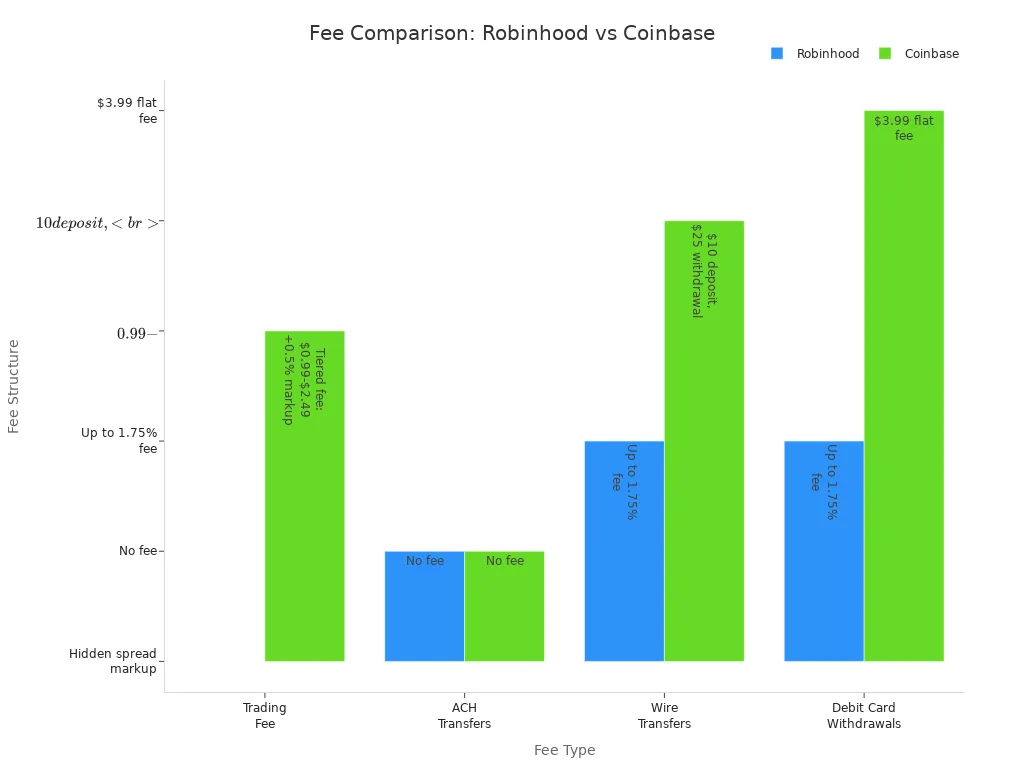
A real-world test showed that on a $500 Bitcoin trade, robinhood’s hidden spread resulted in $23.13 more on a roundtrip trade compared to coinbase, which charged about $9.20 per trade leg. This demonstrates that robinhood’s fees are generally lower and less explicit, while coinbase’s higher, more explicit fees can impact your returns.
coinbase vs robinhood: Supported Coins
Crypto Selection
When you compare crypto selection on coinbase vs robinhood, you see a clear difference in the number of cryptocurrencies supported. Coinbase gives you access to thousands of digital assets. You can trade, store, and transfer a wide range of coins, including popular options like Bitcoin, Ethereum, and Cardano. This digital asset exchange also supports many altcoins and tokens, making it a top choice if you want variety.
Robinhood, on the other hand, keeps things simple. You can trade around seven to eighteen cryptocurrencies, depending on your location and account type. The platform focuses on the most well-known coins, such as Bitcoin, Ethereum, and Dogecoin. If you want to keep your portfolio basic and easy to manage, robinhood offers a straightforward experience. However, you may feel limited if you want to explore new or niche crypto projects.
Coinbase stands out for its user-friendly wallet and strong security. You get a non-custodial wallet with advanced features, while robinhood provides an online wallet that is easier to use but less secure. If you value customer support and security, coinbase delivers a better experience.
Tip: If you want to diversify your crypto holdings or try new cryptocurrencies, coinbase gives you more options than robinhood.
Access to New Tokens
You may want to invest in new tokens as soon as they launch. Coinbase often lists new cryptocurrencies quickly, giving you early access to trending projects. The exchange updates its offerings regularly, so you can stay ahead in the fast-moving crypto market.
Robinhood takes a slower approach. The platform adds new cryptocurrencies carefully and only after a strict review process. This means you might wait longer to access the latest tokens. If you prefer stability and fewer surprises, robinhood’s method may suit you. However, if you want to catch new opportunities, coinbase offers a clear advantage.
Here is a quick comparison:
Feature | Coinbase | Robinhood |
|---|---|---|
Number of cryptocurrencies supported | Thousands | 7–18 |
Speed of new token listings | Fast, frequent updates | Slow, selective |
Wallet type | Non-custodial, software-based | Online, custodial |
You should consider your goals as a crypto investor. If you want the widest selection and early access to new cryptocurrency projects, coinbase is the better digital asset exchange. If you prefer a simple platform with fewer choices, robinhood may fit your needs.
User Experience
Interface
You want a platform that feels easy to use from the start. Robinhood gives you a simple, intuitive interface. The design focuses on beginners, so you can find what you need quickly. You see clear menus, large buttons, and live market data. Many users say Robinhood is “very easy to navigate” and “user-friendly with no glitches.” The platform uses a streamlined look that appeals to both new and experienced traders. Educational resources and tutorials help you learn about cryptocurrency trading without confusion.
Coinbase also offers a clean and professional interface. You get a minimalist design that makes buying and selling cryptocurrency straightforward. If you use Coinbase Pro, you will notice more advanced tools and research features. These extra platform features can feel complex at first, especially if you are new to crypto. Coinbase targets users who want both simplicity and the option to access advanced trading tools.
Here is a quick comparison of user interface design and ease of use:
Aspect | Robinhood | Coinbase |
|---|---|---|
User Interface Design | Simple, intuitive, beginner-friendly; streamlined and minimalistic | Clean, minimalist, generally user-friendly; steeper learning curve with Coinbase Pro |
Ease of Use | Emphasizes ease of navigation, fast trading, accessibility for novices | Intuitive buying/selling; advanced tools in Pro version add complexity for beginners |
Advanced Features | Limited analysis tools; Robinhood Gold offers instant transfers and margin trading | Coinbase Pro offers detailed research tools and charts; no monthly fee but more complex upfront |
Criticisms | Gamification elements encouraging risky trading; flashy visuals and animations (now removed) | More professional appearance; suitable for experienced crypto traders |
Mobile App Ratings | 4.7 (Apple), 4.4 (Google Play) | |
Target User Focus | Simplicity and accessibility for beginners and experienced traders | Balance of user-friendliness with advanced features for experienced crypto traders |
If you want a platform that makes cryptocurrency trading easy, Robinhood stands out for its simplicity. Coinbase gives you more platform features, but you may need time to learn them.
Mobile App
You likely use your phone for most crypto activities. Both Robinhood and Coinbase offer mobile apps for iOS and Android. Robinhood’s app receives high marks for its clean look and fast performance. Users praise the app for being “quick and easy to navigate around.” The app is especially popular with first-time investors who want to start trading cryptocurrency with minimal effort.
Coinbase’s mobile app also scores well, especially on Apple devices. You get a stable experience with clear menus and easy access to your crypto portfolio. The app supports advanced platform features, such as price alerts and detailed charts. If you want to explore more cryptocurrencies or use advanced trading tools, Coinbase’s app gives you those options.
Mobile app ratings show some differences:
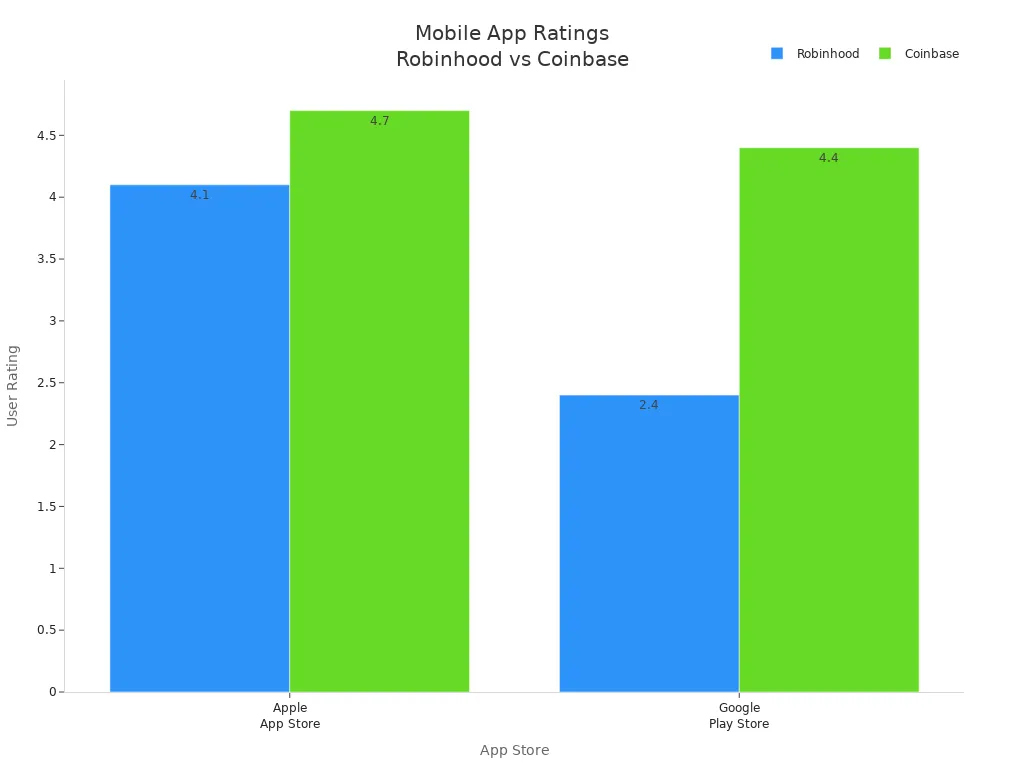
Robinhood’s iOS app rating remains above 4 stars, but Android users gave it many 1-star reviews after trading halts.
Coinbase’s app ratings stay high on both platforms, with stable positive feedback.
You will find that Robinhood’s app is best for simple crypto trading, while Coinbase’s app supports more advanced cryptocurrency features.
Tip: If you want a mobile app that is easy to use and focused on basic crypto trading, Robinhood is a strong choice. If you need more platform features and access to a wider range of cryptocurrencies, Coinbase’s app gives you more flexibility.
Security

Account Protection
You want strong security features when you trust a platform with your assets. Both Robinhood and Coinbase use several layers of protection to keep your account safe. You should never share your login details and always update your credentials. Enable passcodes, PINs, or biometric locks on your devices. These steps help prevent unauthorized access.
Both platforms offer two-factor authentication (2FA). Robinhood lets you set up 2FA, which adds a code from your phone when you log in from a new device. Coinbase auto-enrolls you in 2FA and supports security keys for even stronger protection. You can also use Coinbase Vault, which requires multiple approvals for withdrawals.
Here is a quick look at some key security features:
Security Measure | Description |
|---|---|
Public Company Transparency | You get quarterly financial statements and annual independent audits. |
Asset Custody | Your crypto assets are held 1:1, never lent out without your permission. |
Encryption and Security Technology | Both platforms use industry-leading encryption and regular security updates. |
Two-Factor Authentication (2FA) | Both platforms support 2FA; Coinbase offers auto-enrollment and security key support. |
Insurance | Cash balances are FDIC insured up to $250,000; stocks and ETFs up to $500,000 via SIPC; crypto insurance policy in place. |
Penetration Testing | Whitehat hackers test the systems to find and fix vulnerabilities. |
Sensitive Information Encryption | Your sensitive data, like SSNs and phone numbers, is encrypted and transmitted securely. |
You should always monitor your devices for unusual activity. If you see anything suspicious, contact customer support right away. These robust security measures help protect your funds and personal information.
Past Incidents
No platform is perfect. Robinhood and Coinbase have both faced security challenges in recent years. In November 2021, Robinhood experienced a data breach. A hacker used social engineering to trick a customer support employee. This attack exposed personal information for about 7 million users. Most affected users had only their email addresses or names revealed. Around 310 users had more sensitive data, such as birth dates and zip codes, exposed. No Social Security numbers or bank account details were stolen.
In October 2020, about 2,000 Robinhood accounts were hacked. Attackers gained access by compromising users’ personal email accounts, not through a direct platform vulnerability. Robinhood did not verify changes to linked bank accounts at that time, which allowed unauthorized fund transfers. After this, Robinhood advised you to enable two-factor authentication and improve your account security practices.
Coinbase has not faced major public breaches in recent years. The company continues to invest in crypto security and regularly updates its security features. You benefit from continuous penetration testing and a bug bounty program that rewards those who find vulnerabilities.
Always stay alert and use every security feature available. Your actions, combined with the platform’s security, give you the best protection for your assets.
Earning Opportunities
Staking
You can grow your cryptocurrency holdings through staking. Staking lets you earn rewards by locking up certain crypto assets to help secure the network. On coinbase, you find a straightforward staking process. You select supported coins, stake them, and receive rewards directly in your account. Popular options include Ethereum, Cardano, and Solana. The platform handles the technical details, so you do not need advanced knowledge. Staking rewards on coinbase can reach up to 5% APY, depending on the asset.
Robinhood also offers crypto staking, but the rewards come from the blockchain network, not from Robinhood itself. The platform supports a smaller selection of coins for staking. You may notice that Robinhood’s staking options feel more limited compared to coinbase. If you want to maximize your staking opportunities, coinbase gives you more choices and a smoother experience.
Tip: Staking can help you earn passive income, but always check the lock-up periods and risks before you commit your crypto.
Rewards
Both Robinhood and coinbase provide several reward programs for crypto investors. You can benefit from bonuses, referral rewards, and loyalty programs. The table below summarizes the main reward types:
Platform | Reward Type | Description |
|---|---|---|
Robinhood | Crypto Deposit Bonus | 2% bonus on eligible crypto deposits during promotions; paid in cash (US) or crypto (EU, 1-year lock). |
Robinhood | Gold Card Rewards | Earn rewards with the Robinhood Gold Visa® Credit Card; requires Gold subscription; redeem in crypto. |
Robinhood | New Account Bonus | Stock bonuses ($5, $10, or $200) for new sign-ups. |
Robinhood | Referral Bonus | Stock bonuses ($5+) for referring friends; capped at $1,500 per year. |
Coinbase | Sign-up Bonus | Free crypto ($3–$200) after your first trade. |
Coinbase | Earn & Learn Bonuses | Earn crypto by watching educational videos and completing quizzes. |
Coinbase | Referral Rewards | $10 in crypto for each friend who signs up and trades at least $100. |
You can take advantage of these programs to boost your cryptocurrency portfolio. On coinbase, you earn crypto by learning about new projects or inviting friends. Robinhood focuses on deposit bonuses and card rewards, which can add value if you use their Gold subscription.
Note: Always review the terms for each reward. Some bonuses require holding periods or specific actions, such as making a qualifying trade.
Customer Support
Channels
You need reliable customer support when trading crypto. Both Robinhood and Coinbase offer several ways to get help, but their approaches differ. You can see the main support channels and features in the table below:
Feature | Coinbase | Robinhood |
|---|---|---|
Phone Support | Direct phone number available | Callback request via app required |
Email Support | Available | Not explicitly mentioned |
Help Center | Yes | Yes |
Premium Support Option | Coinbase One ($29.99/month) for enhanced service | No premium option mentioned |
Availability | 24/7 customer support | 24/7 support for logged-in users |
Response Times | Criticized for slow and unhelpful responses |
Coinbase gives you a direct phone number and email support. You can also use their help center for common questions. If you want faster service, you can pay for Coinbase One, which offers premium support. Robinhood handles phone support differently. You must request a callback through the app. Robinhood does not mention email support, but you can use their help center for self-service. Both platforms promise 24/7 support, but only for users who are logged in.
If you value having multiple ways to reach support, Coinbase gives you more options. Robinhood keeps things simple but limits your choices.
Satisfaction
You want quick and helpful answers when you have a problem. Many users report slow response times on both platforms. Coinbase often receives criticism for delayed replies, even though it offers more support channels. Robinhood also faces complaints about slow and sometimes unhelpful responses. Some users say they wait days for a callback or do not get clear solutions.
Coinbase users like the help center and phone support, but many feel frustrated by long wait times.
Robinhood users appreciate the 24/7 promise, but some say the callback system does not always work well.
Aspect | Coinbase | Robinhood |
|---|---|---|
Support Channels | Phone (direct number), email, help center | Phone (callback via app), help center |
Support Availability | 24/7 | 24/7 for logged-in users |
Response Time Feedback | Criticized for delays | Criticized for slow and unhelpful responses |
Tip: For urgent issues, try the help center first. If you need personal help, prepare for possible delays on both platforms. Always keep records of your support requests for reference.
Additional Features
Stock Trading (Robinhood)
You get more than just crypto when you use robinhood. The platform stands out by offering commission-free stock trading, which coinbase does not support. You can buy and sell stocks, ETFs, and even options without paying extra fees. This makes robinhood a popular choice for investors who want to manage both stocks and crypto in one place.
Robinhood also gives you access to futures and cleared swaps trading through its registered futures commission merchant. If you want more advanced features, you can subscribe to Robinhood Gold. This premium service lets you use margin trading and unlocks extra research tools. You also get access to spending accounts, prepaid cash cards, and a credit card. These financial products help you manage your money and investments together.
Commission-free stock, ETF, and options trading
Futures and cleared swaps trading
Robinhood Gold for margin trading and premium research
Integrated spending accounts, prepaid cards, and credit card services
If you want a single app for both stock and crypto trading, robinhood gives you more flexibility than coinbase.
Advanced Tools (Coinbase)
Coinbase focuses on giving you powerful tools for cryptocurrency trading. You can access advanced charting, real-time order books, and detailed analytics. These features help you make better decisions when you trade digital assets. Coinbase Pro, now called Advanced Trade, offers lower fees and more order types, such as stop and limit orders.
You can also use staking, DeFi access, and NFT marketplace features. Coinbase lets you transfer your crypto to external wallets, giving you full control over your assets. The platform supports a wide range of cryptocurrencies, so you can diversify your portfolio easily. If you want to learn more, you can use Coinbase Earn to watch videos and complete quizzes for crypto rewards.
Advanced charting and analytics
Real-time order books and multiple order types
Staking, DeFi, and NFT marketplace access
External wallet transfers and strong asset control
Educational rewards through Coinbase Earn
Choose coinbase if you want a dedicated crypto platform with advanced trading tools and a wide selection of digital assets.
Trust & Reputation
Company Background
You want to trust the platform where you invest your money. Coinbase began with Brian Armstrong and Fred Ehrsam, who set out to build a secure and reliable crypto exchange. The company grew quickly by focusing on compliance, security, and global expansion. Coinbase now leads the industry by offering a wide range of products, including trading, derivatives, and blockchain infrastructure. The company invests in new technology and works closely with regulators. This approach helps Coinbase stay ahead in a changing market.
Robinhood started with Baiju Bhatt and Vlad Tenev. Their goal was to make investing easy and affordable for everyone. Robinhood changed the industry by removing trading commissions and creating a simple mobile app. The company grew fast, especially among young investors. Robinhood added new features like fractional shares and early crypto trading. Over time, Robinhood expanded its services to include retirement accounts and cash cards. The company still faces challenges but continues to focus on making finance accessible.
When you choose a platform, you should look at its history and how it responds to change. Both companies have shaped the way people invest today.
Controversies
You should know about the major controversies that affect your trust in a platform. Both Robinhood and Coinbase have faced regulatory challenges, but Robinhood has seen more public scrutiny.
Robinhood agreed to pay $45 million in penalties after the SEC found several compliance failures from 2019 to 2022. These included securities law violations, weak cybersecurity, and poor reporting.
The company delayed reporting suspicious activity, failed to follow anti-money laundering rules, and did not keep a strong identity theft prevention program.
Robinhood did not keep required records and electronic communications, breaking federal securities laws.
Problems with fractional share trading, stock lending, and inaccurate reporting hurt market oversight.
Robinhood admitted to these violations, paid civil penalties, and promised to improve its compliance systems.
Coinbase also faces regulatory pressure as a leading crypto exchange, but it has invested heavily in compliance and security. The company works with regulators to expand its services and maintain trust with users.
Always review a platform’s track record before you invest. A strong reputation and clear response to challenges can help you feel more secure.
Best for Investors
Beginners
You want a beginner-friendly platform that makes your first steps in crypto simple and safe. Robinhood gives you a clean interface and easy navigation. You can start trading with no account minimums and commission-free trades. The app helps you learn with educational resources and clear menus. You do not need to worry about complex features or hidden fees. Robinhood focuses on the most popular cryptocurrencies, so you can build your portfolio without feeling overwhelmed. If you want to combine stocks and crypto in one place, Robinhood is a strong choice for your first investment.
Coinbase also offers a beginner-friendly platform. You get access to educational modules that teach you about crypto and reward you with free coins. The interface is clean and guides you through each step. You can explore more cryptocurrencies if you want to expand your portfolio later. Coinbase helps you learn and grow as a new investor.
Tip: If you value simplicity and want to start with basic crypto trades, Robinhood is ideal. If you want to learn and earn rewards while exploring more coins, Coinbase is a good option.
Advanced Users
You need powerful tools and a wide selection of assets for your crypto strategy. Coinbase supports over 260 cryptocurrencies, including major coins and new tokens. You can stake your crypto and earn rewards. The platform offers advanced charting, real-time order books, and a crypto card for spending your assets. You can use educational modules to earn free crypto and deepen your knowledge. Coinbase is designed for experienced traders who want more control and features.
Robinhood gives you commission-free trading across stocks, ETFs, options, and crypto. You can use margin trading and IRA matching to boost your investment strategy. Robinhood plans to launch crypto futures, which may attract advanced traders. However, you do not get staking or interest rewards on your crypto holdings. If you want a multi-asset platform with simple features, Robinhood works well. If you want advanced crypto tools and a broad asset selection, Coinbase is better.
Feature/Tool | Coinbase | Robinhood |
|---|---|---|
Cryptocurrency Selection | Over 260 cryptocurrencies supported | Limited selection compared to Coinbase |
Advanced Crypto Features | Staking, crypto-to-crypto trading, educational modules, crypto card | Lacks staking and interest rewards; plans to launch crypto futures |
Trading Assets | Cryptocurrencies only | Multi-asset: stocks, ETFs, options, cryptocurrencies |
Fees | Higher fees, complex fee structure | Commission-free trading, but higher spreads |
User Interface | Clean interface with advanced tools for experienced traders | Simple, user-friendly interface aimed at beginners |
Additional Crypto Products | Staking rewards, USDC interest, crypto card | No advanced crypto products currently |
Margin Trading & IRA Matching | N/A | Available |
Stock & Crypto Traders
You want to manage both stocks and crypto in one place. Robinhood lets you trade stocks, ETFs, options, and cryptocurrencies with no commissions. You can buy fractional shares and use margin trading for your investment. The platform is easy to use and helps you keep track of all your assets. Robinhood is perfect if you want a single app for your entire portfolio.
Coinbase focuses only on crypto. You get access to many coins and advanced trading features, but you cannot trade stocks or ETFs. If your main goal is crypto investment, Coinbase gives you more choices and tools. If you want to combine stocks and crypto, Robinhood is the better fit.
Note: Choose Robinhood if you want a multi-asset, beginner-friendly platform. Pick Coinbase if you want advanced crypto features and a wide selection of coins.
You should choose robinhood if you want to manage stocks and crypto together with low fees and a simple interface. coinbase fits you best when you seek a wide range of cryptocurrencies, advanced features, and strong security. Review your priorities—fees, supported coins, and security—before deciding. The table below highlights key differences:
Investor Type | Best Platform | Why |
|---|---|---|
Stock & Crypto Trader | robinhood | Integrated assets, low fees |
Advanced Crypto User | coinbase | More coins, staking, robust security |
Beginner | robinhood | Easy to use, clear interface |
Tip: Future updates like prediction markets on robinhood and blockchain expansion on coinbase may influence your choice.
FAQ
Can you withdraw crypto from Robinhood?
You can withdraw some cryptocurrencies from Robinhood, but not all. The platform limits withdrawals for certain coins. Always check the supported assets list before you try to transfer your crypto to an external wallet.
Does Coinbase offer better security than Robinhood?
You get strong security on both platforms. Coinbase uses more advanced features, such as security keys and cold storage. Robinhood also protects your account with two-factor authentication and insurance for cash balances.
Which platform has lower fees for small trades?
Robinhood usually offers lower fees for small trades because it uses commission-free pricing. Coinbase charges higher fees, especially for small transactions. Always review the fee schedule before you trade.
Can you trade stocks on Coinbase?
You cannot trade stocks on Coinbase. The platform focuses only on cryptocurrencies and digital assets. If you want to trade both stocks and crypto, Robinhood gives you that option in one app.
Is staking available on both platforms?
You can stake select cryptocurrencies on both platforms. Coinbase supports more coins and offers a smoother staking process. Robinhood provides fewer staking options and limits your choices.

