

Montana bitcoin reserve bill rejected in a 41-59 House vote, signaling deep skepticism about using public funds for crypto investments. Lawmakers voiced strong concerns over volatility and the speculative nature of cryptocurrency. Representative Steven Kelly emphasized that protecting taxpayer money remains a top priority, while bipartisan opposition highlighted the lack of risk management frameworks. This cautious approach stands in contrast to more than half of U.S. states, which have debated or advanced similar measures in recent years.
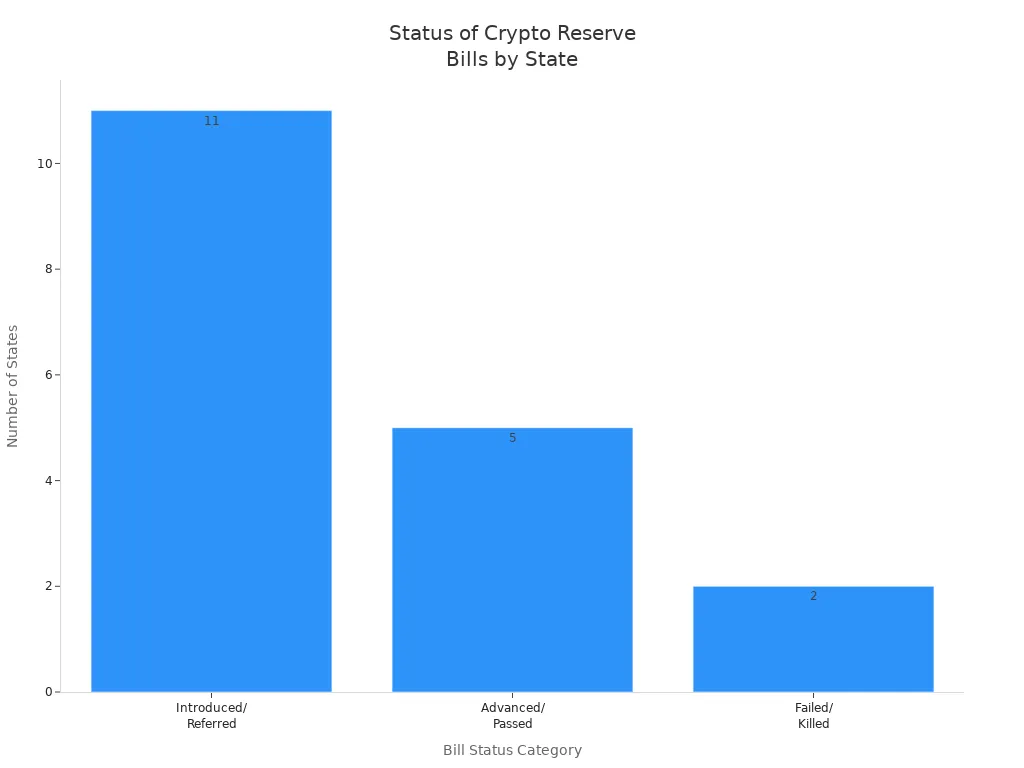
Montana’s decision reflects a larger trend of hesitation among states considering crypto for public finance innovation.
Key Takeaways
Montana rejected a bill to invest public funds in bitcoin due to concerns about high risk and protecting taxpayer money.
Lawmakers worried about bitcoin’s price swings, security risks, and lack of strong oversight for public investments.
Many states remain divided on allowing crypto investments, with some passing limited bills and others rejecting them.
Clear rules, strong risk management, and regulatory cooperation are essential for safely exploring public crypto investments.
Future proposals should focus on transparency, flexibility, and including less volatile digital assets to gain wider support.
Montana Bitcoin Reserve Bill Rejected
Bill Overview and Intent
The Montana bitcoin reserve bill rejected by lawmakers, officially known as House Bill No. 429, aimed to reshape how the state manages its investments. The bill, also called the Inflation Protection Act, proposed creating a special revenue account for the state’s Board of Investments. This account would allow Montana to invest in both precious metals and digital assets, focusing on bitcoin. The bill set a $50 million cap for transfers from the general fund and required that only digital assets with a market capitalization above $750 billion, such as bitcoin, would qualify. Lawmakers intended to use bitcoin reserves to protect against inflation and boost returns for public funds. However, the bill lacked bipartisan support and faced skepticism about its approach to cryptocurrency legislation.
Legislative Vote and Outcome
House Bill No. 429 faced a decisive vote in the Montana House. Lawmakers voted 41 in favor and 59 against, resulting in the montana bitcoin reserve bill rejected outcome. The vote reflected a complex partisan landscape. While the bill’s sponsor belonged to the Republican party, significant opposition also came from Republicans. The lack of regional breakdown showed that concerns about the bitcoin reserve bill crossed party lines. The veto signaled that many legislators did not feel comfortable with the risks tied to bitcoin reserves and crypto investments for public funds.
Supporters vs. Opponents
Supporters of the bitcoin reserve bill argued that Montana should seek higher returns for taxpayers by diversifying investments.
Representative Lee Demming stated, “If we’re going to keep the taxpayer’s money, I think we owe it to the taxpayers to get as high a return on that money.”
Bill sponsor Curtis Schomer claimed, “The only thing that is risky is not passing this bill.”
Supporters also noted that the state’s investment board held large sums in the bank that could be put to better use.
Opponents, however, raised several concerns:
They worried about the volatility and risk of investing public funds in bitcoin.
Some lawmakers pointed to the removal of secure storage requirements, increasing the risk of cyber threats.
Representative Steven Kelly stressed the need to protect taxpayer money, calling the investments “way too risky.”
Many felt the bill would expose state funds to speculative ventures without enough oversight.
The montana bitcoin reserve bill rejected outcome highlighted the ongoing debate over crypto in public finance and the challenges of adopting bitcoin reserves at the state level.
Crypto Bill Rejection: Key Concerns
Volatility and Risk
Lawmakers in Montana raised strong concerns about the unpredictable nature of bitcoin and other digital assets. They pointed to recent price swings as a major reason for the crypto bill rejection. When bitcoin prices peaked near $109,000 and then dropped below $90,000, many saw this as proof of high risk. These sharp changes can create both opportunities and dangers for investors. Public officials must consider how such volatility could impact state funds.
Metric / Indicator | Observed Behavior (Q1 2025) | Institutional Impact / Interpretation |
|---|---|---|
Bitcoin Price Volatility | Peaked near $109,000, corrected below $90,000, fluctuated $70k–$85k | Created trading opportunities and risks; institutions adjusted strategies for profit-taking and accumulation |
Yardstick Indicator | Peaked at 3.06, dropped to -0.58 | High values signaled overvaluation; negative values suggested undervaluation and entry points |
Puell Multiple | Rose to 1.10–1.21, dropped below 1.0 | High values indicated miner selling; low values suggested accumulation phases |
Reserve Risk Ratio | Declined from 0.00132 to 0.00108 | Showed strong holder conviction, signaling institutional confidence |
Miner Supply Spent Ratio | Dropped from above 1.05 to below 0.67, outflow spikes (~798 BTC/day) | Miners liquidated holdings, increasing short-term selling pressure |
Institutional Holdings | MicroStrategy increased BTC holdings; ETF flows mixed | Demonstrated resilience and sensitivity to macro events, adjusting investment flows |
These data points show that even large institutions must adapt quickly to bitcoin’s price changes. For public investments, such swings could threaten financial stability. Many lawmakers felt that exposing state funds to this level of risk was not responsible.
Taxpayer Protection
Protecting taxpayer security stood at the center of the debate. Lawmakers argued that public money should not be put at risk by investing in a volatile and intangible asset like bitcoin. They highlighted several reasons for caution:
The Federal Reserve currently lacks the financial capacity to invest in bitcoin without borrowing, which would increase costs and losses for taxpayers.
Federal law restricts investments to government-backed securities. Allowing cryptocurrency investments would require new laws and could open the door to other risky assets.
Bitcoin pays no interest, but the Fed must pay interest on borrowed funds. This mismatch could lead to annual losses that taxpayers would have to cover.
Proposals to revalue Treasury gold to buy bitcoin could increase the money supply and cause inflation, without making the U.S. dollar stronger.
Lawmakers stressed that investing public funds in cryptocurrency could benefit bitcoin holders more than taxpayers and might weaken the U.S. dollar’s global status.
“We have a duty to protect taxpayer money from unnecessary risk,” said Representative Steven Kelly. “This bill would expose public funds to too much uncertainty.”
The focus on taxpayer protection helped drive bipartisan opposition and shaped the final 41-59 vote against the bill.
Political Divides
Political disagreements also played a key role in the crypto bill rejection. While some lawmakers supported innovation, others saw the bill as a symbolic disapproval of crypto in public finance. Voting patterns did not always follow party lines:
Many Democrats voted for pro-crypto legislation, even when national party leaders opposed it.
Senator Jon Tester, a Democrat from Montana, supported pro-crypto measures despite past skepticism.
Crypto industry groups targeted candidates from both parties, showing that support for crypto crosses political boundaries.
Super PACs like Fairshake worked with both Republicans and Democrats, reflecting complex party dynamics.
These divides made it difficult to build a strong coalition for the bill. The lack of consensus showed that crypto remains a controversial topic in state policy. Lawmakers must balance the promise of innovation with the need for public trust and financial safety.
State-Level Setback and National Context
Other States’ Crypto Bill Outcomes
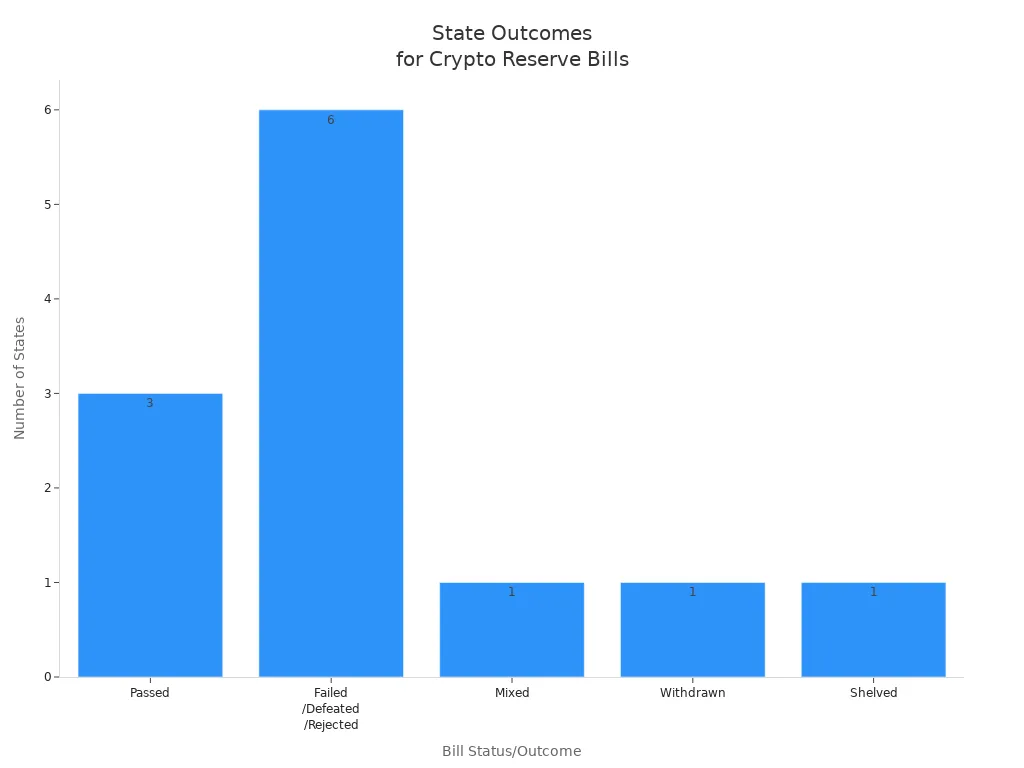
Montana’s decision reflects a broader state-level setback for cryptocurrency adoption in public finance. Many states have debated similar bills, but outcomes remain mixed. Some states, like New Hampshire and Texas, have passed legislation allowing limited investment in digital assets. Others, such as Wyoming and Pennsylvania, have rejected or stalled these efforts. The table below shows how different states have handled cryptocurrency reserve bills:
State | Bill Status/Outcome | Details |
|---|---|---|
New Hampshire | Passed | First state to pass a strategic Bitcoin reserve bill allowing up to 5% of total reserve funds in Bitcoin or digital assets. |
North Dakota | Failed in House (57 against, 32 in favor) | HB 1184 failed; however, a resolution encouraging investment in digital assets and precious metals is still under consideration. |
Pennsylvania | Killed | HB 2664 to invest up to 10% in Bitcoin was effectively killed. |
Wyoming | Killed by committee (only 1 of 8 lawmakers supported) | Bill to invest state and permanent funds in Bitcoin was rejected. |
Mixed | SB 1025 vetoed by governor; HB 2749 signed into law establishing a crypto reserve for unclaimed assets, not investments. | |
Texas | Passed Senate and committee; awaiting full House vote | SB 21 passed Senate 25-5 and House committee 9-4; if passed by full House, goes to governor. |
North Carolina | Passed House; awaiting Senate consideration | HB 92 authorizes investment in qualified digital assets with a 5% limit. |
Florida | Withdrawn | HB 487 and SB 550 withdrawn before consideration. |
Oklahoma | Rejected by Senate committee (6-5 vote) | HB 1203 failed; would have allowed up to 5% investment in Bitcoin or other digital assets. |
Utah | Provision removed from bill; bill passed without reserve clause | HB 2030 passed but without Bitcoin reserve provision. |
Montana | Defeated in House (59 against, 41 in favor) | HB 429 to invest in Bitcoin, stablecoins, and precious metals defeated. |
South Dakota | Defeated in House committee (9-3 vote) | HB 1202 to invest up to 10% in Bitcoin defeated. |
New Mexico | Shelved after committee referral | SB 275 to invest 5% in Bitcoin shelved; sponsor plans to reintroduce. |
Divided Policy Landscape
The policy landscape for cryptocurrency adoption at the state level remains divided. States like Texas and Vermont have adopted clear rules for digital assets, while others, such as California and New York, use strict licensing systems. Some states offer tax incentives or legal recognition for blockchain technology. Others focus on consumer protection and regulatory enforcement. This patchwork of laws makes it hard for companies to operate across state lines. States with large economies often enforce stricter rules, while smaller states try to attract crypto businesses with friendlier policies.
Note: The diversity in state approaches creates both opportunities and challenges for digital asset companies and investors.
Impact on Broader Adoption
The rejection of cryptocurrency reserve bills, like Montana’s, slows the pace of crypto adoption in public finance. Policymakers remain cautious, citing concerns about volatility, security, and long-term stability. Some states, such as Arizona, have vetoed similar bills, calling Bitcoin an untested investment. Even when interest in digital assets grows, lawmakers often demand more evaluation and safeguards. This cautious approach means that broader cryptocurrency adoption in state government will likely remain slow and uneven. States continue to balance innovation with risk management, shaping the future of digital assets in public finance.
Bitcoin Reserve Bill: Implications

Challenges for Public Crypto Investment
Montana’s rejection of the bitcoin reserve bill highlights several challenges that states face when considering public investment in bitcoin. Lawmakers must navigate a fragmented and rapidly changing regulatory landscape. Federal and state agencies often disagree on how to define digital assets, which leads to confusion and gaps in oversight. States also struggle with the lack of a clear legal framework for digital asset investments.
Key challenges include:
Overlapping jurisdictions between federal and state regulators.
Uncertainty about whether digital assets are securities, commodities, or something else.
Risks of fraud, financial crimes, and weak consumer protections.
Difficulty in coordinating rules across borders and sectors.
Complex tax reporting and compliance requirements.
Potential threats to financial stability if public funds experience large losses.
A comparison between bitcoin and traditional assets shows why public investment remains difficult:
Aspect | Bitcoin Challenges | Traditional Asset Challenges |
|---|---|---|
Volatility | Extreme price swings, high risk | Market volatility during economic crises |
Regulatory Environment | Uncertain, evolving, fragmented | Well-defined, stable frameworks |
Security Risks | Hacking, fraud, cyber threats | Lower risk, strong protections |
Adoption & Accessibility | Limited history, global access | Established, sometimes higher entry barriers |
Technical Complexity | Requires specialized knowledge | Easier to manage and understand |
Growth Potential | Potential for rapid gains, but unpredictable | Predictable returns, less explosive growth |
Transparency | Open blockchain records | Regulated statements and exchanges |
Correlation with Markets | Increasing, complicates diversification | Historically more stable |
Capital Raising | Challenging in downturns | Stable capital markets |
Public sector investors also lack long-term data for bitcoin, making it hard to predict outcomes. High volatility and increased correlation with traditional markets further complicate portfolio decisions. These factors explain why many states hesitate to move forward with bitcoin reserve bills.
Regulatory and Oversight Needs
States considering public investment in bitcoin must address significant regulatory and oversight needs. The current regulatory environment remains fragmented, with different agencies such as the SEC, CFTC, and Treasury offering conflicting guidance. This confusion makes it hard for states to create clear policies.
To manage public bitcoin holdings safely, experts recommend a comprehensive oversight framework:
Ensure compliance with anti-money laundering (AML) and know-your-customer (KYC) laws.
Use robust identity verification to prevent fraud.
Monitor transactions in real time with automated systems.
File required reports for suspicious or large transactions.
Develop and update internal policies for risk management.
Train employees to recognize and report suspicious activity.
Conduct independent audits to test oversight systems.
Screen transactions against official sanction lists.
Appoint qualified compliance officers for oversight.
Follow the Travel Rule for large transactions.
Keep detailed records for at least five years.
Use regulatory sandboxes to test new technologies.
Coordinate with other states and countries to address cross-border risks.
Some states have started to build these frameworks. For example, Arizona created a law allowing the state to hold digital assets as unclaimed property, with legislative oversight on fund allocation. New York’s BitLicense and California’s regulatory approach focus on customer protection and licensing. Wyoming offers a sandbox for financial technology and clear rules for digital asset custody. These examples show that strong oversight and clear regulation are essential for public bitcoin investment.
Lessons for Future Proposals
Montana’s experience with the bitcoin reserve bill offers important lessons for other states. Many states have rejected similar proposals, showing widespread caution. Lawmakers in Arizona, Florida, North Dakota, Oklahoma, Pennsylvania, South Dakota, and Wyoming have all decided against using public funds for bitcoin investments. Political leaders often cite the need to protect public money and avoid speculative risks.
States that want to advance future bitcoin reserve bills should consider the following steps:
Build strong risk management strategies to address volatility and cybersecurity threats.
Engage early with regulators to ensure compliance and clear legal guidance.
Increase transparency in fund management and educate the public about risks and benefits.
Remain flexible and adapt proposals as regulations and market conditions change.
Consider including less volatile digital assets, such as stablecoins, to reduce risk.
Note: No state has yet implemented a successful public bitcoin reserve. Traditional financial institutions continue to adopt digital assets, but state governments remain cautious. This gap shows the need for careful planning and strong oversight in any future proposals.
Montana’s decision may slow the pace of state-level innovation in public bitcoin investment. Other states will likely watch closely and adjust their own approaches, keeping the debate about public finance and digital assets alive.
Montana’s rejection of the Bitcoin reserve bill highlights a broader trend of caution among U.S. states. Lawmakers and the public remain divided, with many viewing cryptocurrency as too risky for public funds. Experts recommend states create clear definitions, harmonize regulations, and use regulatory sandboxes to balance innovation with risk management. Advocacy groups continue to educate policymakers and promote coordinated frameworks. Ongoing debate and careful regulation will shape the future of state-level crypto adoption.
FAQ
What is a Bitcoin reserve bill?
A Bitcoin reserve bill lets a state invest public funds in Bitcoin or other digital assets. Lawmakers propose these bills to protect against inflation and seek higher returns for taxpayers.
Why did Montana reject the Bitcoin reserve bill?
Montana lawmakers cited high volatility, risk to taxpayer money, and lack of strong oversight. Many felt the bill exposed public funds to unpredictable losses.
Do other states allow public investment in Bitcoin?
Some states, like New Hampshire and Texas, have passed limited measures. Most states remain cautious and have rejected or stalled similar bills.
What risks do public Bitcoin investments carry?
Price swings can cause big losses.
Cybersecurity threats may endanger funds.
Unclear rules make oversight difficult.
How can states safely explore crypto investments?
States can:
Build strong risk management plans.
Work closely with regulators.
Use pilot programs or regulatory sandboxes to test new ideas.

