
Is bitcoin mining still profitable in 2025? After the 2024 halving, most small miners see reduced profitability. The average cost to mine one bitcoin now exceeds the bitcoin price, making mining challenging for many. Large-scale bitcoin mining operations with access to cheap electricity and efficient hardware continue to find value. Mining profitability depends on several factors: bitcoin price, mining difficulty, hardware efficiency, electricity costs, and scale. Industrial miners often benefit, while home miners struggle. The profitability of bitcoin mining now requires careful planning and a strategic approach to crypto mining.
Key Takeaways
Bitcoin mining in 2025 is mostly profitable for large-scale miners with cheap electricity and efficient hardware.
Mining profitability depends on bitcoin price, mining difficulty, electricity costs, and hardware efficiency.
Home mining faces high costs and strong competition, making it rarely profitable and more of a hobby.
Joining mining pools and using professional hosting services help miners earn steadier returns.
Careful planning, upgrading hardware, and choosing locations with low energy costs improve chances of success.
Bitcoin Mining Profitability 2025
Is Bitcoin Mining Still Profitable?
In 2025, many investors ask, “is bitcoin mining still profitable?” The answer depends on several factors, including hardware, electricity, and the current bitcoin price. After the 2024 bitcoin halving, the bitcoin block reward dropped from 6.25 BTC to 3.125 BTC per block. This change cut mining revenue in half for every miner. As a result, only the most efficient operations with access to cheap electricity and modern hardware can achieve consistent profit.
The 2024 halving event forced miners to upgrade their equipment or leave the network. Many smaller miners could not keep up with the rising mining difficulty and higher costs. The network hash rate dipped temporarily, but it recovered as larger miners adopted new technology and optimized their operations.
Mining profitability in 2025 relies on a delicate balance between costs and revenue. The current bitcoin price sits around $117,861.97, with some experts predicting it could reach $150,000. However, mining difficulty remains high, averaging about 127.62 trillion, and energy prices continue to rise in many regions. These trends make the profitability of bitcoin mining more challenging for small-scale miners.
Key Factors: Price, Difficulty, Costs
Several factors that affect crypto mining profitability shape the landscape in 2025:
Bitcoin Price Trends: The bitcoin price has a direct impact on profitability in mining. When the price rises, mining revenue increases. In 2025, the price hovers near $117,861.97, with bullish sentiment suggesting further growth.
Mining Difficulty: Mining difficulty measures how hard it is to find a new block. In July 2025, difficulty reached 127.62 trillion, with a slight decrease expected soon. High difficulty means miners need more power and better hardware to compete.
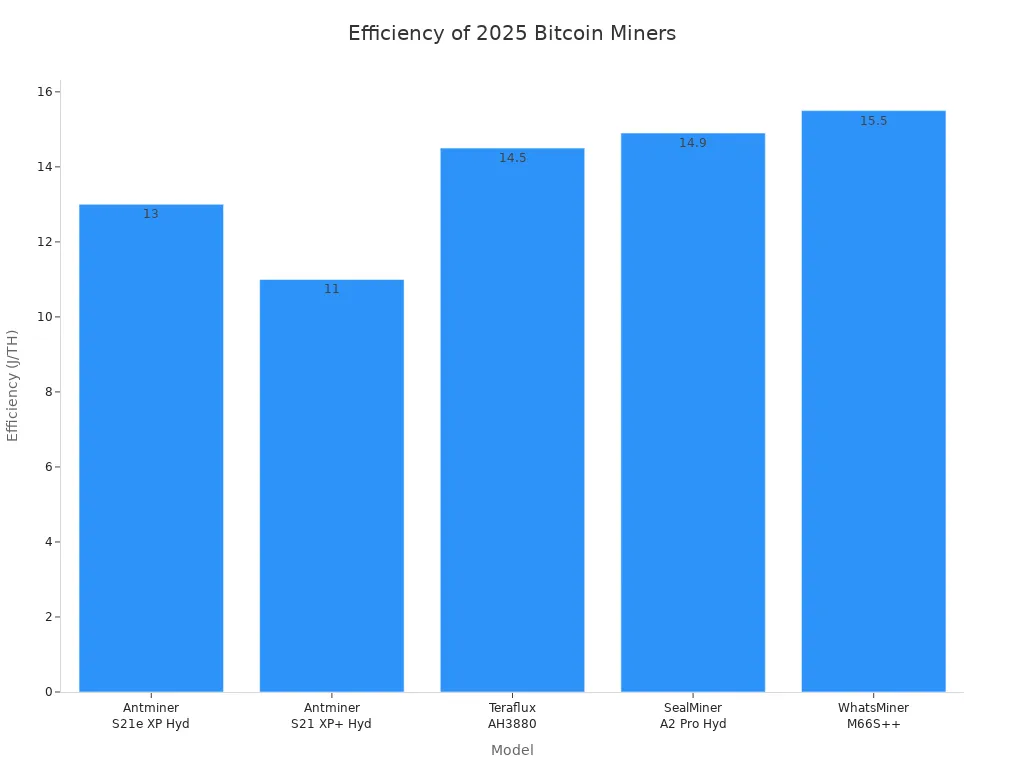
Hardware Efficiency: The latest mining hardware, such as the Bitmain Antminer S21 XP+ Hyd, achieves efficiencies as low as 11 J/TH. Most top models range from 11 to 20 J/TH, reducing power consumption and improving mining profitability.
Model | Hash Rate (TH/s) | Power Consumption (W) | Efficiency (J/TH) |
|---|---|---|---|
Bitmain Antminer S21e XP Hyd | 860 | 11180 | 13 |
Bitmain Antminer S21 XP+ Hyd | 500 | 5500 | 11 |
Auradine Teraflux AH3880 | 600 | 8700 | 14.5 |
Bitdeer SealMiner A2 Pro Hyd | 500 | 7450 | 14.9 |
MicroBT WhatsMiner M66S++ | 356 | 5518 | 15.5 |
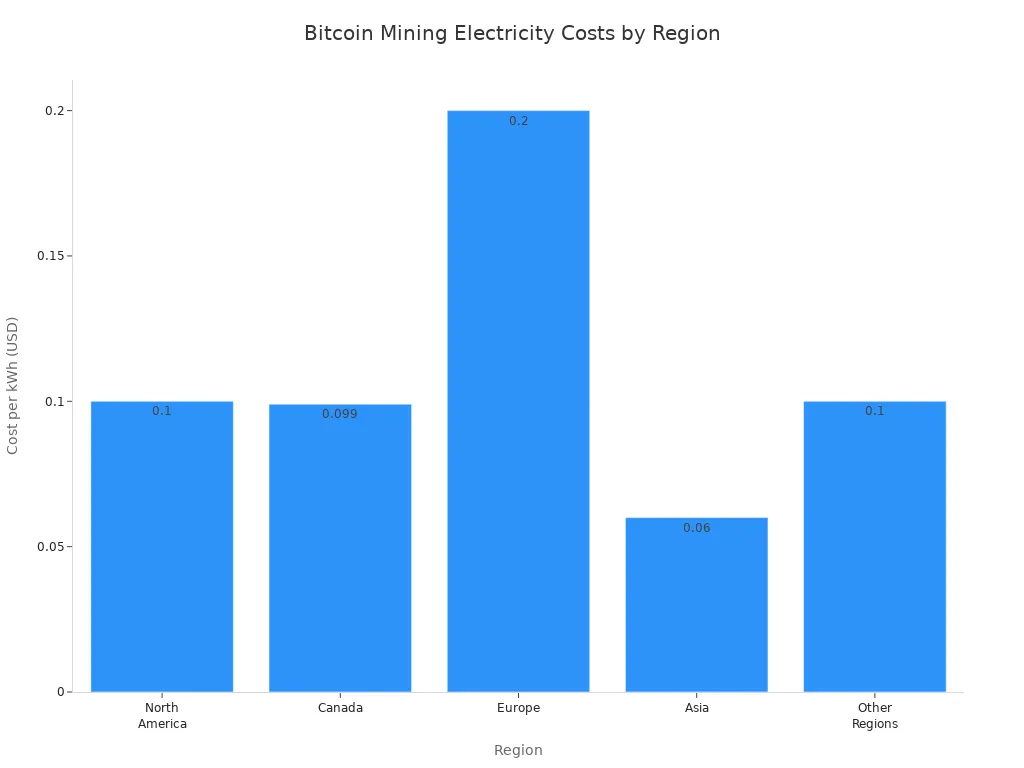
Electricity Costs: The cost of electricity is a major expense for miners. In the U.S., states like Texas and Kentucky offer rates as low as $0.03 to $0.06 per kWh. Canada’s hydro-rich provinces provide similar rates. In Europe, costs often exceed $0.20 per kWh, making mining less profitable. Asia and South America offer variable rates, with some regions as low as $0.03 per kWh.
Region | Typical Electricity Cost (per kWh) | Key Benefits | Challenges |
|---|---|---|---|
North America | $0.03–$0.10 | Hydroelectric power, tax incentives | Higher costs in some areas |
Canada | $0.05–$0.099 | Low-cost hydropower | Regulatory tightening |
Europe | $0.20+ | Strong infrastructure | High electricity costs |
Asia | $0.03–$0.06 | Low costs in some countries | Regulatory restrictions |
Africa/South America | $0.03–$0.10 | Renewable energy | Infrastructure challenges |
Break-even Analysis: The break-even bitcoin price for efficient miners with modern hardware and low electricity costs ranges from $45,000 to $50,000. With the current BTC price above $117,000, efficient industrial miners can earn a net profit of $162.61 per month per device. If the price rises to $150,000, monthly profit could reach $449 per device. However, in regions with high energy costs, the break-even point can exceed $96,000, erasing profit margins.
Parameter | Value/Range | Explanation/Context |
|---|---|---|
ASIC Efficiency | ~16.5 W/TH | Modern ASIC hardware efficiency used in break-even calculations |
Electricity Cost | $0.066 – $0.068 per kWh | Competitive energy rates for optimized mining facilities |
Break-even Bitcoin Price | $45,000 – $50,000 | Estimated break-even price for efficient miners with modern hardware and low electricity costs |
Antminer S21+ Specs | 225 TH/s, 3.8 kWh power consumption | Example hardware used in case study |
Break-even Price (Antminer) | ~$46,000 | Price at which Antminer S21+ remains profitable, providing a 43% buffer below current BTC price |
Current BTC Price (March 2025) | $82,277 | Reference market price for profitability comparison |
Profitability Example | $162.61 net profit/month per device | Profit at current BTC price and electricity cost |
Profit at BTC $150,000 | $449 net profit/month per device | Projected profit with higher BTC price |
Break-even Range (Global) | $1,200 (subsidized) to $96,100 (high cost) | Variation depending on location and energy costs |
Mining Revenue and Costs: Mining revenue depends on the number of blocks mined and the current bitcoin price. Costs include hardware, electricity, maintenance, and pool fees. Efficient miners with access to cheap power and advanced hardware can achieve higher profitability.
Industrial vs. Home Mining Outcomes
The profitability of bitcoin mining differs greatly between industrial and home miners. Industrial miners benefit from economies of scale, bulk equipment discounts, and access to the lowest electricity rates. They use advanced cooling systems and professional management to reduce operational expenses. Home miners face higher setup costs, less efficient hardware, and higher electricity rates. For most, mining serves as a hobby or a way to support decentralization, not as a reliable source of profit.
Aspect | Home Mining (2025) | Industrial Mining |
|---|---|---|
Initial Setup Cost | $2,630–$23,850 | Higher upfront but offset by bulk equipment discounts |
Electricity Cost | Requires very low rates (~$0.05/kWh or lower) for marginal profitability | Access to significantly lower electricity rates due to scale |
Operational Expenses | Maintenance ($60–$300/month), heat management, pool fees (1–2.5%) | Advanced cooling systems reduce operational costs per unit of mining power |
Profitability | Marginal, heavily dependent on electricity cost, hardware efficiency, and BTC price fluctuations | More profitable due to economies of scale, efficiency, and cost advantages |
Practicality | Often more a hobby or decentralization effort rather than consistent profit source | Industrial mining dominates profitability and scale |
Market Competition | High competition from industrial miners makes home mining difficult to profit from | Benefits from scale, bulk discounts, and professional management |
Home mining has become difficult to profit from in 2025. Companies like FutureBit offer specialized devices for home users, but even their CEO admits that industrial-scale mining dominates the market. Home mining now serves more as a tool for decentralization and user sovereignty than as a source of steady profit.
Hardware Innovation and Trends
Mining hardware continues to evolve. Bitmain plans to release the Antminer S23 Hydro in 2026, promising an efficiency of 9.7 J/TH. This trend toward lower power consumption helps miners reduce costs and improve mining profitability. Rising global hash rates and a 6.6% drop in mining profitability in early 2025 have pushed miners to innovate. Some platforms now offer cloud mining and mobile apps, lowering entry barriers for new miners. However, high initial costs and tough competition remain challenges for small-scale operations.
The Impact on Profitability
The 2024 halving, rising mining difficulty, and hardware innovation all have a significant impact on profitability. Only miners who control costs, use the latest hardware, and operate at scale can expect consistent profit. For most individuals, the answer to “is bitcoin mining still profitable” in 2025 is no, unless they have access to very cheap electricity and efficient equipment. Industrial miners continue to lead the market, while home mining remains a niche activity.
Main Risks and Rewards
Investment Risks
Bitcoin mining in 2025 presents several risks and challenges in bitcoin mining that every investor should understand. The landscape changes quickly, and miners face new obstacles each year. The most significant risks include:
Market Volatility: Bitcoin prices can swing wildly. High volatility often leads to sudden drops in mining revenue. When prices fall, miners may need to sell bitcoin at a loss or shut down their operations.
Rising Costs: Operational costs continue to increase. Electricity prices, hardware upgrades, and maintenance all add up. Public mining companies often mine bitcoin at costs higher than the market price, which leads to slim or negative profit margins.
Regulatory Uncertainty: Governments around the world have started to focus on bitcoin mining. In the U.S., regulators examine environmental and health impacts. Some states have passed “Right-to-Mine” laws, but others push for stricter rules. The regulatory landscape remains fragmented, and enforcement is inconsistent. This uncertainty can disrupt mining operations and affect profitability.
Hardware Obsolescence: Mining hardware becomes outdated quickly. New ASIC models with better efficiency and lower power consumption appear every year. Older machines like the Antminer S9 are now obsolete. Miners must upgrade their equipment every few years to stay competitive and maintain profit.
Geopolitical and Environmental Challenges: Some countries offer cheap energy and favorable policies, but others impose bans or heavy restrictions. Environmental concerns, such as water usage and noise pollution, have led to increased scrutiny. Local communities sometimes face negative impacts from mining facilities.
Note: Central bank officials warn that large losses in the crypto market could harm trust in traditional banking systems. Rising institutional exposure to bitcoin adds contagion risk if big firms sell off their holdings during downturns.
Key Risks Table
Risk Factor | Description | Impact on Mining |
|---|---|---|
Market Volatility | Sudden swings in bitcoin price | Unpredictable revenue |
Rising Costs | Higher electricity, hardware, and operational costs | Lower profit margins |
Regulatory Uncertainty | Fragmented rules, environmental and health concerns, enforcement challenges | Disrupted operations |
Hardware Obsolescence | Rapid release of new, more efficient ASICs | Frequent upgrades needed |
Geopolitical Factors | Bans, sanctions, and policy changes in major mining countries | Relocation or shutdown |
Environmental Challenges | Water use, noise, and pollution concerns | Community opposition |
Potential Rewards
Despite the risks, bitcoin mining still offers potential rewards for those who manage their operations well. Efficient miners can achieve steady profit, especially in regions with low electricity costs and supportive policies.
Profit Margins: Industrial miners with access to cheap power and modern hardware can maintain moderate profit margins. For example, a mid-tier Antminer S19j Pro+ can generate about $4.68 in net profit per day, or roughly $140.40 per month, when electricity costs stay around $0.07 per kWh. Efficient mining operations, such as managed mining programs, can lower all-in costs to about $55,000 per bitcoin, improving profitability.
Passive Income: Some miners use strategies for maximizing profits, such as joining mining pools or optimizing firmware. Home miners may use recycled heat or renewable energy to reduce costs and boost mining revenue. While home mining rarely delivers high profit, it can provide passive income and support network decentralization.
Direct Bitcoin Ownership: Unlike mining stocks, direct mining allows individuals to own bitcoin directly. Managed mining programs offer transparency, tax advantages, and lower operational costs compared to public mining companies.
Global Opportunities: Certain countries, like the United States, Norway, and Paraguay, offer abundant renewable energy and favorable policies. These regions attract industrial miners seeking high profitability and stable operations.
Profitability Snapshot for Mid-Tier Bitcoin Miner (Antminer S19j Pro+) in 2025
Metric | Value |
|---|---|
BTC mined per day | ~0.00017 BTC |
Gross revenue per day | ~$9.72 |
Power consumption | 72 kWh/day |
Electricity cost (@$0.07/kWh) | $5.04/day |
Net profit per day | ~$4.68 |
Monthly net profit | ~$140.40 |
Electricity cost remains the most important factor. Rates below $0.05 per kWh keep mining lucrative, while higher rates can erase profit.
Pool fees and bitcoin price swings also affect profitability.
Industrial miners often achieve better results due to scale and efficiency.
Global Mining Profitability in 2025
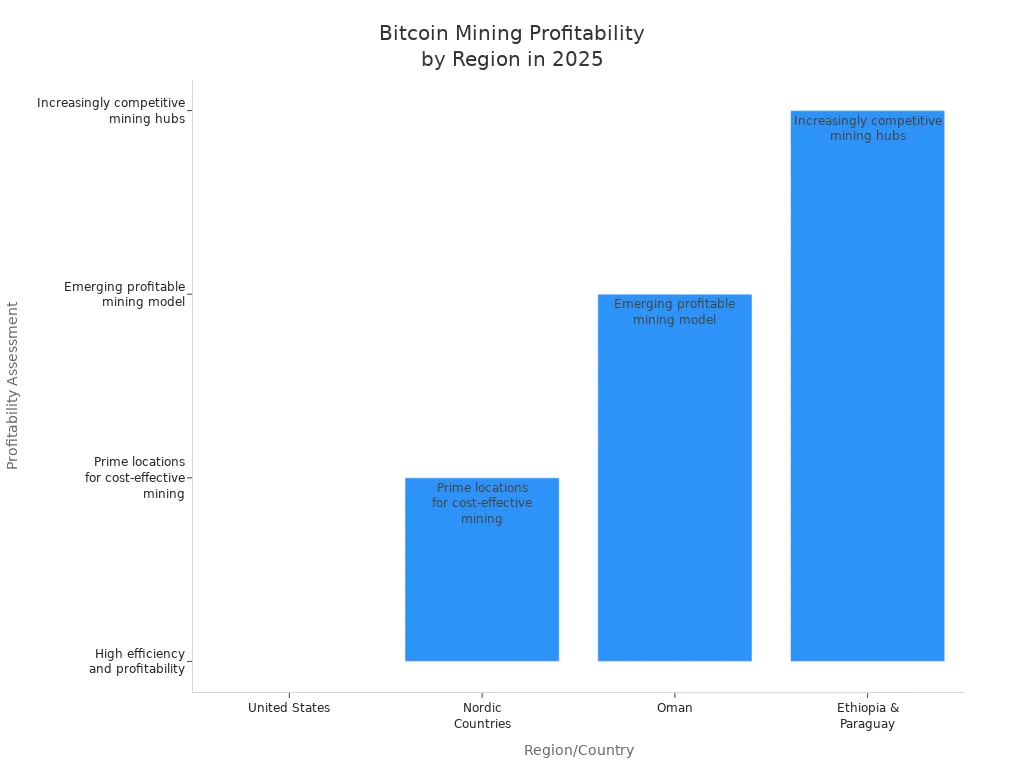
Tip: Miners who upgrade hardware regularly, choose locations with cheap renewable energy, and optimize operational costs can improve their chances of success.
Bitcoin mining in 2025 remains a high-risk, high-reward activity. The main challenges include market volatility, rising operational costs, regulatory uncertainty, and rapid hardware obsolescence. However, miners who control costs and adapt quickly can still achieve profit and benefit from direct bitcoin ownership. Understanding the risks and rewards helps investors make informed decisions about entering the mining industry.
Who Should Invest in Bitcoin Mining?
Industrial vs. Home Miners
Industrial miners and home miners approach bitcoin mining with different strategies and resources. Industrial miners invest heavily in infrastructure, often building large facilities with advanced cooling systems and direct access to cheap electricity. They pay lower rates, usually around 5 to 7 cents per kWh, and sometimes own energy assets like wind or solar farms. This scale allows them to negotiate better prices and improve efficiency. Home miners, on the other hand, face higher residential electricity rates, such as 14.11 cents per kWh in the US. They buy ASIC miners for prices ranging from $2,000 to $17,000 or more. Home setups require less capital but struggle with higher operational costs and limited profitability. Hosting services offer a middle ground, providing professional management and lower electricity rates, but require an initial investment in mining hardware and ongoing fees.
Industrial Bitcoin Miners | Home Bitcoin Miners | |
|---|---|---|
Electricity Costs | Low rates (~5-7 cents/kWh) | Higher rates (14.11 cents/kWh in the US) |
Hardware Scale & Cost | Bulk purchases, discounts | Smaller scale, $2,000–$17,000+ per ASIC |
Infrastructure | Large facilities, advanced cooling | Basic setup, cooling and noise management needed |
Operational Expenses | Professional management, optimized energy use | Higher costs, heat and noise challenges |
Hosting Services | Not typical | Option for lower rates and professional management |
Industrial mining requires significant capital and ongoing expenses but benefits from scale and efficiency. Home mining offers flexibility and decentralization but faces higher costs and operational challenges.
Ideal Investor Profiles
The ideal investor for bitcoin mining in 2025 seeks strategic, cost-efficient exposure to bitcoin. High-net-worth individuals or serious investors often prefer direct bitcoin yield from mining rather than relying on volatile mining stocks. They value transparency, control over assets, and partnerships with experienced operators who provide operational support and high uptime. These investors focus on long-term passive bitcoin income and ownership of tangible mining assets. They also look for tax advantages, such as bonus depreciation and deductible expenses, by structuring mining as a business.
Bitcoin mining suits those with a high risk tolerance and enough discretionary income to handle market swings. Financial advisors suggest allocating only a small portion of a portfolio—typically 3% to 10%—to bitcoin. Investors should use funds left after covering essential expenses and savings. Small investments can help individuals learn about their own risk tolerance and emotional response to bitcoin’s volatility. This approach allows for exposure to mining while managing potential losses.
Alternatives to Bitcoin Mining
Is Crypto Mining Still Profitable?
Many investors in 2025 ask, “is crypto mining still profitable?” The answer depends on the type of coin, hardware, and electricity costs. Bitcoin mining now favors large industrial operations, making it hard for individuals to compete. However, crypto mining with altcoins remains accessible for home miners. Many altcoins use ASIC-resistant algorithms, allowing users to mine with CPUs or GPUs. This lowers the entry barrier and gives more people a chance to earn rewards.
Popular alternatives to bitcoin mining include:
CPU Mining: Monero (XMR), VerusCoin (VRSC), Zcash (ZEC), Zano (ZANO)
GPU Mining: Ethereum Classic (ETC), Ravencoin (RVN), Kaspa (KAS), Ergo (ERG), Zcash (ZEC)
Phone Mining: Pi Network (Pi), Electroneum (ETN)
Kaspa stands out for its energy-efficient GPU mining and innovative technology. Monero offers privacy and moderate returns. Ravencoin and Ethereum Classic provide options for GPU miners. Altcoin mining rigs can cost more, but lower mining difficulty and diverse algorithms help balance operational costs. Crypto mining with altcoins often brings quicker profits during price spikes, but volatility and regulatory risks remain.
Mining Pools and Cloud Mining
Mining pools allow miners to combine resources and share rewards. In 2025, pools like Foundry USA, AntPool, ViaBTC, and F2Pool lead the market. These pools use payout methods that give steady daily returns. A typical mining rig with 110 TH/s can earn $6 to $8 per day, but electricity costs often reduce these earnings. Mining profitability depends on location and energy prices.
Cloud mining services, such as Genesis Mining and NiceHash, attract users without hardware. These platforms grew by 19% in 2025. However, cloud mining returns are usually lower and less predictable than mining pools. High fees and bitcoin price swings make it hard for users to break even. Many find that cloud mining takes months to recover the initial investment.
Tip: Mining pools offer more consistent returns than cloud mining, but both options require careful research.
Direct Investment in Bitcoin
Some investors choose to buy bitcoin directly instead of mining. This approach gives simple exposure to bitcoin price movements and offers high liquidity. Direct investment avoids the operational risks and complexity of mining. However, it does not provide tax benefits or daily bitcoin yield.
Mining bitcoin can offer tax advantages, such as bonus depreciation on hardware and deductible expenses. Managed mining programs help investors gain direct bitcoin ownership and steady yield. These programs handle maintenance and reduce operational risks. Still, mining requires technical knowledge and faces price volatility.
Investment Method | Benefits | Risks/Challenges |
|---|---|---|
Direct Bitcoin Buying | Simple, liquid, no operational overhead | No tax benefits, no yield |
Mining | Tax advantages, daily yield, direct ownership | Complexity, operational risks, volatility |
Mining Stocks | Exposure to mining industry | No direct bitcoin ownership, company risk |
Predictions and Final Thoughts
2025 Outlook
Industry experts expect bitcoin mining to remain a high-stakes venture in 2025. The landscape continues to evolve as miners adapt to new challenges and opportunities. The following table summarizes expert predictions for key factors shaping mining profitability:
Factor/Aspect | Expert Insight / Prediction | Supporting Example / Explanation |
|---|---|---|
Bitcoin Price Trends | Mining profitability is highly dependent on Bitcoin price; higher prices increase profitability despite halving effects. | Bull markets increase profits; bear markets cause many miners to shut down. |
Block rewards will reduce from 6.25 to 3.125 BTC, cutting miners’ Bitcoin earnings in half, impacting profitability. | Miners must rely more on transaction fees or higher Bitcoin prices to maintain profits. | |
Mining Hardware Technology | Continuous advancements in ASIC miners improve efficiency and reduce electricity consumption, crucial for profitability. | Latest ASICs from Bitmain and MicroBT offer higher hash rates and energy efficiency. |
Energy Costs and Sources | Electricity is the largest ongoing cost; access to cheap and renewable energy sources is a major advantage. | Successful miners in Texas use renewable energy to lower costs and maintain profitability amid price volatility. |
Mining Difficulty and Competition | Increasing mining difficulty and network hash rate intensify competition, challenging smaller or less efficient miners. | More miners and advanced hardware increase difficulty, requiring strategic investment to stay competitive. |
Regulatory Environment | Government policies can either restrict or support mining; favorable regulations and incentives improve profitability. | China’s ban reduced mining; US and Canada’s supportive policies attract mining operations. |
Miners who invest in efficient hardware and secure low-cost, renewable energy have the best chance to succeed. Environmental regulations and sustainability concerns may increase operational costs, but miners who use green energy can offset these challenges. Institutional adoption of bitcoin as a reserve asset may also support long-term price growth, which benefits mining operations.
Key Takeaways
Bitcoin mining in 2025 uses about 10 GW of power, similar to a mid-sized country.
Nearly 43% of mining energy comes from renewable sources, helping miners reduce costs and environmental impact.
Professional miners use advanced strategies, such as dynamic power usage and heat reuse, to improve sustainability and profitability.
The most important factors for investors include bitcoin price trends, mining difficulty, electricity costs, hardware efficiency, and regulatory environment.
Joining a mining pool and using professional hosting services can help miners achieve more consistent returns.
“If you want to succeed in mining today, you need a smart strategy. Joining a mining pool is essential for generating consistent returns—anything else is a gamble. And if you’re serious about long-term profitability, professional hosting is the way forward: scalable, efficient, and located at sites with highly competitive energy rates. That’s how mining remains a profitable business in 2025 and beyond.” — Matthias Reder, Account Manager & Mining Expert
Bitcoin mining remains a complex but potentially rewarding investment. Investors should carefully consider all risks and focus on efficiency, location, and strategic planning to maximize profitability.
Industry experts agree that bitcoin mining in 2025 remains profitable mainly for large-scale miners with access to cheap electricity and efficient hardware. Key factors include bitcoin price, electricity costs, hardware efficiency, and mining pool participation.
Large operations benefit from economies of scale and financial tools.
Home mining is rarely profitable due to high costs and competition.
Investors should match their mining approach to their risk tolerance and capital. Those with limited resources may consider mining pools or cloud mining for steadier returns.
FAQ
What is the biggest factor that affects crypto mining profitability in 2025?
Bitcoin price trends have the largest impact on profitability in mining. High bitcoin prices increase mining revenue. Rising mining difficulty and the cost of electricity also play major roles. Efficient hardware and low operational costs help miners maximize profit.
How much initial investment in mining hardware is needed for beginners?
A beginner usually needs an initial investment between $2,000 and $17,000 for a single ASIC miner. Industrial miners spend much more. The total investment includes hardware, setup, and electricity costs. These expenses directly affect mining profitability and long-term profit.
Is bitcoin mining still profitable for home users?
Home users rarely see consistent profit from bitcoin mining in 2025. High operational costs and competition from industrial miners reduce profitability. Most home miners treat mining as a hobby or a way to support the bitcoin network, not as a reliable investment.
What are the main risks and challenges in bitcoin mining today?
Major risks include market volatility, rising operational costs, regulatory changes, and hardware obsolescence. These challenges can lower mining profitability or cause losses. Investors must monitor bitcoin price trends and adapt strategies for maximizing profits to stay competitive.
How do mining pools impact on profitability?
Mining pools combine resources from many miners. This approach increases the chance of earning mining revenue and provides more stable profit. Pools help reduce the risks of solo mining and allow users to earn steady returns, even with smaller initial investment.

