

The defi sector shows remarkable momentum, with Ethereum decentralized exchanges recording $166 million in net inflows in just 24 hours and defi borrowing reaching a record $17 billion. Three categories now capture attention: Decentralized Exchanges, Liquid Staking Protocols, and Real-World Asset Tokenization. Recent SEC signals have triggered a wave of optimism, as shown by a 25% surge in leading defi tokens and a 10% increase in the overall cryptocurrency market cap. This convergence of regulatory clarity, institutional capital, and technological progress sets the stage for a bullish perspective in the crypto and cryptocurrency markets.
Token | 1-day Price Surge | 3-month Growth | Market Cap |
|---|---|---|---|
Uniswap (UNI) | 25% | 38% | $4.9 billion |
Aave (AAVE) | 15% | 74% | $4.6 billion |
Key Takeaways
The DeFi market is growing fast, driven by strong capital inflows and rising investor confidence.
Clear SEC rules on staking and mining reduce risks and encourage more people and institutions to join DeFi.
Decentralized exchanges offer users control over their assets and show rapid growth and innovation.
Liquid staking protocols let users earn rewards while keeping assets flexible, attracting big investors.
Tokenizing real-world assets like bonds and real estate brings traditional finance to blockchain, increasing access and liquidity.
Investor optimism and high trading volumes signal a strong crypto bull market with many opportunities.
Retail, high net worth, and institutional investors should diversify and engage in governance to maximize gains.
Staying informed about regulations and market trends helps manage risks and capture new opportunities in DeFi.
DeFi Bull Drivers
Market Trends
Capital Inflows
The current bull market in crypto stands on a foundation of robust capital inflows. Ethereum’s price rally, climbing over 10% from $2,490 to $2,820, reflects strong buying pressure and renewed investor confidence. This surge follows regulatory clarity from the SEC, which has encouraged both retail and institutional participants to increase their exposure. The Total Value Locked (TVL) in the DeFi lending sector soared to $55 billion as of June 2025, doubling within a year. This rapid expansion signals that liquidity conditions have improved, drawing more participants into the cryptocurrency market. Drift Protocol’s market cap of $200 million and rising trading volume highlight growing user adoption and institutional onboarding. Dawgz AI’s $3.6 million presale and a payment platform’s $1 million raise further demonstrate the influx of new capital and engagement.
Investor Sentiment
Investor sentiment in the crypto bull market remains highly optimistic. The 25% surge in leading DeFi tokens and a 10% increase in the overall cryptocurrency market cap underscore this positive outlook. Hyperliquid’s dominance, with a 78% share in decentralized perpetual swaps, points to increased trading activity and confidence in decentralized platforms. Weekly trading volume on Hyperliquid now reaches 11% of Binance’s, suggesting significant room for growth. These trading signals indicate that both retail and institutional investors see the current bull market as a prime opportunity for investment and portfolio diversification.
Technological Shifts
Protocol Upgrades
Foundational developments in blockchain technology continue to fuel the crypto bull market. Leading protocols have rolled out major upgrades, improving security, scalability, and user experience. These enhancements attract more liquidity and support the growth of the DeFi ecosystem. Strategic partnerships and mergers also play a key role, as protocols seek to expand their reach and strengthen their market position.
Layer 2 Growth
Layer 2 solutions have transformed liquidity conditions and trading efficiency in the cryptocurrency market. By reducing transaction costs and increasing throughput, these technologies make DeFi more accessible to a broader audience. The Asia-Pacific region leads in adoption, driven by rapid industrialization and urbanization, while North America maintains a mature and highly competitive market. The evolving landscape includes decentralized exchanges, yield farming, stablecoins, and decentralized insurance, each showing distinct growth trends.
Note: The combination of regulatory clarity, technological innovation, and improved liquidity conditions creates a powerful catalyst for the ongoing crypto bull market. Investors and analysts should monitor these drivers closely to identify emerging opportunities and optimize their investment strategies.
SEC Signals for DeFi

Regulatory Clarity
Staking and Mining
The SEC roundtable in June 2025 delivered clear signals that support innovation and self-custody in the crypto sector. The chairman emphasized that staking, mining, and validator operations do not fall under securities regulations. This statement removes a major barrier for both retail and institutional investors. Now, protocols like Lido and Rocket Pool can attract more capital without fear of regulatory scrutiny. The SEC’s stance also encourages the development of new staking products, which strengthens the foundation of the cryptocurrency market.
CryptoUK’s response to these developments highlights the importance of clear definitions. Regulators now focus on parties with actual control over user assets. This approach allows for a flexible regulatory perimeter, distinguishing between custodial and non-custodial tools. As a result, DeFi protocols can innovate while maintaining compliance. The market has responded positively, with staking activity reaching new highs and more users participating in validator networks.
Innovation Exemptions
The SEC introduced the concept of innovation exemptions, creating a regulatory sandbox for new DeFi products. This move allows developers to launch and test products without facing immediate regulatory scrutiny. The approach mirrors successful frameworks in Singapore and Switzerland. It encourages rapid experimentation and integration with traditional finance.
Note: The SEC’s positive signals have already influenced the market. Ripple’s $1 billion XRP commitment in Japan, a country with regulatory clarity, led to a strong price rebound and increased futures open interest. Chainlink’s long-to-short ratio also climbed, reflecting growing optimism for real-world DeFi infrastructure.
Institutional Adoption
Capital Influx
Institutional investors have responded quickly to the SEC’s new policies. The total locked-in volume (TVL) on Ethereum-based DeFi protocols jumped from $46 billion to $54 billion in just one week. Major protocols like Uniswap, Aave, and Lido saw simultaneous increases in locked-in volume. Real-world asset platforms such as Maple Finance and Ondo Finance reported higher on-chain deposits and user numbers. Ondo Finance’s US Treasury bond token issuance grew by over 40% after the policy release. Stablecoin inflows also rose, signaling renewed institutional confidence in the cryptocurrency market.
Compliance Pathways
The SEC’s regulatory clarity has paved the way for new compliance pathways. Legal entity formation among DeFi protocols now stands at about 60% for significant projects. This trend supports the creation of valuation mechanisms and compliance structures. The table below summarizes key compliance metrics:
Metric | Description | Quantitative Value |
|---|---|---|
Jurisdictional Compliance | Alignment with regulatory requirements across regions | Centralized exchanges: 5-20 jurisdictions; DeFi: typically none |
KYC/AML Implementation | Identity verification and anti-money laundering controls | ~15% of DeFi protocols implemented KYC/AML |
Regulatory Action Exposure | Regulatory notices or enforcement actions received | ~30% of major DeFi protocols affected |
Legal Entity Formation | Formal legal structures supporting decentralized systems | ~60% of significant protocols maintain legal entities |
These compliance pathways make it easier for institutions to enter the crypto space. Governance tokens such as UNI, AAVE, and MKR experienced price increases between 25% and 60% within a week. The SEC’s signals have legitimized DeFi, attracting both capital and talent to the cryptocurrency market.
Cryptocurrency Market Context
Bull Market Indicators
Sentiment Indexes
Sentiment indexes play a crucial role in shaping the direction of the cryptocurrency market. During a bull market, optimism dominates. Analysts observe bullish sentiment reaching levels as high as 90%. This strong confidence often leads to a surge in crypto investments. The put/call ratio drops to its lowest point, showing that traders prefer call options over puts. This preference signals a clear expectation of rising prices. Technical analysis tools, such as the Relative Strength Index and Directional Movement Index, confirm the presence of strong bullish momentum. These indicators help investors identify the best entry points in the crypto bull market.
Trading Volume
Trading volume acts as a key signal for market strength. As bitcoin and ethereum approach major breakout levels, trading activity increases sharply. The formation of a triple bottom pattern, with consistent lows and rising volume, suggests that sellers are losing control while buyers gain confidence. This trend often marks the start of a new bull phase. High trading volumes in the cryptocurrency market reflect growing participation from both retail and institutional investors. These patterns support the ongoing expansion of DeFi and altcoin projects.
Broader Crypto Trends
NFTs and GameFi
NFTs and GameFi have become major forces in the crypto ecosystem. NFT trading volumes have surged, driven by new collections and celebrity endorsements. GameFi platforms attract millions of users who seek rewards and entertainment. These trends create new opportunities for altcoin projects and DeFi protocols. Many DeFi platforms now integrate NFT lending, staking, and yield farming, blending financial innovation with digital culture. This fusion expands the reach of the cryptocurrency market and brings fresh capital into the space.
Altcoin ETFs
Altcoin ETFs represent a significant shift in crypto investment products. Major exchanges now list ETFs that track baskets of altcoins, including bitcoin and ethereum. These products offer investors diversified exposure to the crypto market without the need for direct asset management. The launch of altcoin ETFs has increased liquidity and attracted institutional capital. Analysts note that ETF inflows often coincide with periods of strong bull market activity. This development supports the growth of DeFi, as more capital flows into protocols linked to popular altcoins.
The interplay between DeFi, NFTs, GameFi, and new financial products like altcoin ETFs drives innovation and adoption across the cryptocurrency market. Investors should monitor these trends closely to identify emerging opportunities and optimize their strategies.
Three DeFi Categories to Watch
Decentralized Exchanges
Self-Custody
Decentralized exchanges have become a cornerstone of the crypto ecosystem. They empower users to maintain self-custody of their assets, reducing reliance on centralized platforms. This approach aligns with the core values of blockchain technology and supports greater financial independence. Regulatory clarity has strengthened the legitimacy of these platforms, making them more attractive to both retail and institutional participants. Users now benefit from enhanced security and direct control over their funds, which increases trust and participation in the cryptocurrency market.
Innovation
Innovation in decentralized exchanges continues to drive growth and adoption. Uniswap v4, for example, has achieved $40 billion in trading volume within four months, capturing 23% of the DEX sector. Hyperliquid dominates on-chain perpetual futures trading, with $94.3 billion in total volume and a 60% market share. The perpetual swaps DEX sector grew by 13.9% last week, outpacing the broader market. These statistics highlight strong user activity, deep liquidity, and rising institutional involvement. The table below summarizes key metrics:
Metric | Decentralized Exchange (DEX) Example | Value | Significance |
|---|---|---|---|
On-chain perpetual futures trading volume | Hyperliquid | $94.3 billion total, Hyperliquid accounts for 60% | Indicates dominant market share in on-chain perpetual futures trading |
Futures open interest of HYPE token | Hyperliquid’s HYPE token | $2.06 billion | Fifth-largest token by futures open interest, surpassing Dogecoin |
Trading volume | Uniswap v4 | $40 billion in 4 months | Represents 8.7% of total decentralized trading market volume in 2025 |
Market share in DEX sector | Uniswap v4 | 23% | Highlights leading position within decentralized exchanges |
Sector performance over past week | Perpetual swaps DEXs | Outperformed market average, showing rising interest and development |
The rapid growth of decentralized exchanges demonstrates their ability to adapt to changing regulatory environments and meet the evolving needs of the crypto community.
Liquid Staking Protocols
Regulatory Clarity
Liquid staking protocols have experienced significant expansion as regulatory guidance has become clearer. These protocols allow users to stake assets, such as ETH, while retaining liquidity and earning rewards. The SEC’s recent statements have removed uncertainty around staking, encouraging more participants to join. Lido, for instance, holds 8.94 million ETH, representing a 25.6% market share. The total amount of staked ETH has reached an all-time high of 34,824,875, which is 28.15% of the total ETH supply. This growth reflects increased confidence in the regulatory landscape and the underlying blockchain infrastructure.
Institutional Flows
Institutional flows into liquid staking protocols have accelerated. Major platforms like Binance and Coinbase collectively stake over 5.24 million ETH, accounting for more than 15% of the market. ether.fi has grown by 16% in the past month, reaching 2.25 million ETH. Blockdaemon’s staking operations expanded by 85% over six months. The price of ETH surged 9.5% in the last 24 hours, reaching $2,758, further boosting interest in staking. The table below highlights recent statistics:
Metric | Value/Statistic |
|---|---|
All-time high staked ETH | 34,824,875 ETH |
Percentage of total ETH supply | 28.15% |
Validator count | 1,088,277 |
Lido staked ETH | 8.94 million ETH (25.6% market share) |
Binance + Coinbase staked ETH | 5.24 million ETH (combined >15% share) |
ether.fi growth | 2.25 million ETH, +16% in past month |
Lido market share change | Down 2% last month, down 9% last 6 months |
Blockdaemon growth | +85% over 6 months |
ETH price surge | +9.5% in past 24 hours, price at $2,758 |
Liquid staking protocols now serve as a bridge between traditional finance and decentralized networks, offering both liquidity and compliance for institutional and retail investors.
Real-World Asset Tokenization
Integration
Real-world asset tokenization platforms integrate traditional financial instruments with blockchain technology. These platforms enable users to tokenize assets such as bonds, real estate, and equities, making them accessible on the blockchain. Regulatory frameworks now support faster experimentation and product launches, which accelerates integration with existing financial systems. Ondo Finance, Maple Finance, and Centrifuge lead this sector, providing new opportunities for both investors and institutions.
Growth Potential
The real-world asset tokenization sector has reached a market capitalization of $35.2 billion, showing strong adoption and acceptance. Institutional investors have increased their exposure, as seen in the table below:
Institution | Shares Added | Percentage Change | Estimated Value (USD) |
|---|---|---|---|
Armistice Capital, LLC | 622,165 | +inf% | $1,175,891 |
Heron Bay Capital Management | 15,482 | +inf% | $29,260 |
Renaissance Technologies LLC | 10,455 | +82.3% | $19,759 |
Henrickson Nauta Wealth Advisors | 9,400 | +15.9% | $17,766 |
Quinn Opportunity Partners LLC | 5,000 | +9.4% | $9,450 |
UBS Group AG | 3,929 | +inf% | $7,425 |
Tower Research Capital LLC (TRC) | 2,976 | +230.5% | $5,624 |
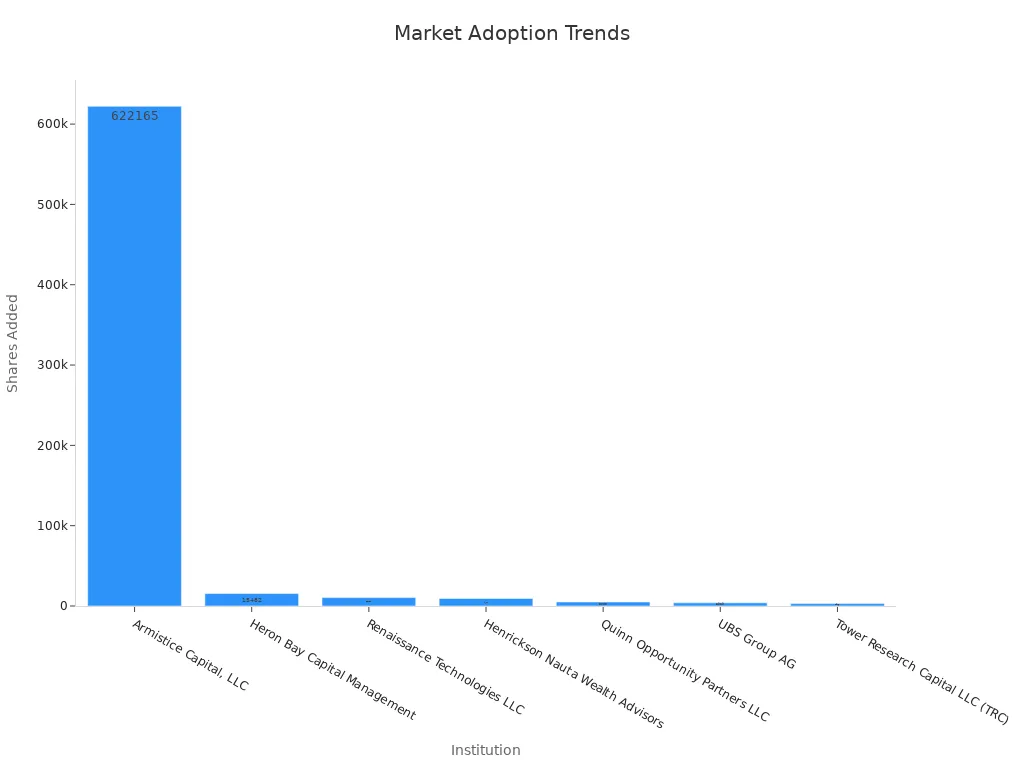
The growing interest from major financial institutions signals a shift toward broader adoption of blockchain-based assets. As regulatory clarity improves, more protocols will likely enter the space, driving further innovation and liquidity.
Next Bull Run Strategies
The next bull run in crypto presents unique opportunities for every type of participant. Each investor profile—retail, high net worth, and institutional—requires a tailored approach to maximize returns and manage risk. Strategic allocation, governance engagement, and compliance remain central themes as bitcoin and ethereum lead the charge.
Retail Investors
Allocation
Retail investors often drive momentum during a bull phase. They tend to increase allocations to equities and leveraged ETFs as the market recovers. Recent data shows that retail buyers remained active even during market selloffs in April and May. The Fear/Greed Index currently reads 71.54, reflecting high exposure and signaling caution as technical indicators approach overbought levels.
Key allocation trends include:
Increased buying during the middle of market moves, often following herd behavior.
Growing interest in leveraged products to amplify gains.
Professional investors remain underweight, but retail participants continue to add exposure.
Retail investors should consider a balanced approach. Diversifying across decentralized exchanges, liquid staking protocols, and real-world asset tokenization can help manage volatility during the next bull run.
Governance
Active participation in governance offers retail investors a voice in protocol decisions. By holding governance tokens, they can vote on proposals and influence the direction of major DeFi projects. Early engagement in governance forums often leads to access to new features and potential rewards. Transparent governance structures also provide additional confidence for those investing in emerging protocols.
High Net Worth
Direct Participation
High net worth individuals benefit from direct participation in the next bull run. Many entrepreneurs and family offices face concentrated wealth in cyclical assets, which increases vulnerability during downturns. Research indicates that about 70% of an owner’s wealth may be tied to their operating company. Advisors recommend direct involvement in protocol staking, validator operations, and early-stage DeFi projects to diversify exposure.
Advanced Strategies
Advanced strategies help manage risk and optimize returns. Techniques such as staged pre-sale diversification, exchange-fund swaps, and income buffers (like low-duration bonds) protect against forced liquidation. Comprehensive risk mapping—including guarantees, covenants, and cyber risks—ensures a robust defense against unexpected events. Consolidated balance sheets across trusts and holding companies improve transparency and enable sophisticated scenario modeling. These approaches have proven effective for high net worth investors navigating previous market cycles.
Institutions
Treasury Management
Institutions play a pivotal role in the next bull run. Treasury management strategies have evolved, with significant inflows into crypto ETPs and direct bitcoin acquisitions. Recent statistics highlight this trend:
Metric | Value (USD millions or BTC) | Description |
|---|---|---|
Weekly net inflows into global crypto ETPs | +1600.7 million USD | Total net inflows across all crypto assets, indicating strong institutional demand. |
Weekly net inflows into global Bitcoin ETPs | +1038.4 million USD | Significant inflows, including +1369.9 million USD specifically into US spot Bitcoin ETFs. |
Weekly net inflows into US spot Bitcoin ETFs | +1369.9 million USD | Highlighting strong institutional interest in US Bitcoin ETFs. |
Weekly net inflows into global Ethereum ETPs | +577.3 million USD | Positive inflows showing growing institutional interest in Ethereum. |
Weekly net inflows into US Ethereum spot ETFs | +528.1 million USD | Reinforces Ethereum’s recent outperformance and institutional treasury activity. |
Corporate treasury acquisition by Metaplanet (Japan) | 1,112 BTC acquired, total 10,000 BTC | Demonstrates direct corporate treasury accumulation of Bitcoin during bull market phases. |
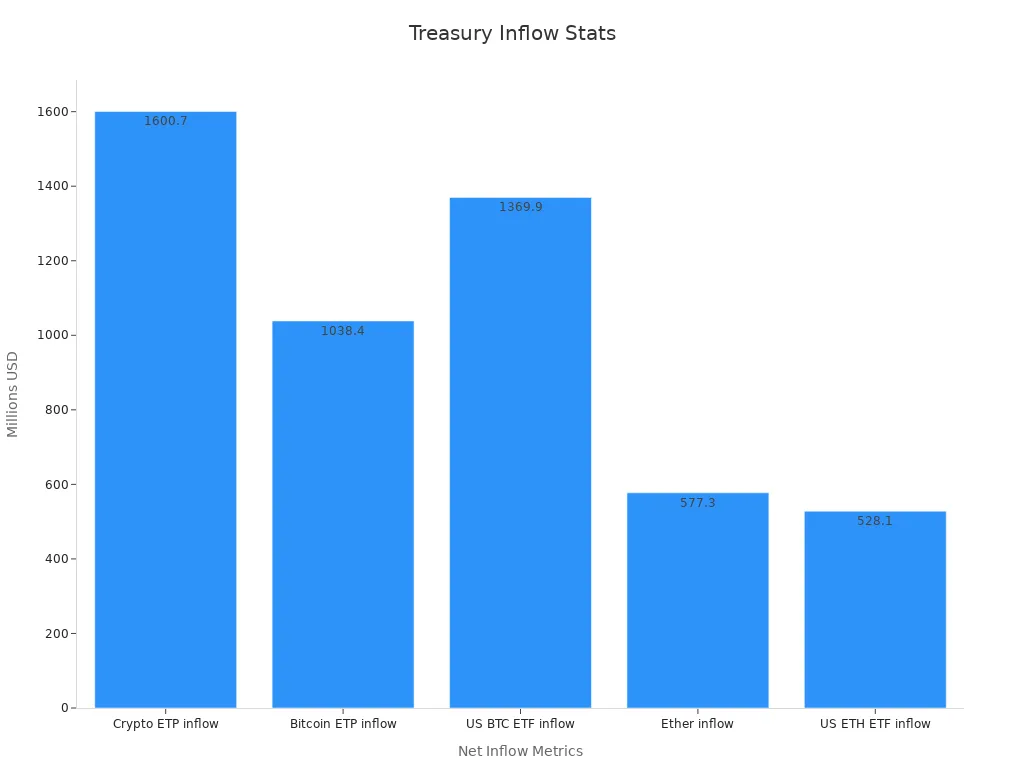
Institutions should monitor fund flows and adjust treasury allocations to bitcoin and ethereum as the next bull run accelerates.
Custom Solutions
Custom solutions enable institutions to address compliance and operational needs. Legal entity formation, KYC/AML integration, and cross-jurisdictional compliance support secure participation in DeFi. Institutions can leverage custom integrations with decentralized protocols, optimize yield strategies, and participate in governance to shape the evolving landscape. Early adoption of compliant DeFi products positions institutions for long-term growth as the investment environment matures.
Proactive engagement, diversified allocation, and governance participation will define success for all investors in the next bull run.
Looking Ahead in DeFi
Innovation
New Products
DeFi continues to evolve with the introduction of new products that blend advanced technology and finance. Recent developments highlight the rapid adoption of platforms that integrate artificial intelligence and decentralized finance. For example, Singularity Finance completed a strategic merger, combining AI with DeFi on a Layer 2 platform. This move led to a 37% increase in trading volume within 24 hours, showing strong market interest. New features such as multi-asset strategy vaults and onchain identity solutions have enhanced platform capabilities. Community sentiment remains optimistic, and the consolidation of governance and liquidity streamlines the ecosystem. Projects that focus on tokenizing AI assets now attract attention from both professionals and investors, positioning themselves at the forefront of the AI-Fi intersection.
World Chain’s integration of Circle’s USDC stablecoin and Cross-Chain Transfer Protocol (CCTP V2) enables instant, low-cost USDC transfers across more than ten blockchains. Since 2023, CCTP has processed $36 billion in transactions, demonstrating significant liquidity and usage. Developers can now build native USDC-enabled applications, lowering barriers for users and institutions. Regulatory compliance and scalable liquidity pools support institutional inflows, while biometric identity verification adds security and appeal.
Regulatory Sandboxes
Regulatory sandboxes play a crucial role in fostering innovation. These frameworks allow developers to test new DeFi products in a controlled environment, reducing uncertainty and encouraging experimentation. The SEC’s recent support for innovation exemptions mirrors successful models in other countries. Sandboxes help projects launch faster and integrate with traditional finance, while maintaining compliance. As more protocols enter these environments, the pace of product development and adoption is likely to accelerate.
Risks
Volatility
DeFi markets remain highly volatile, presenting both opportunities and challenges. Price swings can be extreme, as seen when NEO dropped 519.9% in 24 hours and 299.25% over seven days. Such volatility signals high market instability and exposes participants to significant risk. Declining user engagement, with daily active addresses at multiyear lows and transaction volumes below historical averages, further increases uncertainty. Lower developer activity may also hinder innovation and platform robustness.
Regulatory Shifts
Regulatory shifts represent another major risk for DeFi participants. Increased scrutiny on anti-money laundering and securities compliance can create operational hurdles. Delays in technical upgrades, especially those addressing scalability and security, may weaken platform competitiveness. Waning institutional participation and the absence of derivatives or ETFs tied to certain assets limit capital inflows and market stability. Projects must monitor regulatory updates closely and adapt quickly to maintain compliance and resilience.
Staying informed and proactive remains essential. Predictive models and statistical forecasts, such as ARIMA and machine learning algorithms, help estimate future growth trends and identify underlying drivers. These tools enable strategic planning and targeted interventions, supporting both innovation and risk management in the evolving DeFi landscape.
The DeFi bull market now stands at a pivotal moment. SEC signals have created new opportunities for investors and enthusiasts. They should closely monitor decentralized exchanges, liquid staking protocols, and real-world asset tokenization. These categories drive growth in the current bull market.
Staying informed and adaptable will help participants capture the full potential of this bull market.
Next steps:
Track regulatory updates
Explore governance participation
Diversify across leading DeFi sectors
FAQ
What triggered the current DeFi bull market?
Strong capital inflows, regulatory clarity from the SEC, and rapid protocol innovation have driven the current DeFi bull market. Investors now see clear opportunities in decentralized exchanges, liquid staking, and real-world asset tokenization.
How do SEC signals impact DeFi protocols?
SEC signals provide legal clarity for staking, mining, and innovation. Protocols can now launch products with less regulatory risk. This clarity attracts institutional capital and encourages developers to build within the United States.
Why should investors watch decentralized exchanges?
Decentralized exchanges offer self-custody, deep liquidity, and rapid innovation. Regulatory support has increased their legitimacy. Both retail and institutional investors now use these platforms for secure, transparent trading.
What makes liquid staking protocols attractive?
Liquid staking protocols allow users to earn rewards while keeping assets liquid. Clear SEC guidance has removed uncertainty. Institutions and individuals now participate more actively, boosting total value locked and market growth.
How does real-world asset tokenization benefit the market?
Tokenization brings traditional assets like bonds and real estate onto the blockchain. This process increases accessibility, transparency, and liquidity. Regulatory support accelerates adoption by financial institutions and investors.
What risks should DeFi participants consider?
DeFi markets remain volatile. Regulatory changes, technical issues, and declining user activity can impact returns. Participants should monitor updates, diversify holdings, and use risk management tools.
How can investors get involved in DeFi governance?
Investors can buy governance tokens and join protocol forums. Voting on proposals shapes project direction. Early participation often leads to rewards and greater influence within the ecosystem.
Where can users find updates on DeFi regulations?
Users can follow official SEC announcements, protocol blogs, and reputable crypto news sources. Staying informed helps participants adapt strategies and remain compliant with evolving regulations.

