

Recent data shows that alt coin season has not officially arrived, despite strong gains in many tokens. The Altcoin Season Index sits at 33, well below the needed 75 mark, even as altcoins like AVAX and SOL have surged over 130% in the past month.
Alt coin season describes a period when a majority of altcoins outperform bitcoin, drawing increased attention from the crypto market. Investors watch key indicators and signals because these key factors help guide smarter investing decisions.
Key Takeaways
Altcoin season has not started yet; the Altcoin Season Index remains below 33, signaling bitcoin still leads the market.
Investors should watch key signals like bitcoin dominance, the ETH/BTC ratio, and trading volume to spot when altcoin season may begin.
Altcoin season means many altcoins outperform bitcoin, offering chances for higher profits but also higher risks.
Using multiple market indicators together helps investors make smarter decisions and manage risks effectively.
Diversifying investments and monitoring market changes regularly can protect portfolios and prepare investors for future altcoin rallies.
Alt Coin Season: Is It Now?
Key Signals Today
The crypto market in early 2025 shows mixed signals for alt coin season. Most indicators point to a strong bitcoin season, with altcoins struggling to outperform. The altcoin season index remains low, averaging around 18 in Q1 2025 and reaching a yearly low of 17 on March 12. This number signals that altcoins are not leading the market. Bitcoin dominance stands at 61%, reflecting a clear preference for bitcoin over other digital assets.
Metric/Indicator | Q1 2025 Data/Trend |
|---|---|
CMC Altcoin Season Index | Averaged around 18, hitting a yearly low of 17 on March 12, indicating strong Bitcoin dominance. |
Bitcoin (BTC) Price Change | Down -10.52% in Q1 2025; strong January (+9.29%) offset by February drop (-17.39%) and weak March. |
Ethereum (ETH) Price Change | Down -43.85% in Q1 2025, steepest quarterly loss since 2018, reflecting heavy altcoin underperformance. |
Large-Cap Altcoins Performance | Mostly down double digits: SOL (-31.55%), LINK (-34.71%), TON (-30.09%), ETH (-6.02%), BNB (-14.64%). |
Altcoin Outliers | Few altcoins posted strong gains: BERA (+745.98%), FORM (+447.06%), PIP (+89.20%). |
Bitcoin Dominance | High at 61%, reflecting capital rotation into BTC for relative safety amid macro uncertainty. |
Market Sentiment (Fear & Greed) | Persistently low, stuck below 40, with periods of Extreme Fear (as low as 15), indicating weak investor confidence. |
Market Liquidity & Volume | Declined significantly, with 24hr trade volume down 40.65%, reflecting cooling retail interest. |
Q2 2025 Outlook | Early signs of altcoin rotation but requires BTC price stabilization and positive macro/regulatory catalysts to trigger true altcoin season. |

Bitcoin price movements have dominated headlines, especially after a sharp drop below $50,000 during a ‘Black Monday’ event. Bitcoin lost over 18% in 24 hours, causing panic across the crypto market. Ethereum underperformed bitcoin, dropping over 40% and struggling to recover above $2,500. Most large-cap altcoins, such as SOL, LINK, and TON, posted double-digit losses. Only a few outliers, like BERA and FORM, managed significant gains.
Market sentiment remains weak. The Fear & Greed Index stayed below 40 for most of Q1, with periods of extreme fear as low as 15. Liquidity and trading volume also declined, with 24-hour volume dropping by over 40%. These key factors show that investors prefer safety, keeping capital in bitcoin or stablecoins rather than rotating into altcoins.
Despite these trends, some early Q2 signals suggest a possible shift. The altcoin market cap rebounded by $167 billion in one day, hinting at renewed interest. Stablecoin market capitalization reached an all-time high of $160 billion, and adjusted stablecoin transfer volumes hit $1.3 trillion. This liquidity could move into altcoins if bitcoin price movements stabilize and positive regulatory news emerges. For now, the data confirms that bitcoin season continues, and alt coin season has not yet arrived.
What Investors Should Know
Investors should watch several signals to spot when alt coin season may ignite. The altcoin season index remains the most direct measure. A reading above 75 signals the start of alt coin season, but current levels remain far below this threshold. Bitcoin dominance above 56% shows that most capital stays with bitcoin, not altcoins.
Key statistical indicators help investors track market momentum and possible reversals:
Relative Strength Index (RSI): Measures if an asset is overbought or oversold.
Moving Average (MA): Shows the trend direction for bitcoin and altcoins.
MACD (Moving Average Convergence Divergence): Detects trend reversals.
Fibonacci Retracement: Identifies support and resistance levels.
Bollinger Bands: Measures volatility and signals overbought or oversold conditions.
Tip: Investors should combine these signals with market sentiment and liquidity data for a clearer picture.
The crypto market remains in a holding pattern. Only 19 out of 52 sectors showed positive growth in Q3, with TRON ecosystem, Media, and Stablecoins leading. DeFi and infrastructure sectors faced steep losses, while meme coins, despite high volatility, led year-to-date gains. Stablecoins now hold record market share, suggesting large amounts of capital remain on the sidelines, ready to enter the market when conditions improve.
Investors should stay alert to changes in bitcoin price movements and monitor the altcoin season index. If bitcoin stabilizes and positive news appears, alt coin season could begin quickly. For now, the market remains in bitcoin season, and patience is key for those investing in altcoins.
What Is Alt Coin Season?
Definition and Features
Alt coin season describes a period when a large number of altcoins outperform bitcoin over a set timeframe. This phase often follows a strong rally in bitcoin, as investors seek higher returns in smaller, more volatile assets. During alt coin season, the market sees a shift in capital from bitcoin to a wide range of alternative cryptocurrencies.
The Bitget Altcoin Season Index helps define this period. It tracks the performance of the top 50 or 100 cryptocurrencies, excluding bitcoin, over 90 days. If 75% or more of these altcoins outperform bitcoin, the index signals an alt coin season. A score below 25% points to a bitcoin season. This index gives investors a clear view of recent market trends.
Key features of alt coin season include:
A sharp drop in bitcoin’s market dominance.
Rising altcoin trading volumes.
Many altcoins posting higher gains than bitcoin.
Increased attention on new and emerging crypto projects.
Historical data supports these patterns. For example, in 2017-2018, bitcoin dominance fell from 86.3% to 38.69%. In 2020-2021, it dropped from 70% to 38%. These periods saw altcoins surge in both price and popularity.
Why It Matters
Alt coin season holds great importance for crypto investors. It often brings rapid price increases for many altcoins, creating opportunities for significant profits. Investors who recognize the start of this season can adjust their portfolios to capture these gains.
Note: Alt coin season does not last forever. It can end quickly if bitcoin regains dominance or if market sentiment shifts.
Understanding the signs of alt coin season helps investors manage risk. They can avoid entering the market too late or holding altcoins during downturns. Macroeconomic factors, such as changes in Federal Reserve interest rates, also influence these cycles. By tracking indicators like the Altcoin Season Index and market dominance, investors can make more informed decisions.
Altcoin Indicators to Watch
Understanding the right indicators helps investors spot when the altcoin market is ready for a shift. Here are the six main signals that experts monitor:
ETH/BTC Ratio
Altcoin Market Cap
Volume Spikes
Bitcoin Dominance
Bitcoin dominance measures the share of bitcoin in the total crypto market. High bitcoin dominance often means investors prefer safety, especially during uncertain times. When bitcoin dominance drops, it can signal that capital is moving into the altcoin market. Historical data shows that after long periods of high bitcoin dominance, altcoins often rally. Technical analysis supports this, as traders watch for declines in dominance to predict altcoin performance. In 2025, bitcoin dominance remains above 60%, which points to a strong bitcoin season and less risk-taking in the altcoin market.
ETH/BTC Ratio
The ETH/BTC ratio compares the value of Ethereum to bitcoin. A rising ratio means Ethereum is gaining strength against bitcoin, often leading the way for other altcoins. Regression analysis shows a strong link between Ethereum’s network activity and this ratio. When the ETH/BTC ratio climbs, it often signals a shift toward the altcoin market. In recent months, the ratio has stayed low, showing that bitcoin still leads, but any breakout could boost the dominance of altcoins.
Altcoin Season Index
The altcoin season index tracks how many top altcoins outperform bitcoin over 90 days. If 75% or more do better than bitcoin, the index signals an altcoin season. Scores below 25 mean a bitcoin season. The index uses real market data and has matched past altcoin rallies, such as those in 2017 and 2021. Right now, the altcoin season index sits below 33, showing that the altcoin market is not yet leading.
Metric | Description |
|---|---|
Top 50 Altcoins by Market Cap | Evaluated excluding stablecoins and asset-backed tokens |
Time Period | Performance measured over last 90 days |
Altcoin Season Threshold | 75% or more altcoins outperform Bitcoin signals Altcoin Season |
Index Range 0-25 | Bitcoin Season: BTC outperforms most altcoins |
Index Range 26-74 | Neutral Market: No clear dominance |
Index Range 75-100 | Altcoin Season: Altcoins lead the market |
Altcoin Market Cap
Altcoin market capitalization shows the total value of all altcoins, not counting bitcoin or top stablecoins. When altcoin market cap consolidates or rises, it can signal accumulation and less downside risk. In 2025, altcoin market capitalization holds near $0.73 trillion. This level suggests investors are waiting for the right signals before moving more capital into the altcoin market. Past cycles show that when bitcoin dominance peaks and altcoin market cap consolidates, a breakout often follows.
Volume and Sentiment
Volume spikes and bullish sentiment often come before big moves in the altcoin market. High trading volume means more activity and interest. Sentiment analysis tools scan social media, reviews, and news to measure how investors feel. Positive sentiment and rising volume can signal the start of an altcoin rally. These tools help investors spot changes early and adjust their strategies.
Tip: Watch for a combination of rising altcoin season index, falling bitcoin dominance, and strong ETH/BTC ratio. These signals together often mark the start of a true altcoin season.
Crypto Market Patterns
Bitcoin, Ethereum, and Altcoins Sequence
The crypto market often follows a clear sequence during major cycles. Bitcoin usually rallies first. This phase, known as bitcoin season, attracts most of the capital and attention. As bitcoin price movements slow, Ethereum often starts to gain strength. When Ethereum outperforms bitcoin, traders watch for signs that other altcoins may follow. After Ethereum, the broader altcoin market can surge, marking the end of bitcoin season and the start of a new phase.
Researchers use ordinal networks and permutation entropy to study these sequences. These tools help identify patterns and transitions between stable and chaotic periods. Bitcoin shows strong long-term memory and efficiency, which supports its leading role. Ethereum and other altcoins display more dynamic and unpredictable behavior. This sequence-based approach helps explain why bitcoin season comes before altcoin rallies.
Historical Altcoin Seasons
Looking at historical patterns, the crypto market has seen several clear cycles. In 2017, the idea of altcoin season first appeared. Ethereum and many ERC-20 tokens surged, while bitcoin season faded. In 2020 and 2021, new trends like DeFi and NFTs drove altcoins to outperform bitcoin. Some altcoins gained 10 to 100 times their value compared to bitcoin. However, in 2018-2019 and again in 2022-2023, the market corrected. Bitcoin season returned, and risk appetite dropped. Recent data from 2024-2025 shows the Altcoin Season Index below 25, confirming another bitcoin season.
Note: Factors like macroeconomic shifts, new technology, and regulatory changes shape these cycles. Historical comparisons show that bitcoin season often returns after periods of altcoin growth.
Duration and Volatility
The duration and volatility of these cycles can vary. Researchers use statistical measures to track these changes. The table below summarizes key metrics:
Statistical Measure | Description |
|---|---|
Mean | Average daily return over time |
Standard Deviation | Measures how much prices change each day |
Range | Difference between highest and lowest returns |
Skewness | Shows if returns lean positive or negative |
Kurtosis | Highlights how often extreme changes happen |
During the COVID-19 pandemic, the crypto market saw a long bullish phase. Prices climbed for almost two years before a sharp crash in early 2022. Events like wars or economic shocks can cause sudden spikes in volatility. Models like TVP-VAR help track how shocks move through the market. These tools show that bitcoin season can last months or even years, with periods of high volatility and rapid change.
Monitoring the Altcoin Market
Tracking Key Metrics
Investors who monitor the altcoin market rely on a mix of real-time data and statistical benchmarks. They use tools like Geckoboard for live dashboards, Salesforce CRM for tracking key performance indicators, and spreadsheets such as Microsoft Excel or Google Sheets for data analysis. These platforms help track metrics like trading volume, price changes, and sentiment shifts. Sentiment metrics, including the Fear and Greed Index, social volume, and funding rates, reveal early changes in market mood. On-chain data, such as daily active addresses and the NVT ratio, confirm or challenge these trends. Tokenomics factors, like unlock schedules and burn mechanisms, show supply pressures that can affect prices. Macro indicators, including bitcoin dominance and treasury yields, provide context for shifts in the altcoin market.
Market Tracking Indicators (KPIs) | Numerical Tools for Validation |
|---|---|
Trading Volume | Geckoboard, Excel, Google Sheets |
Sentiment Metrics | Social media tools, Fear & Greed Index |
On-chain Activity | Blockchain explorers |
Macro Indicators | Financial news, market dashboards |
Tip: Combining several metrics gives a clearer picture than relying on one alone.
Managing Risk
Risk management remains essential for anyone with altcoin exposure. Statistics show that up to 70% of projects fail, and organizations that ignore risk management face a 50% chance of failure. Investors should identify risks early and create response plans. Regular monitoring helps reduce surprises. Many successful projects use digital tools to track and control risks, which lowers the chance of costly mistakes.
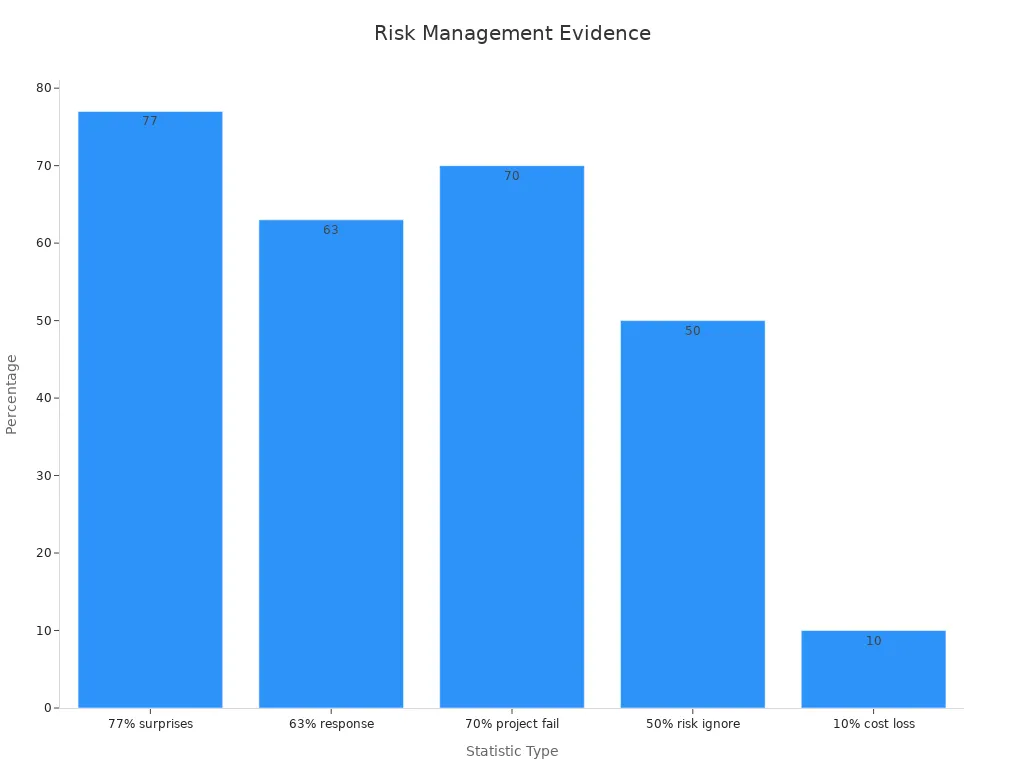
A bundle of performance metrics, such as alphas, value at risk, lower partial moments, maximum drawdown, and the Sharpe ratio, helps measure risk and reward. Using multiple benchmarks gives a more complete view than any single metric. This approach helps investors avoid large losses and manage their altcoin exposure more effectively.
Portfolio Tips
Diversification stands out as a key strategy for managing altcoin exposure. Investors lower risk by spreading investments across different coins, sectors, and asset classes. A portfolio with 20 to 30 different investments offers practical oversight and reduces the impact of any single loss. Adding index funds or bond funds can further balance risk. Over-diversification, however, may increase risk if assets are too similar. Monitoring standard deviation helps track overall portfolio risk. Diversification protects against sharp losses in bear markets and keeps altcoin exposure at a manageable level.
Note: Regularly review and adjust the portfolio to match changing market conditions and personal risk tolerance.
Recent data confirms that altcoin season has not started. The Altcoin Season Index remains well below the 75% threshold. Multiple sources show values between 16 and 24, signaling continued bitcoin season.
Investors should stay alert to market changes and monitor these signals closely. Proactive tracking and timely action help manage risk and capture new opportunities.
FAQ
What triggers the start of altcoin season?
A drop in bitcoin dominance and a rise in the Altcoin Season Index often signal the start. Investors also watch for increased trading volume and positive sentiment in the altcoin market.
How long does altcoin season usually last?
Altcoin season can last from a few weeks to several months. The duration depends on market trends, investor sentiment, and macroeconomic factors.
Can new investors benefit from altcoin season?
Yes. New investors can benefit if they research projects, manage risk, and monitor key indicators. Diversification and careful entry points help reduce losses.
What risks come with investing during altcoin season?
Altcoin prices can change quickly. Many projects fail or lose value. Investors face high volatility and potential losses. Risk management remains essential.
Where can investors track the Altcoin Season Index?
Investors can track the Altcoin Season Index on sites like Blockchain Center and CoinMarketCap. These platforms update the index regularly and provide historical data.

