
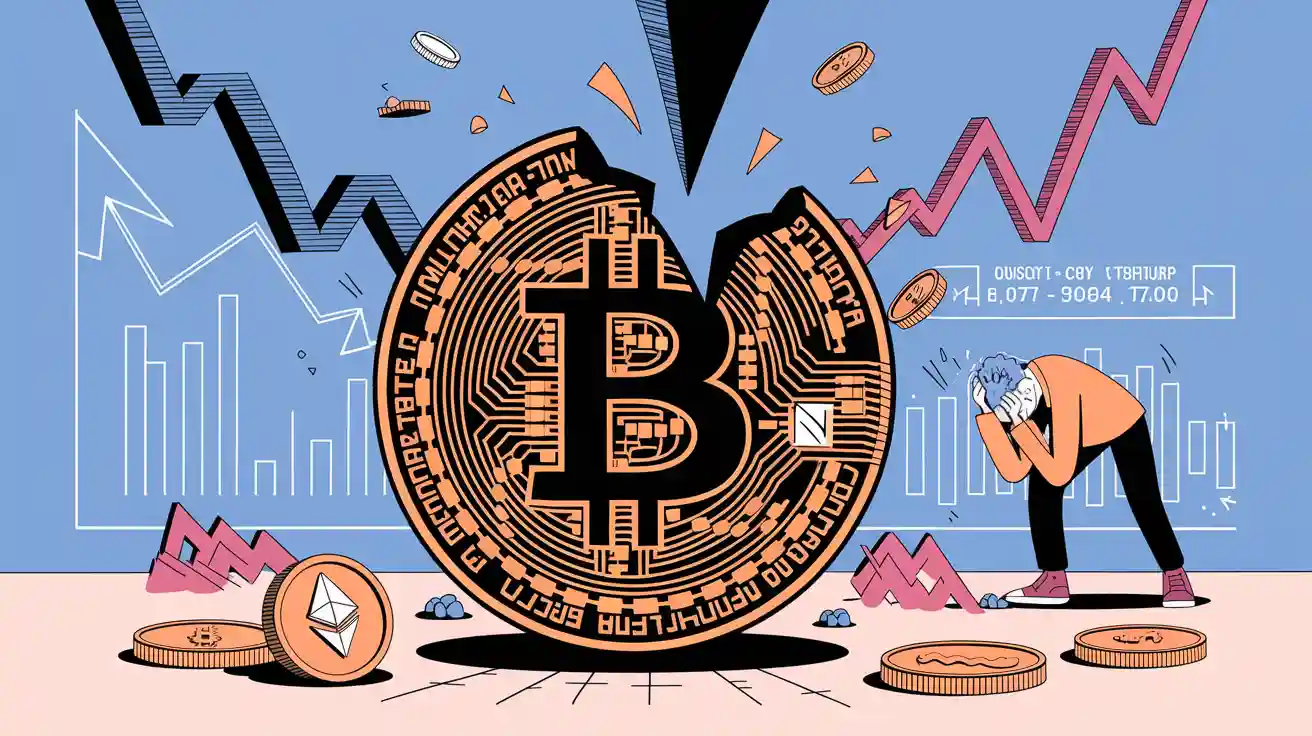
The recent crash in the crypto market has sparked widespread concern, leaving many to wonder, “Why is crypto crashing and will it recover?” Understanding the reasons behind this downturn and the potential for recovery is essential. Data indicates that during crashes, cryptocurrencies tend to exhibit higher correlation values, leading to synchronized movements and heightened volatility. Despite this, history shows that post-crash periods often bring a return to stability. Factors such as technological advancements, growing institutional interest, and evolving regulations suggest that recovery is possible. For instance, increased blockchain adoption across various industries and supportive pro-crypto policies could help restore market confidence. By staying informed and adopting long-term strategies, you can better navigate the question of why crypto is crashing and whether it will recover.
Key Takeaways
Spread your money across different types of investments. This lowers risk during market drops and keeps your savings safer.
Think about long-term plans. Buy when prices are low and use cost-averaging to handle price changes better.
Keep up with market news and trends. Knowing about new rules and the economy helps you make smarter choices.
Control risk by noticing your emotions. Don’t sell in a panic. Stick to your plan, even when things get rough.
Learn how markets move in cycles. Knowing the stages like growth, peak, and drop can help you predict changes.
Why Is the Crypto Market Crashing?
Regulatory Changes and Government Policies
Regulatory pressure has played a significant role in the recent crypto crash. Governments worldwide have introduced stricter policies to address concerns about illegal activities and market stability. For example, the collapse of FTX highlighted the need for tighter oversight, as it led to a bank run and legal consequences for key figures in the cryptocurrency industry. Similarly, the Terra crash caused a ripple effect, wiping out billions in value and shaking investor confidence. These events have prompted regulators to act swiftly, creating uncertainty for investors.
In addition, the approval of Bitcoin exchange-traded products (ETPs) by the SEC in early 2024 initially seemed like a step toward mainstream acceptance. However, warnings about the risks associated with these products have added to market turmoil. As governments continue to refine their approach to crypto regulation, the market faces ongoing challenges. This regulatory uncertainty often triggers market panic, causing crypto prices to fall further.
Market Sentiment and Investor Behavior
Investor sentiment plays a crucial role in the crypto market’s volatility. When confidence wanes, market panic can set in, leading to sharp declines in prices. Recent data shows a significant shift in investor sentiment, with bearish trends dominating the market. For instance, the decline in Bitcoin futures open interest by approximately 17,000 BTC and perpetual open interest by around 18,000 BTC reflects reduced optimism among traders. Negative funding rates and a higher put-call open interest ratio further indicate that many investors expect prices to drop.
This shift in sentiment has also affected trading behavior. In Q1 2025, Bitcoin’s price fell from $101,470 to $76,330, while Ethereum’s price dropped from $3,300 to $1,470. These declines coincided with a reduction in open interest across major cryptocurrencies, signaling cautious behavior among traders. As fear spreads, many investors exit the market, exacerbating the crash and creating a self-reinforcing cycle of declining prices.
Global Economic Factors and Macroeconomic Uncertainty
The broader economy significantly influences the crypto market. Macroeconomic uncertainty, driven by inflation fears, fluctuating interest rates, and geopolitical tensions, has shifted investor behavior. Many now view Bitcoin as a hedge against economic instability, which has increased its demand during turbulent times. However, this shift has also introduced new challenges. As traditional markets experience volatility, the crypto market often mirrors these fluctuations, amplifying its own instability.
For example, during periods of economic recession, investors tend to move away from high-risk assets like cryptocurrencies. This behavior contributes to falling prices and reduced market activity. Additionally, the global distribution of crypto ownership reveals potential economic impacts. High-income individuals hold significant portions of crypto assets, while social minorities have scattered ownership. This uneven distribution means that market corrections can disproportionately affect certain groups, further complicating recovery efforts.
The interplay between macroeconomic factors and crypto market dynamics underscores the importance of understanding why crypto crashes occur. By staying informed about these influences, you can better navigate the challenges and identify potential buying opportunities during periods of market turmoil.
Technological Issues and Security Concerns
Technological challenges and security vulnerabilities often play a critical role in crypto market crashes. As an investor, you need to understand how these issues can disrupt the market and impact your portfolio.
1. Blockchain Scalability Problems
Many cryptocurrencies rely on blockchain technology, which can face scalability issues. When transaction volumes increase, networks like Bitcoin or Ethereum may struggle to process them efficiently. This leads to slower transaction speeds and higher fees, frustrating users and reducing confidence in the system.
For example, during periods of high demand, Ethereum’s network has experienced congestion. Users faced delays and paid exorbitant gas fees to complete transactions. These inefficiencies can discourage adoption and cause prices to drop.
2. Security Breaches and Hacks
Security breaches remain one of the most significant threats to the crypto market. Hackers often target exchanges, wallets, and decentralized finance (DeFi) platforms. When a major breach occurs, it can lead to massive losses and erode trust in the market.
Example: In 2022, the Ronin Network, which supports the popular Axie Infinity game, suffered a $625 million hack. This event not only impacted the platform but also caused panic among investors across the crypto space.
You should always prioritize security when choosing where to store your assets. Using hardware wallets and enabling two-factor authentication can help protect your investments.
3. Smart Contract Vulnerabilities
Smart contracts power many blockchain applications, but they are not immune to flaws. Bugs or poorly written code can create vulnerabilities that hackers exploit. These incidents can result in significant financial losses and damage the reputation of the affected cryptocurrency.
A notable example is the 2016 DAO hack, where attackers exploited a vulnerability in Ethereum’s smart contract. This event led to the loss of $60 million worth of Ether and forced the Ethereum community to implement a hard fork.
4. Dependence on Centralized Infrastructure
Although cryptocurrencies aim to be decentralized, many still rely on centralized infrastructure, such as exchanges or mining pools. When these centralized entities face outages, technical failures, or attacks, the entire market can feel the impact.
For instance, if a major exchange halts withdrawals due to technical issues, it can trigger panic selling. This creates a ripple effect, driving prices down further.
5. Emerging Technologies and Risks
The rapid pace of innovation in the crypto space introduces new risks. Technologies like cross-chain bridges, which connect different blockchains, have become popular. However, they also present unique vulnerabilities. Hackers often target these bridges because they handle large amounts of funds.
Tip: Stay informed about the technologies behind the cryptocurrencies you invest in. Understanding their strengths and weaknesses can help you make better decisions.
Summary Table: Key Technological Issues and Their Impact
Issue | Impact on Market |
|---|---|
Blockchain Scalability | Slower transactions, higher fees, reduced user confidence |
Security Breaches | Loss of funds, erosion of trust, market-wide panic |
Smart Contract Vulnerabilities | Exploited bugs leading to financial losses and reputational damage |
Centralized Infrastructure | Outages or failures causing panic and price drops |
Emerging Technologies | New risks from innovative tools like cross-chain bridges |
Technological issues and security concerns highlight the importance of due diligence. By staying informed and taking proactive steps, you can better navigate the risks associated with the crypto market.
Historical Context of Crypto Market Crashes
The 2018 Crypto Winter and Its Aftermath
The 2018 crypto winter marked one of the most significant downturns in the cryptocurrency market. Rising inflation rates and aggressive interest rate hikes reduced investor confidence, leading to a sharp decline in prices. The TerraUSD and Luna crash wiped out billions in value, triggering a crisis of trust among investors. Over-leverage among crypto lenders and exchanges exposed vulnerabilities, creating a domino effect of financial losses. The bankruptcy of FTX further destabilized the market, resulting in billions of dollars in losses. Concerns about liquidity and security heightened fears, while the lack of regulatory clarity added uncertainty to the digital currency market.
Cause/Event | Description |
|---|---|
Rising inflation rates | Contributed to the decline in investor confidence. |
Aggressive interest rate hikes | Increased borrowing costs, affecting investment in cryptocurrencies. |
TerraUSD and Luna crash | Triggered a significant loss of investor equity, leading to a crisis of confidence. |
Bankruptcy of FTX | Resulted in billions of dollars in losses for investors, further destabilizing the market. |
Over-leverage among crypto lenders/exchanges | Exposed vulnerabilities in the market, leading to a domino effect of financial losses. |
Lack of regulatory clarity | Created uncertainty, contributing to the decline in investor confidence. |
Concerns about liquidity and security | Heightened fears among investors, exacerbating the downturn. |
The aftermath of the 2018 crash revealed the importance of resilience in the crypto market. Investors began focusing on long-term strategies, while developers worked on improving blockchain scalability and security. These efforts laid the foundation for future recovery.
The 2021 Market Correction: Causes and Recovery
The 2021 market correction highlighted the growing connection between the crypto market and traditional finance. Inflationary fears and potential interest rate hikes caused the U.S. stock market to drop by 5%, leading to Bitcoin’s price falling by 17%. During the same period, China’s crackdown on cryptocurrency trading and mining pushed Bitcoin’s price down by another 9%. Ethereum also experienced significant losses, reflecting the broader impact of macroeconomic factors and regulatory actions.
Despite these challenges, the market showed signs of recovery. Institutional investors began exploring crypto as an alternative asset class, while advancements in blockchain technology attracted renewed interest. The correction underscored the importance of understanding external influences on the cryptocurrency market.
Patterns of Recovery in Past Crashes
Crypto crashes often follow predictable patterns. These include transitioning from euphoria to fear in distinct phases. Declining trading volume despite rising prices and unusual whale wallet movements serve as early warning signs. Extreme greed in market sentiment and negative regulatory news often precede corrections.
Market crashes typically begin with over-optimism, where prices rise rapidly due to speculative buying.
As trading volume declines, fear sets in, leading to panic selling and sharp price drops.
Recovery begins when confidence returns, driven by technological innovation, regulatory clarity, or institutional involvement.
Understanding these patterns can help you anticipate market movements and make informed decisions during periods of volatility.
Will Crypto Recover? Factors Influencing Recovery Potential
Role of Technological Innovation in Market Resilience
Technological innovation plays a vital role in determining whether the crypto market can recover from downturns. Blockchain technology and artificial intelligence (AI) have emerged as key drivers of resilience. These innovations enhance adaptability and diversification, which are essential for maintaining stability during periods of volatility. For instance, blockchain advancements improve transaction efficiency and security, while AI-powered tools help analyze market trends and predict price movements.
Despite economic uncertainty, on-chain fundamentals continue to support the crypto market. This suggests that downturns may present opportunities for increasing exposure to assets like Bitcoin and other cryptocurrencies. By leveraging these technologies, the market can adapt to challenges and build a stronger foundation for recovery.
Tip: Diversifying your investments across various crypto assets and traditional markets can help you navigate downturns more effectively.
Institutional Involvement and Mainstream Adoption
Institutional involvement has significantly influenced the recovery potential of the crypto market. Large-scale investors bring liquidity and stability, which can help reduce volatility. In 2022, institutional investors accounted for over 68% of crypto trading volume, highlighting their growing interest in the market. Additionally, 30% of institutional portfolios now include cryptocurrencies, reflecting their acceptance as a viable investment option.
Mainstream adoption also plays a crucial role. Over 36% of small businesses in the U.S. now accept crypto payments, demonstrating its integration into everyday commerce. This widespread acceptance boosts confidence in the market and encourages further investment.
Statistic | Description |
|---|---|
68% of crypto trading volume | Institutional investors accounted for over 68% of trading volume in 2022. |
36% of small businesses | Over 36% of U.S. small businesses accept crypto payments. |
30% of institutional portfolios | 30% of institutional investors hold cryptocurrencies in their portfolios. |
As institutional involvement grows and mainstream adoption increases, the crypto market becomes more robust. These factors contribute to its ability to recover from crashes and sustain long-term growth.
Regulatory Clarity and Its Impact on Stability
Regulatory clarity is another critical factor influencing the recovery of the crypto market. Clear and consistent regulations reduce uncertainty, which helps stabilize prices and attract more investors. For example, the GENIUS Act aims to create a regulatory framework for stablecoins, addressing concerns about their reliability and fostering market stability.
The Regulatory Risk Index (CRRIX) highlights the impact of policy shifts on market volatility. Data shows that changes in regulatory clarity often precede fluctuations in the market. This indicates that uncertainty surrounding regulations can drive price instability.
Indicator | Description |
|---|---|
GENIUS Act | Aims to establish a stablecoin regulatory framework to enhance market stability. |
Regulatory Risk Index (CRRIX) | Captures policy shifts and shows how regulatory clarity affects market volatility. |
Note: Staying informed about regulatory developments can help you anticipate market movements and make better investment decisions.
When governments and regulatory bodies provide clear guidelines, the crypto market benefits from increased trust and reduced volatility. This creates a more favorable environment for recovery and long-term growth.
Market Cycles and Long-Term Investor Behavior
Understanding market cycles is essential for navigating the crypto market. These cycles follow predictable patterns, driven by investor behavior and external factors. As a long-term investor, recognizing these trends can help you make informed decisions during periods of volatility.
The Phases of a Market Cycle
Crypto market cycles typically consist of four phases: accumulation, uptrend, distribution, and downtrend. Each phase reflects changes in investor sentiment and trading activity.
Accumulation Phase: This phase occurs after a market crash. Prices stabilize as long-term investors begin buying assets at lower valuations. You might notice reduced trading volume and a lack of enthusiasm during this period.
Uptrend Phase: Optimism returns, driving prices higher. Increased trading activity and positive news often fuel this phase. Speculative traders enter the market, contributing to rapid price growth.
Distribution Phase: Prices peak as early investors start selling their holdings. Trading volume remains high, but sentiment shifts from optimism to caution. You may observe unusual movements in whale wallets during this phase.
Downtrend Phase: Panic selling dominates this phase, leading to sharp price declines. Fear spreads among investors, causing reduced market activity and lower valuations.
Recognizing these phases can help you anticipate market movements and adjust your strategy accordingly.
Insights from Long-Term Investor Behavior
Long-term investors play a crucial role in shaping market cycles. Their behavior often reveals cyclical trends that influence the crypto market’s recovery potential. For example, Bitcoin dominance tends to decline around the two-year mark of a market cycle. This suggests that you should broaden your measures for assessing crypto valuations beyond Bitcoin alone.
Funding rates for perpetual futures contracts also provide valuable insights. Positive funding rates indicate demand for long positions, reflecting optimism among traders. However, current rates are lower than previous cycle highs, suggesting that speculative trading remains cautious. Additionally, the MVRV Ratio, which compares Bitcoin’s market value to its realized value, currently stands at 2.6. Historically, this ratio has peaked at higher levels, indicating that the cycle may still have room for growth.
Tip: Monitoring metrics like Bitcoin dominance, funding rates, and the MVRV Ratio can help you identify opportunities during market cycles.
Strategies for Long-Term Investors
To navigate market cycles effectively, you need a clear strategy. Here are some actionable steps:
Diversify Your Portfolio: Spread your investments across multiple assets to reduce risk. Include both crypto and traditional investments for balance.
Focus on Fundamentals: Prioritize assets with strong use cases and reliable technology. Avoid speculative investments during volatile periods.
Stay Patient: Market cycles take time to unfold. Avoid emotional decision-making and focus on long-term goals.
Monitor Key Metrics: Keep an eye on indicators like trading volume, funding rates, and whale wallet movements. These metrics can provide early warnings of market shifts.
By adopting these strategies, you can better navigate the ups and downs of the crypto market and position yourself for long-term success.
Actionable Insights for Navigating the Crypto Market Crash
Diversify Your Portfolio to Mitigate Risk
Diversification is one of the most effective ways to protect your investments during a crypto market crash. By spreading your investments across different assets, you reduce the impact of any single asset’s poor performance. This approach promotes stability in returns, even during volatile periods. For example, combining traditional assets like stocks or gold with cryptocurrencies can create a more balanced portfolio. Bitcoin and gold, for instance, have historically shown low correlations with equities, making them excellent diversifiers.
To diversify effectively, consider including a mix of cryptocurrencies, such as Bitcoin for stability and altcoins for growth potential. Additionally, stay aware of global market trends to adjust your strategy as needed. Regularly assessing your portfolio ensures it remains resilient against market fluctuations.
Tip: Use a structured approach to monitor your investments and rebalance your portfolio when necessary.
Focus on Long-Term Investment Strategies
Long-term strategies can help you navigate the ups and downs of the crypto market. Buying during bear markets allows you to acquire assets at lower prices, potentially leading to significant gains when the market recovers. Another proven method is cost-averaging, where you invest a fixed amount regularly, regardless of market conditions. This reduces the risk of making poorly timed decisions.
Focus on projects with strong fundamentals. Avoid chasing short-term trends or speculative tokens. Instead, prioritize cryptocurrencies with clear use cases and reliable technology. This approach not only minimizes risk but also positions you for steady growth over time.
Note: Patience is key. Long-term strategies require discipline and a focus on your financial goals.
Stay Informed About Market Trends and News
Staying updated on market trends is crucial during a crypto market crash. Factors like political events, regulatory changes, and new token launches can significantly influence prices. For instance, recent discussions about tariffs have highlighted Bitcoin’s role as a safe haven during uncertain times. Monitoring these developments helps you make informed decisions and adapt your strategy.
Pay attention to market correlations as well. Understanding how Bitcoin, altcoins, and traditional markets interact can provide valuable insights. Reliable sources like Exness or other reputable platforms can keep you informed about the latest trends and analyses.
Tip: Set aside time each week to review market news and updates. Staying informed gives you an edge in navigating volatility.
Manage Risk and Avoid Emotional Decision-Making
Managing risk effectively and avoiding emotional decision-making are essential skills for navigating a crypto market crash. Emotional reactions often lead to poor investment choices, especially during periods of high volatility. By understanding common biases and adopting practical strategies, you can make more rational decisions.
Recognize Emotional Biases
Emotions can cloud your judgment during market downturns. Behavioral finance studies highlight several common biases that affect investors:
Loss Aversion: You may feel the pain of losses more intensely than the joy of gains, leading to overly cautious decisions.
Overconfidence: This bias can cause you to take excessive risks or hold onto losing positions for too long.
Recency Bias: You might project recent market trends onto the future, assuming that past performance will repeat itself.
Recognizing these biases is the first step toward managing them. Implementing systematic investment processes, such as setting predefined rules or using quantitative models, can help you stay objective.
Use Advanced Risk Management Techniques
Risk management techniques can provide a structured approach to handling market volatility. Research shows that advanced models, like the Lévy-GJR-GARCH model, are particularly effective in capturing the unique risks of cryptocurrencies. These models account for extreme market events and offer more conservative risk estimates.
Technique | Benefit |
|---|---|
Lévy-GJR-GARCH Model | Captures volatility and tail risks, essential during market downturns. |
Models with Infinite Jumps | Provides conservative estimates for extreme tail events. |
Dataset Analysis | Reveals distinct volatility patterns in Bitcoin, Ethereum, and Ripple. |
By incorporating these tools into your strategy, you can better anticipate risks and make informed decisions.
Stay Disciplined and Avoid Emotional Traps
Discipline is key to avoiding emotional traps. Set clear investment goals and stick to them, even when the market becomes unpredictable. Avoid making impulsive decisions based on fear or greed. Instead, rely on data-driven strategies and long-term planning.
Tip: Create a checklist for your investment decisions. This can help you stay focused and reduce the influence of emotions during volatile times.
By managing risk and staying objective, you can navigate the challenges of a crypto market crash with greater confidence.
The crypto market crash stems from factors like regulatory uncertainty, herding behavior, and macroeconomic instability. Historical patterns reveal that cryptocurrencies often crash together, amplifying volatility. For example:
Higher moment connectedness among cryptocurrencies increases during turbulent times.
Co-explosivity and tail risk dependence reinforce the cyclical nature of market dynamics.
Despite these challenges, recovery remains possible. Diversifying investments and aligning with personal financial goals can help you navigate volatile prices. Research shows that balancing risk tolerance with diversification mitigates losses and fosters long-term growth. By staying informed and patient, you can approach the market with confidence.
FAQ
What should you do if the crypto market crashes suddenly?
Focus on managing risk. Avoid panic selling and assess your portfolio. Diversify your investments to reduce exposure to volatile assets. Research market trends and consider long-term strategies. Staying calm and informed helps you make better decisions during uncertain times.
How can you identify early signs of a crypto market crash?
Watch for declining trading volumes, unusual whale wallet movements, and negative news about regulations. Monitor sentiment indicators like funding rates and the put-call ratio. These signals often precede market corrections and help you prepare for potential downturns.
Is it safe to invest in cryptocurrencies during a crash?
Investing during a crash can offer opportunities if you focus on assets with strong fundamentals. Use cost-averaging to reduce timing risks. Avoid speculative tokens and prioritize projects with clear use cases. Research thoroughly before making decisions.
How does diversification protect your portfolio during a crash?
Diversification spreads risk across multiple assets. Combining cryptocurrencies with traditional investments like stocks or gold reduces the impact of any single asset’s poor performance. This strategy helps stabilize returns and shields your portfolio from extreme volatility.
What role does regulation play in crypto market stability?
Clear regulations reduce uncertainty and attract more investors. They improve trust in the market and help prevent fraud. Staying informed about regulatory changes allows you to anticipate market movements and adjust your strategy accordingly.

