

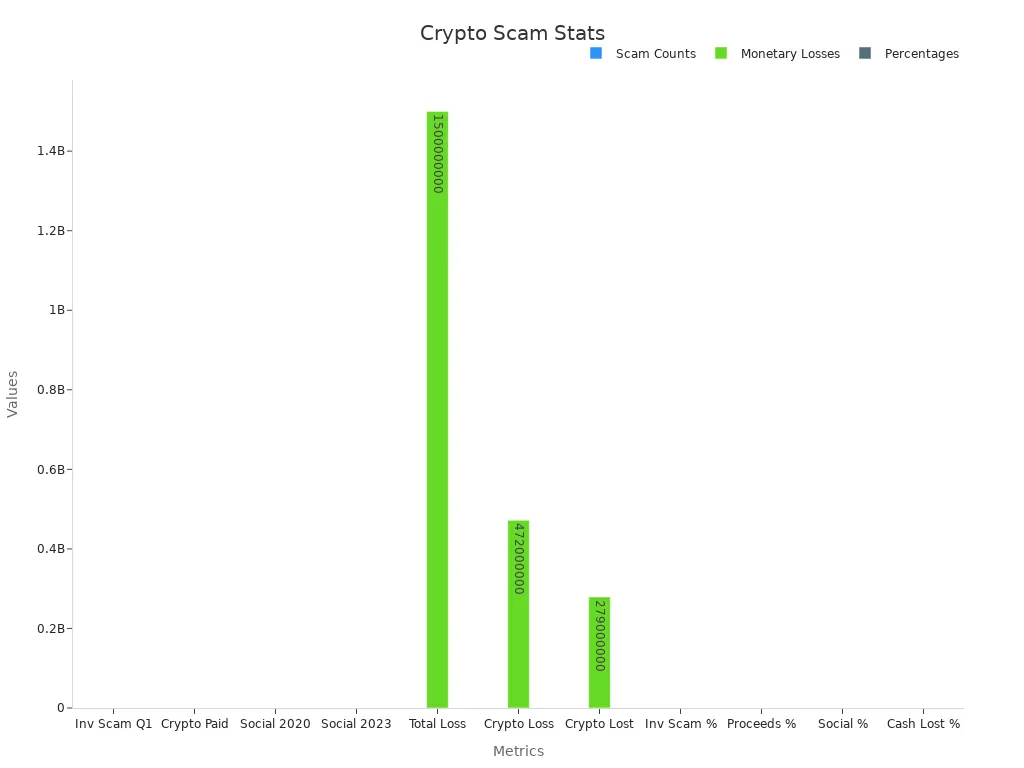
Picture this: you get a random call from someone claiming you just won big in a new crypto project. Sounds tempting, right? But wait—before you trust them, you can use the potential frauds call meme template to spot the tricks. Memes work as quick checklists that help you catch fraud before it happens. Take a look at these huge numbers from early 2025:
Metric | Statistic |
|---|---|
Number of investment scams in Q1 2025 | Nearly 30,000 |
Total consumer losses from investment scams in Q1 2025 | $1.5 billion |
Losses via cryptocurrency in Q1 2025 | $472 million |
Using humor and the potential frauds call meme template, you can turn internet culture into a tool for crypto safety.
Key Takeaways
Memes can help you quickly spot crypto scam calls by showing common red flags in a fun and easy way.
Watch for scam signs like urgent requests, fake promises, and callers asking for your wallet info or private keys.
Use meme templates as checklists to remind yourself to stay alert before answering suspicious crypto calls.
Customize and share your own scam warning memes with friends to help everyone avoid scams together.
If you get a suspicious call, hang up, never share private info, and check official sources before trusting any offer.
Potential Frauds Call Meme Template
Meme Template Overview
You have probably seen the potential frauds call meme template floating around on social media. This meme usually shows a phone screen with a caller ID that says something like “Potential Fraud” or “Scam Likely.” People love to use this meme to poke fun at those weird calls you get from unknown numbers. It’s funny because it’s true—everyone gets these calls, and everyone knows they’re suspicious.
But here’s the cool part: you can use this meme as more than just a joke. The potential frauds call meme template works as a visual reminder to stay alert. When you see the meme, you remember to pause and think before you answer any strange call, especially if it’s about crypto. You can even customize the meme to show different scam scenarios, like someone pretending to be a famous crypto influencer or offering a “guaranteed” meme coin investment.
Tip: Save your favorite version of the meme on your phone. Next time you get a sketchy call, check the meme first!
Why Use Memes for Scam Awareness
Memes are everywhere. You see them on Instagram, Twitter, and even in group chats. They spread fast because they are simple, funny, and easy to understand. That’s why memes make great tools for scam awareness. When you use a meme like the potential frauds call meme template, you turn a boring warning into something you’ll actually remember.
Here’s how memes help you spot scams:
They use humor to make serious topics less scary.
They give you a quick checklist in a single image.
They help you share scam warnings with friends in a way that feels natural.
If you want to stay safe in the crypto world, start using memes as your first line of defense. You’ll find that a good meme can help you spot a scam call before you even pick up.
Common Signs of a Meme Coin Scam
Red Flags in Scam Calls
You might think meme coin scams only happen online, but scammers love to use phone calls too. They know people trust a real voice. When you get a call about a new cryptocurrency or meme coin, you need to look for warning signs. Here are some red flags you should never ignore:
Impersonation: Scammers often pretend to be famous crypto influencers or company officials. They might even use AI to sound like someone you know. In one case from Spain, criminals used fake emails and calls to trick companies into sending money to the wrong account. They lost almost €20,000 before catching on. This shows how scammers use trust and fake authority to steal from you.
Urgent Requests: If someone says you must act now or you’ll miss out, that’s a big warning. Scammers create a sense of urgency to stop you from thinking. During the COVID-19 pandemic, scam calls shot up by 42%. Many used fear and fake emergencies to get people to send money fast.
Unrealistic Promises: Watch out for promises of huge returns or “guaranteed” profits. Meme coin scams often claim you can double your money overnight. If it sounds too good to be true, it probably is.
Requests for Private Keys or Wallet Info: No real crypto project will ever ask for your wallet password or private keys. If someone does, hang up right away.
Confidentiality: Scammers may tell you to keep the call secret. They don’t want you to check with friends or family.
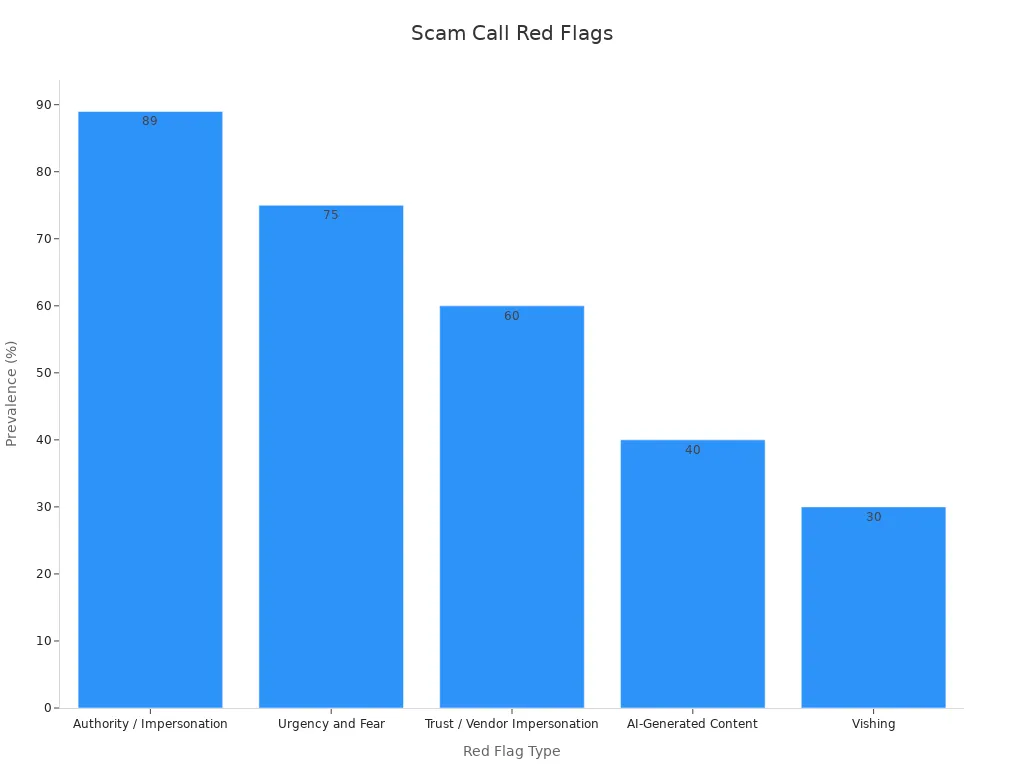
Here’s a quick table to help you spot these red flags:
Red Flag Type | What to Watch For | Real-World Example / Impact |
|---|---|---|
Impersonation | Caller claims to be a crypto influencer or CEO | Deepfake CEO voice scam caused €220,000 loss |
Urgency and Fear | “Act now!” or “You’ll lose your chance!” | |
Trust / Vendor Impersonation | Pretends to be a trusted partner or vendor | Google & Facebook lost $100M to fake invoice scams |
AI-Generated Content | Voice or emails sound “off” or too perfect | 40% of phishing emails flagged as AI-generated |
Vishing (Voice Phishing) | Fake calls from “officials” or “support” | 30% of organizations hit by vishing attacks |
Confidentiality & Isolation | “Don’t tell anyone about this offer” | Common tactic to prevent you from checking with others |
🚨 Tip: If you hear any of these red flags, hang up and double-check before you do anything with your wallet or crypto.
Social Engineering Tactics
Scammers keep getting smarter. They use social engineering to trick you into trusting them. This means they study your habits, use your favorite memes, and even copy your friends’ voices. You might get a call or message that feels personal. That’s because scammers use AI bots and deepfakes to make their scams more believable.
Recent reports show that scammers now use AI to create fake emails, deepfake voices, and even VR or AR tricks. They can send you a message that looks like it’s from a real crypto project. Sometimes, they use QR codes or chatbots to get your wallet info. These tricks make meme coin scams harder to spot.
Here are some common social engineering tactics in meme coin scams:
Pump and Dump Schemes: Scammers hype up a new meme coin. They use memes, fake news, and social media to pump the price. When enough people buy in, the scammers dump their coins and disappear. You lose your money, and the price crashes.
Fake Promises: You might hear about “guaranteed” profits or secret investment tips. These promises are just bait. Scammers want you to trust them and send your crypto.
Pump Groups: Some scammers invite you to private groups where everyone talks about a new meme coin. They promise you’ll get rich if you join early. In reality, these groups exist to pump the price and then dump it on new buyers.
Wallet Drainers: Scammers send you links or QR codes that steal your wallet info. If you click or scan, you could lose all your cryptocurrency.
Watch Out for Pump and Dump Patterns: If you see a meme coin price shoot up fast and then crash, that’s a classic pump and dump. Scammers use this trick over and over.
Note: Social engineering is getting more advanced every year. AI bots can now mimic trusted contacts and make scams feel real. Always double-check before you trust a new meme coin or share your wallet details.
Meme coin scams use every trick in the book. You need to stay alert for common signs of a meme coin scam. If you spot urgent requests, fake promises, or pump and dump patterns, take a step back. Don’t let scammers trick you out of your crypto. Share memes and warnings with your friends. Help everyone stay safe from digital scams and crypto scams.
Avoid Meme Coin Scams
Using Meme Templates as Checklists
You can turn a meme into your secret weapon against meme coin scams. Think of a meme template as a quick checklist you can use every time you get a strange crypto call. Here’s how you can do it:
Pick Your Favorite Meme Template
Choose a meme that makes you laugh and helps you remember to stay alert. The “Potential Fraud” call meme works great. You can also use any meme that shows a suspicious phone call or a funny warning.Add Your Own Red Flags
Edit the meme to include warning signs. For example, you can add text bubbles that say things like, “Asks for wallet info,” “Promises huge profits,” or “Says act now!” This way, you see the red flags right on the meme.Use the Meme When You Get a Call
When your phone rings and someone talks about a new meme coin, pull up your meme checklist. Compare what the caller says to the red flags on your meme. If you spot any, you know it’s time to hang up.Share the Meme With Friends
Send your meme checklist to your friends and family. You help them avoid meme coin scams too. The more people use these memes, the harder it gets for scammers to trick anyone.
💡 Tip: Keep your meme checklist saved on your phone. You can even print it out and stick it near your computer. This way, you always have a reminder to double-check before you trust a crypto call.
Here’s a simple example of a meme checklist:
Meme Red Flag | What It Means |
|---|---|
“Send me your wallet info” | Never share private info! |
“Guaranteed profits” | No one can promise this. |
“Don’t tell anyone” | Scammers want you isolated. |
“Limited time offer” | Pressure is a classic trick. |
You can use this table as a guide when you make your own meme. Every time you see these signs, you know you need to stop and do more research.
Customizing for Personal Use
You don’t have to use the same meme as everyone else. You can make your own meme that fits your style. Customizing your meme makes it more fun and helps you remember the warning signs. Here’s how you can do it:
Choose a Meme That Speaks to You
Maybe you like the “Distracted Boyfriend” meme or the “Drake Hotline Bling” meme. Pick one that you and your friends love. The more you enjoy the meme, the more likely you’ll use it.Add Personal Warnings
Think about the scams you’ve seen or heard about. Add those to your meme. For example, if you know scammers often say they are from a certain crypto project, put that in your meme. You can even add a reminder to always research before you invest.Include a Step to Verify Developer Information
Add a note on your meme to verify developer information before you trust any new meme coin. This step helps you avoid meme coin scams and keeps your crypto safe.Share Your Meme Online
Post your meme on social media or in group chats. You can help others spot meme coin scams. When you share, ask your friends to make their own memes too. The more memes out there, the safer everyone becomes.
🚀 Note: You don’t need fancy tools to make a meme. Free apps and websites let you add text and images in minutes. You can even draw your own meme if you want!
Keep Updating Your Meme
Scammers change their tricks all the time. Update your meme when you learn about new scams. Add new red flags or tips. This way, your meme stays fresh and useful.Make It a Habit
Every time you hear about a new meme coin, check your meme checklist. Ask yourself: Did I do my research? Did I verify developer information? If you answer “no,” take a step back before you invest.
🛡️ Alert: If you ever feel unsure, talk to someone you trust or check official crypto resources. A meme can help you spot trouble, but you should always double-check before you send money or share wallet info.
Memes make it easy to remember what to watch for. When you use them as checklists, you protect yourself and your friends from meme coin scams. You can laugh, learn, and stay safe at the same time.
Real-Life Scam Examples
Sample Scam Call Scripts
You might wonder what a real scam call sounds like. Let’s look at a few examples. These scripts come from a large dataset of over 300 scam calls. Researchers used machine learning to study how scammers talk and trick people. They found patterns in the words, speed, and even the emotions scammers use.
“Hello! You have won free dogecoin! To claim your prize, please give us your wallet address and private key.”
“This is the support team. We noticed suspicious activity on your account. Please act fast or your funds will be lost. Can you confirm your wallet info?”
“Congratulations! You are one of the lucky investors in our new meme coin. For a limited time, double your investment. Don’t tell anyone—this is a secret offer.”
Researchers found that scammers often use urgent language and ask for private information. They also use fake rewards and pressure you to act quickly. Machine learning models can spot these tricks by looking at how the conversation changes. This helps stop scams before you lose money.
If you get a call like this, hang up. Never share your wallet info. Always check for scam websites before you trust any offer.
Meme Template in Action
Now, let’s see how you can use a meme template to spot these scams. Imagine you get a call about a new coin or a free dogecoin offer. You pull up your meme checklist. The caller says, “Act now!” or “Don’t tell anyone.” You see these red flags on your meme. That’s your sign to stop and think.
A recent study called “Detecting Rug Pulls in Decentralized Exchanges: The Rise of Meme Coins” shows that meme-based examples help people spot scams faster. The research used real blockchain data to find scam patterns in meme coin launches. When you use a meme template, you make scam detection quick and easy.
If you spot a scam, don’t just ignore it. Report the scam to the right authorities. You help protect others when you report the scam. Always use official resources to check if a project is safe. Memes make it fun, but real safety comes from staying alert and sharing what you learn.
Meme templates make spotting scam calls simple and fun. You can use a meme as a quick reminder to check for red flags before you trust anyone. Share your favorite meme checklist with friends to help everyone stay safe. If you ever feel unsure, always check with official resources. You protect your money and your peace of mind when you use memes for scam awareness.
FAQ
What is a meme template?
A meme template is a popular image or format you can edit with your own text. You use it to make jokes or share ideas. In this blog, you use meme templates as checklists to spot scams.
How do memes help me avoid crypto scams?
Memes make scam warnings easy to remember. You see a funny image and recall the red flags. Sharing memes with friends helps everyone stay alert. You turn a serious topic into something simple and fun.
Can I make my own scam warning meme?
Yes! You can use free apps or websites to add your own text to any meme template. Add your favorite red flags or tips. Share your custom meme with friends to help them stay safe too.
What should I do if I get a suspicious crypto call?
Hang up right away.
Never share your wallet info or private keys.
Double-check the caller’s claims using official crypto resources.
Report the scam to help protect others.
Stay safe! 🚨

